
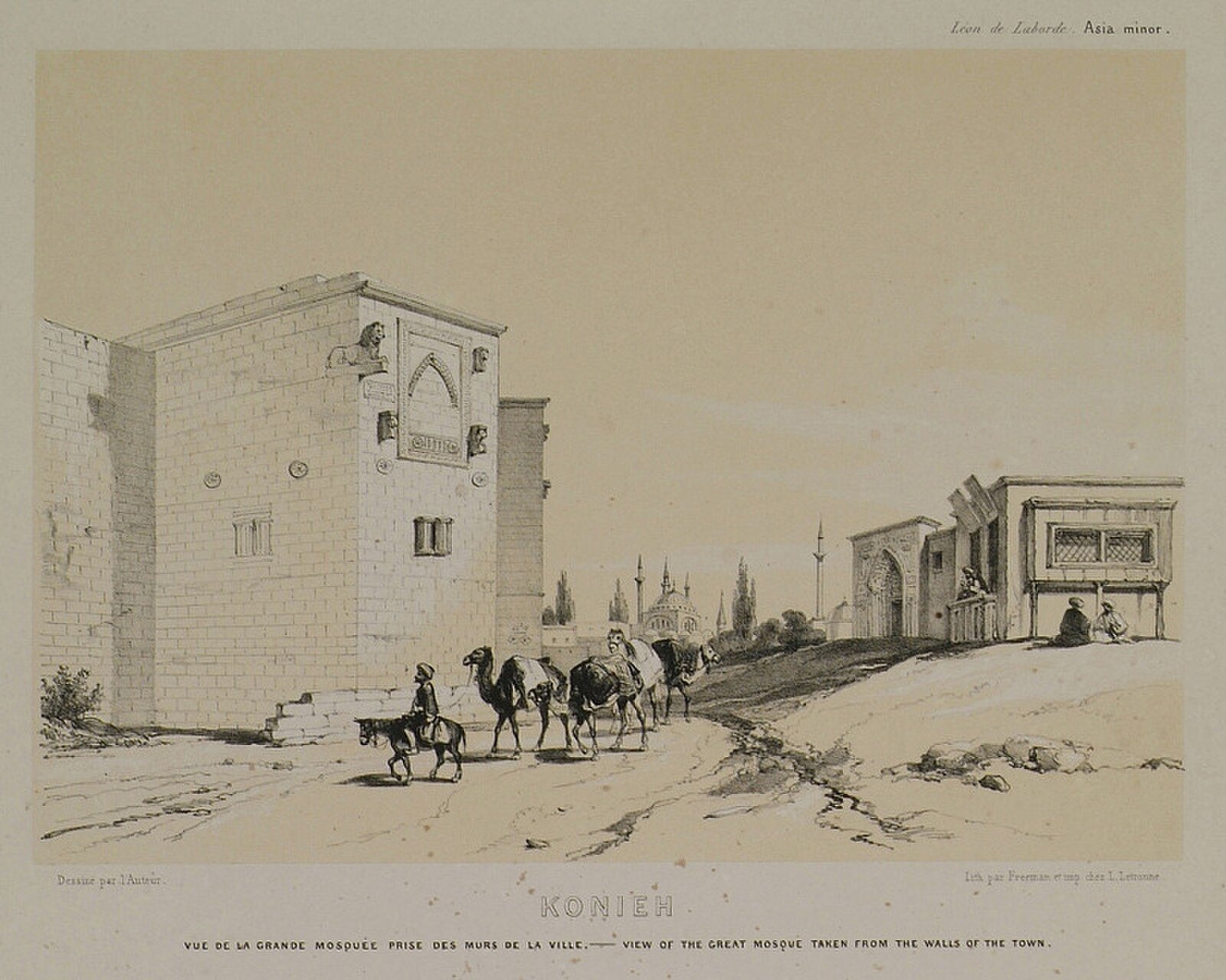
The Great Mosque seen from the city walls
The Alâeddin Mosque (1220) on Alâeddin Hill seen from the city walls — one of the earliest images documenting both the mosque and the ruins of the Seljuk…

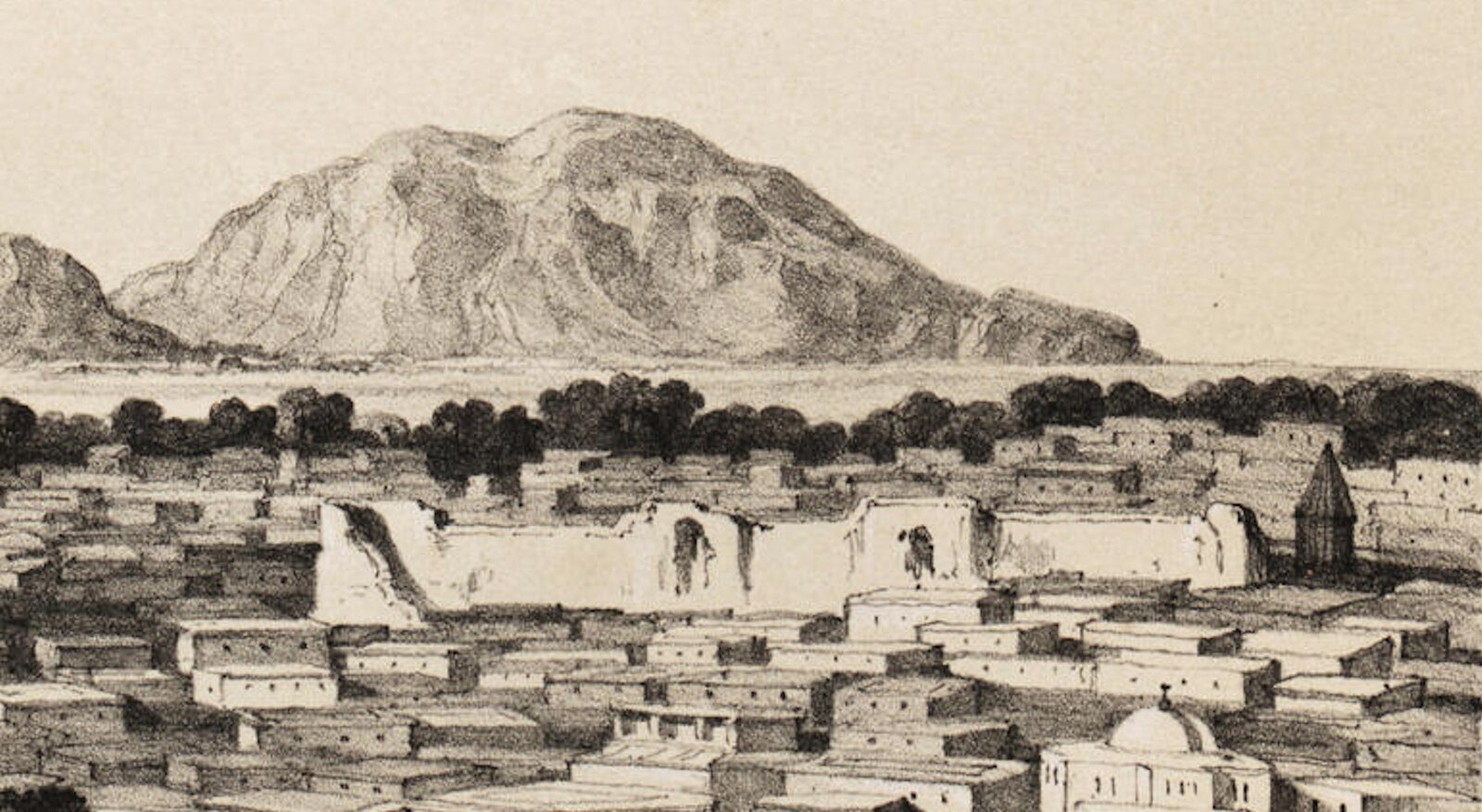
Konya citadel from the east
The citadel of Konya seen from the east in 1838. It was demolished at the end of the 19th century; today Alâeddin Hill park stands in its place.

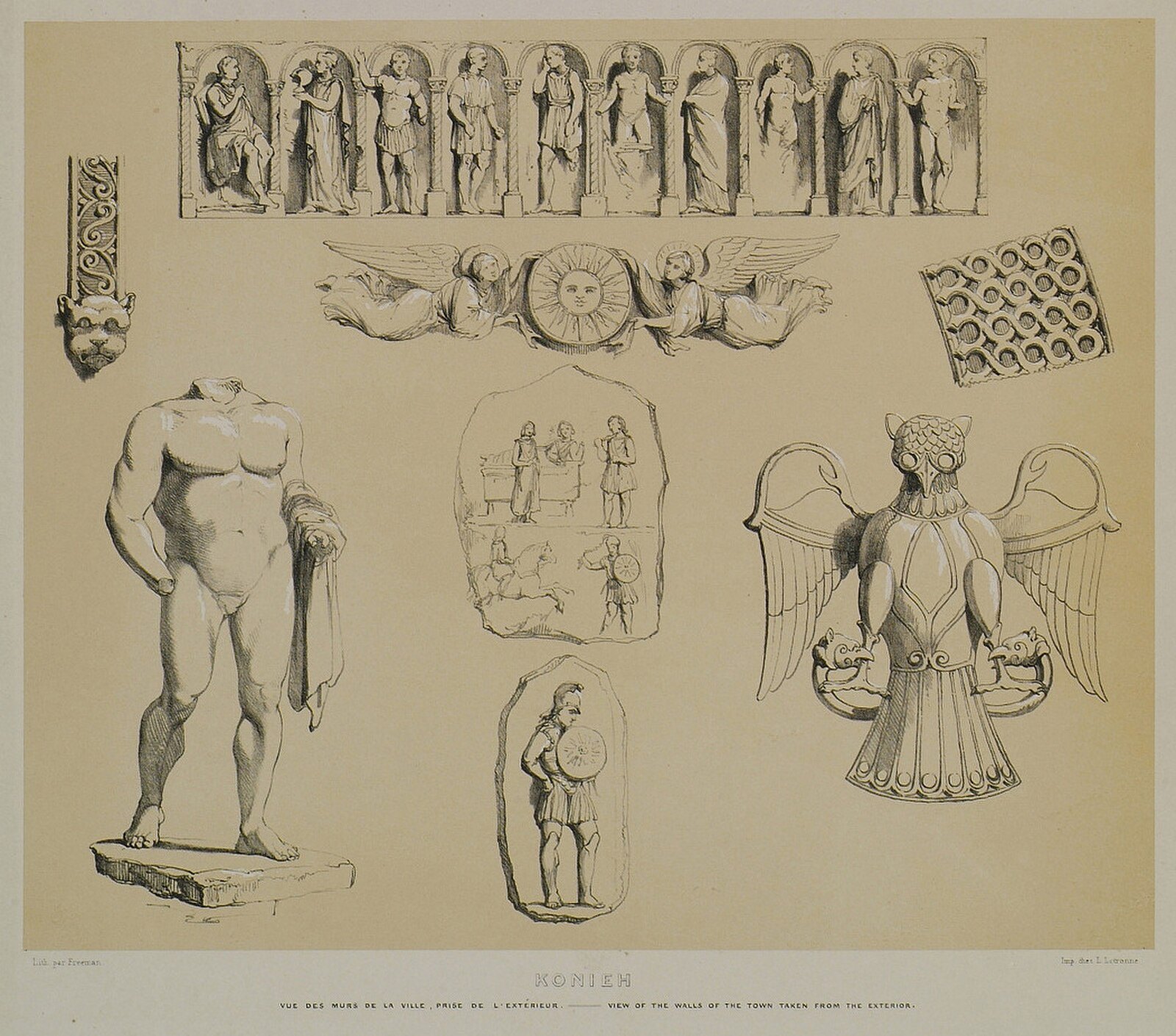
The walls of Konya seen from outside
From Léon de Laborde's 'Voyage de l'Asie Mineure' (Paris, 1838): the city walls of Konya — now completely vanished — with their towers and the life at their…

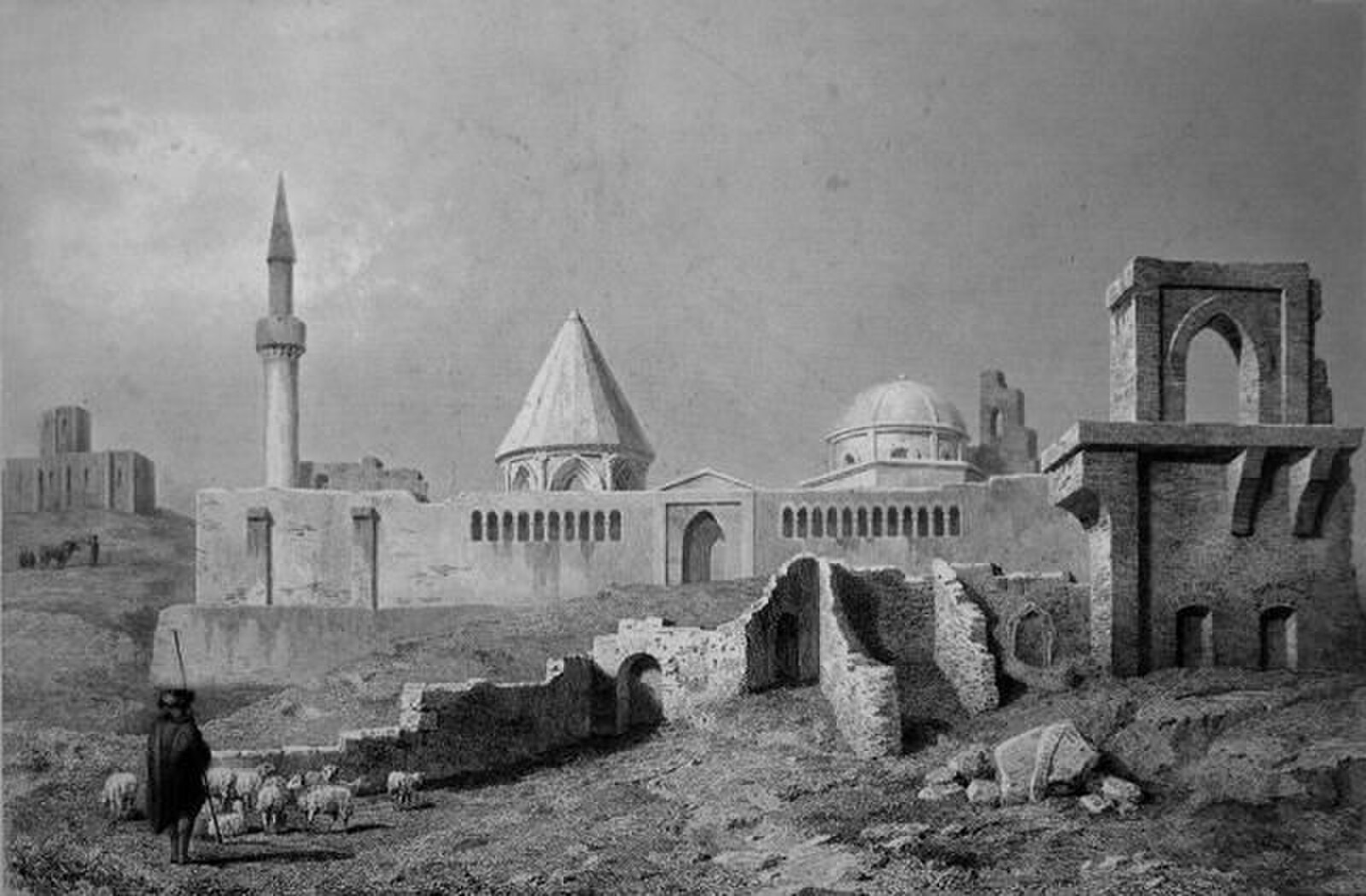
Ruins of the Alâeddin Kiosk
The Seljuk palace remnant known as the Kiosk of Kılıç Arslan II, photographed in 1865. Only a single fragment of wall survives today, sheltered by a concrete…

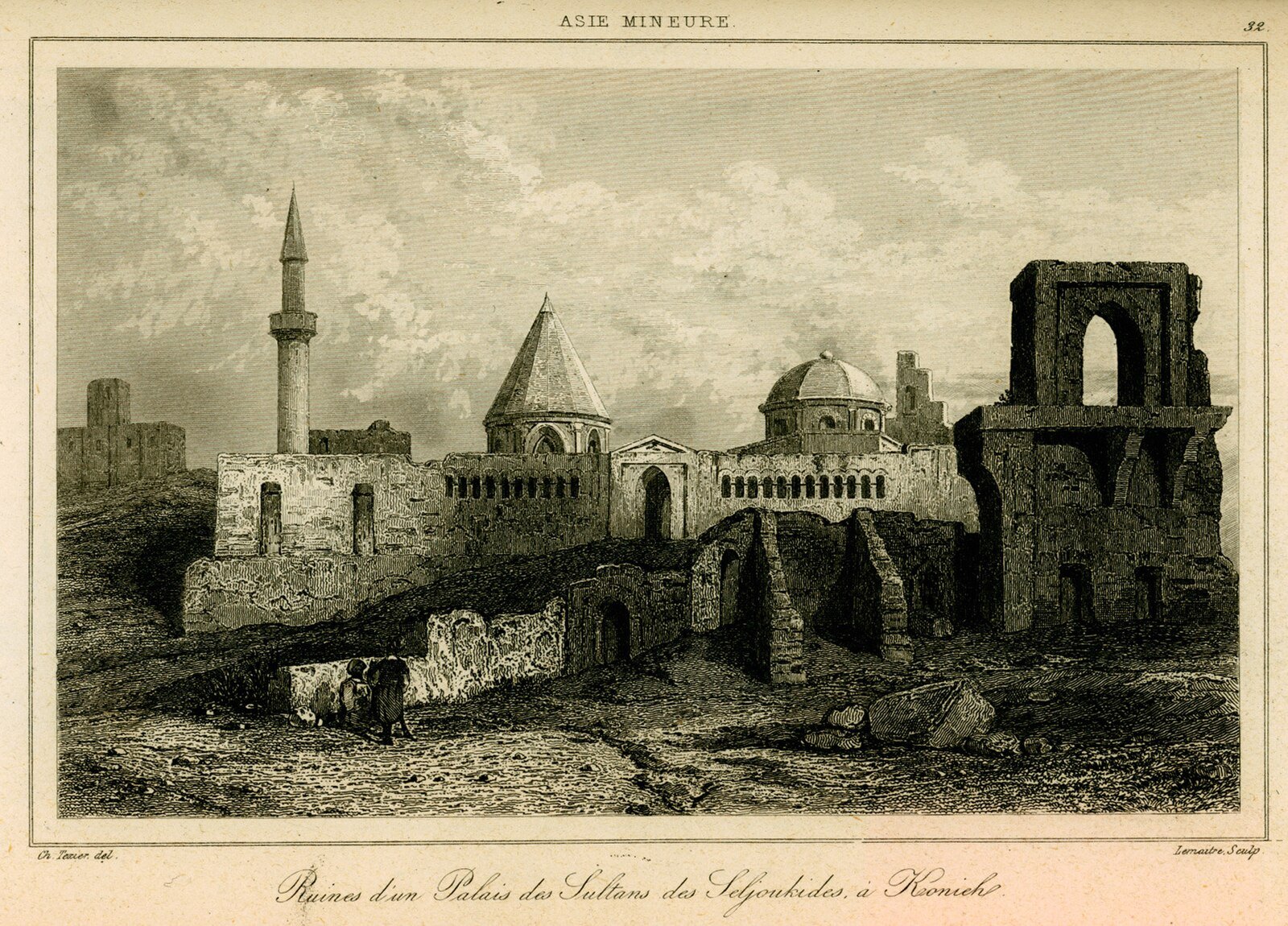
Palace of the Seljuk sultans
An engraving reconstructing the Seljuk palace of Konya, from Charles Texier's 'Asie Mineure' (Paris, 1882).

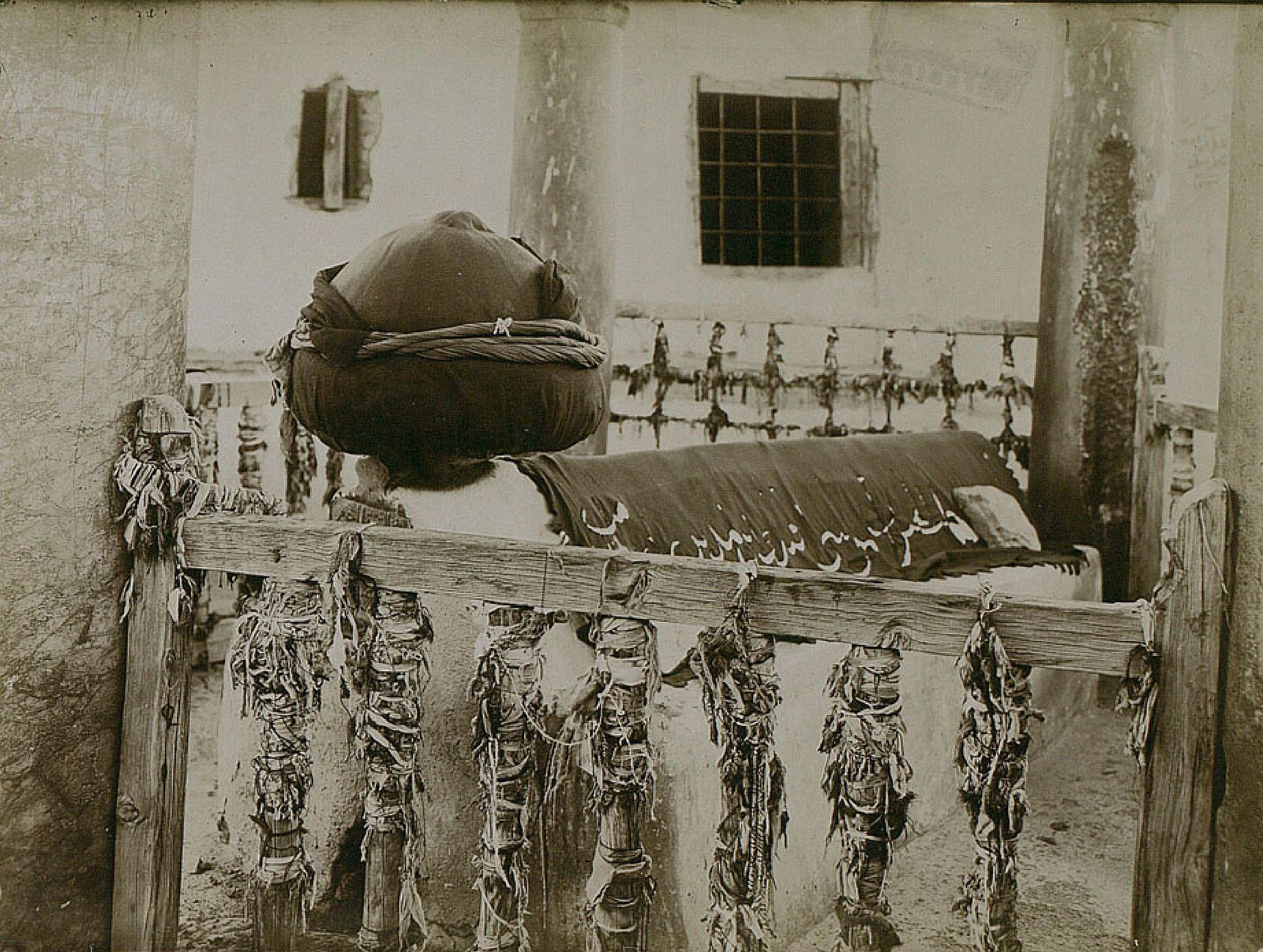
Interior of the tomb of Nasreddin Hodja
The cenotaph in the tomb of Nasreddin Hodja at Akşehir, photographed by Garabet Kirkor Solakyan in the late 1890s or early 1900s.

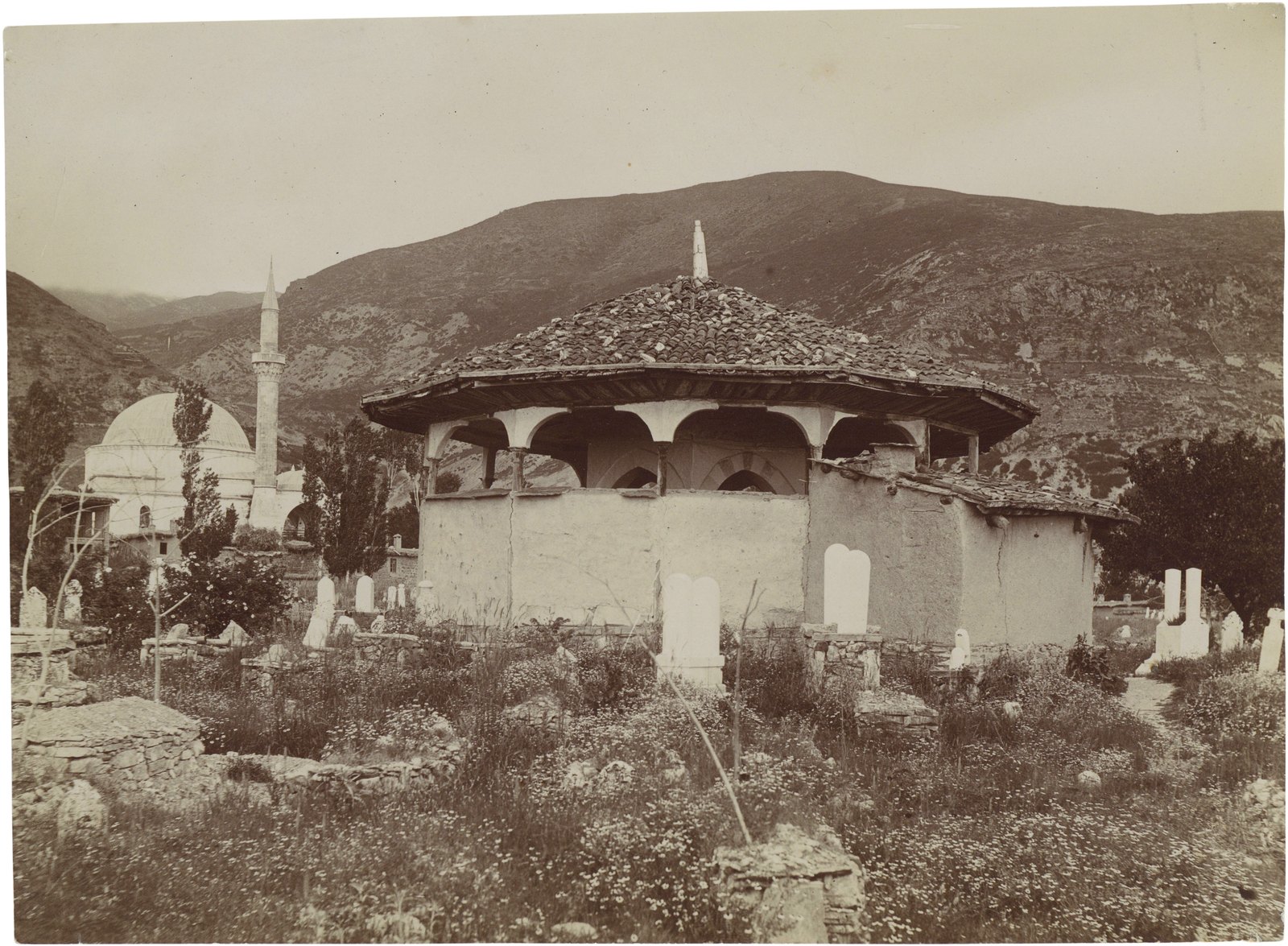
The tomb of Nasreddin Hodja in Akşehir
The tomb of Nasreddin Hodja in Akşehir with the old cemetery around it and the mountains of Akşehir behind.
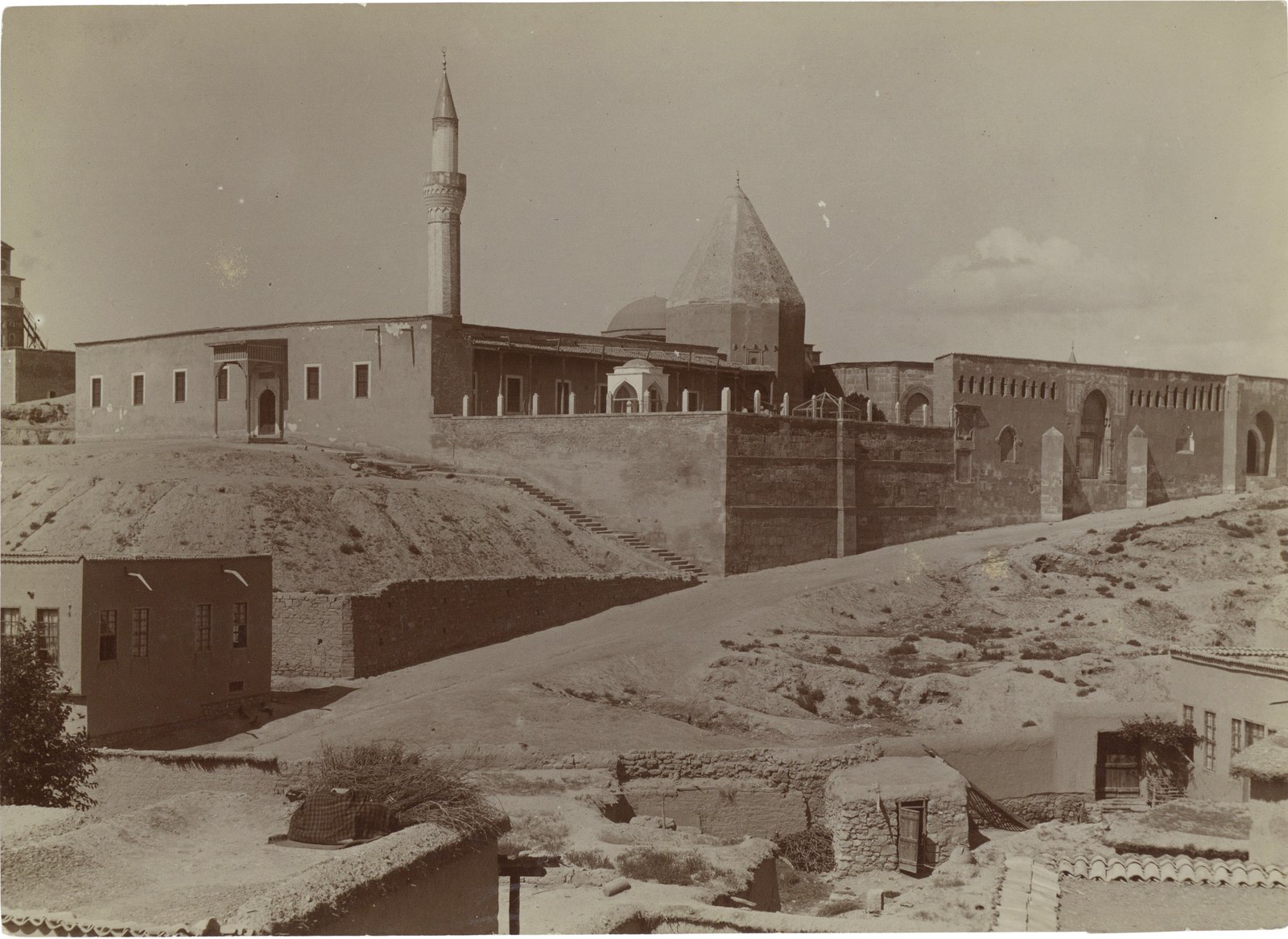
The Alâeddin Mosque
The Alâeddin Mosque (1220) on Alâeddin Hill at the turn of the century, photographed by Garabed K. Solakian, active in Konya between 1890 and 1910.
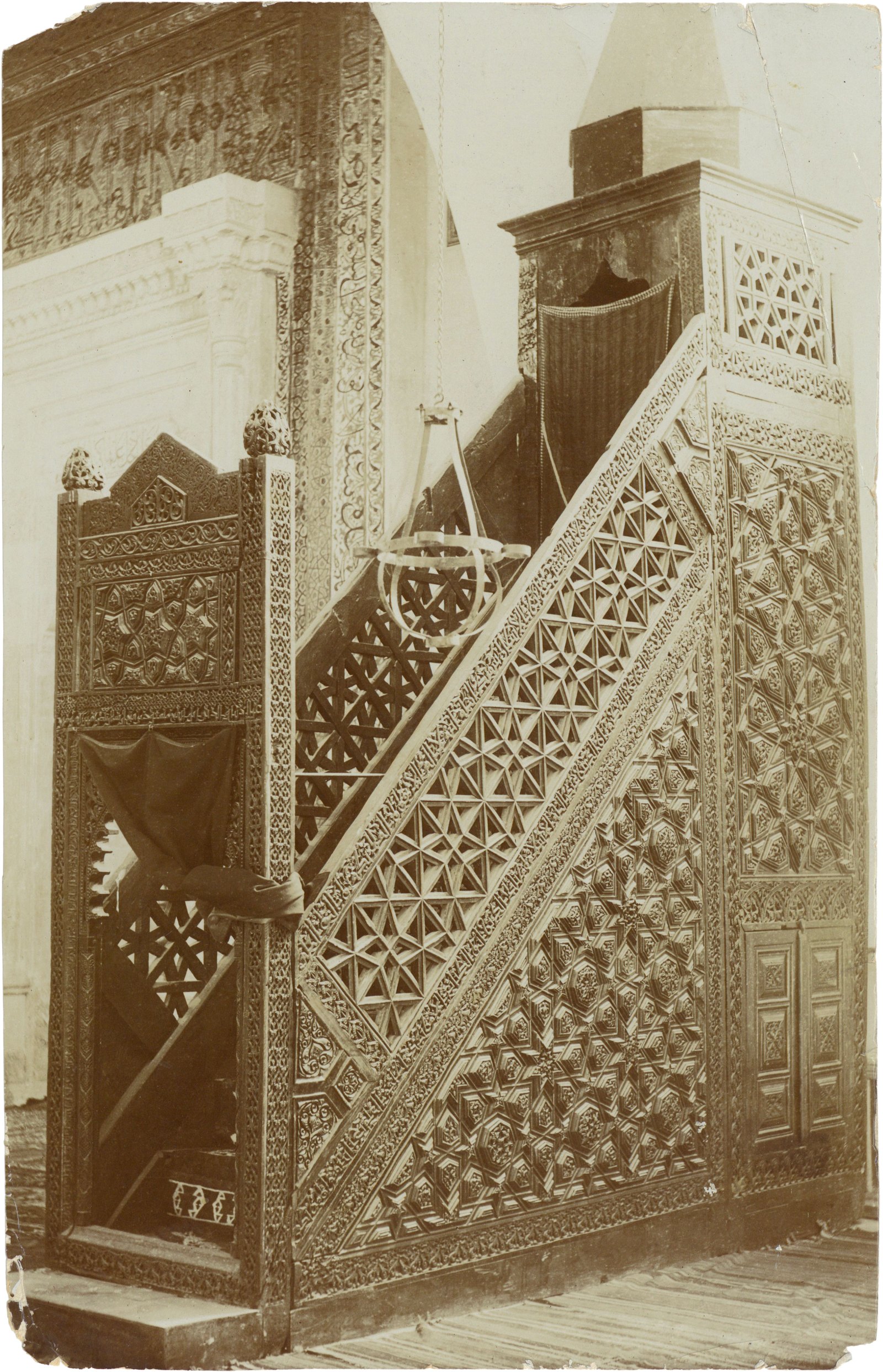
The minbar of the Alâeddin Mosque
The ebony minbar of the Alâeddin Mosque, dated 1155 — made by the kündekâri interlocking technique, without nails or glue.
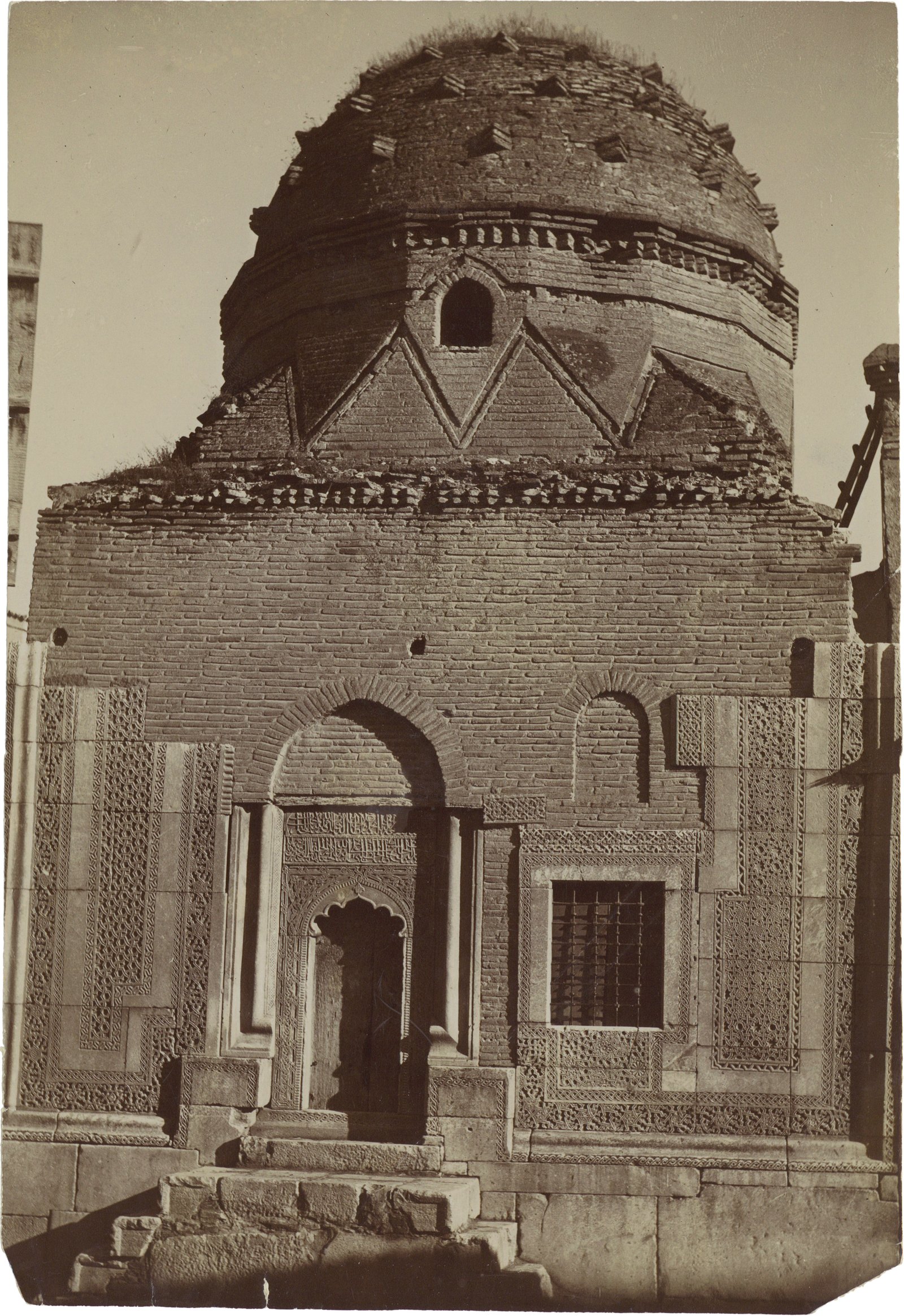
The Hasbey Darülhuffaz
A small domed building erected in 1421 by Hacı Hasbey for the training of Qur'an memorisers — a rare example of its kind in Anatolia.
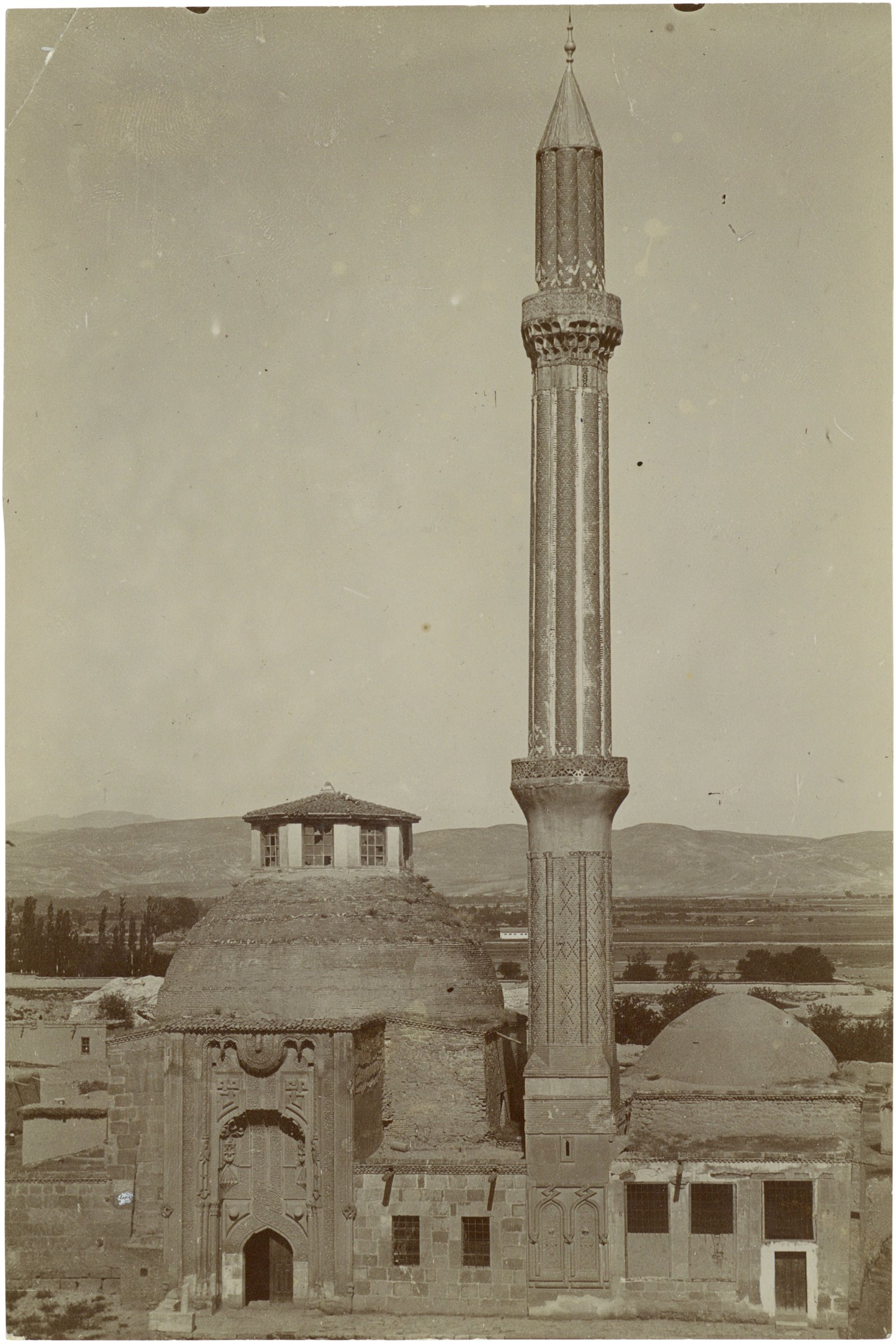
The İnce Minareli Medrese and its minaret
The minaret of the İnce Minareli Medrese before lightning destroyed it in 1901, from Solakian's documentation of Konya.
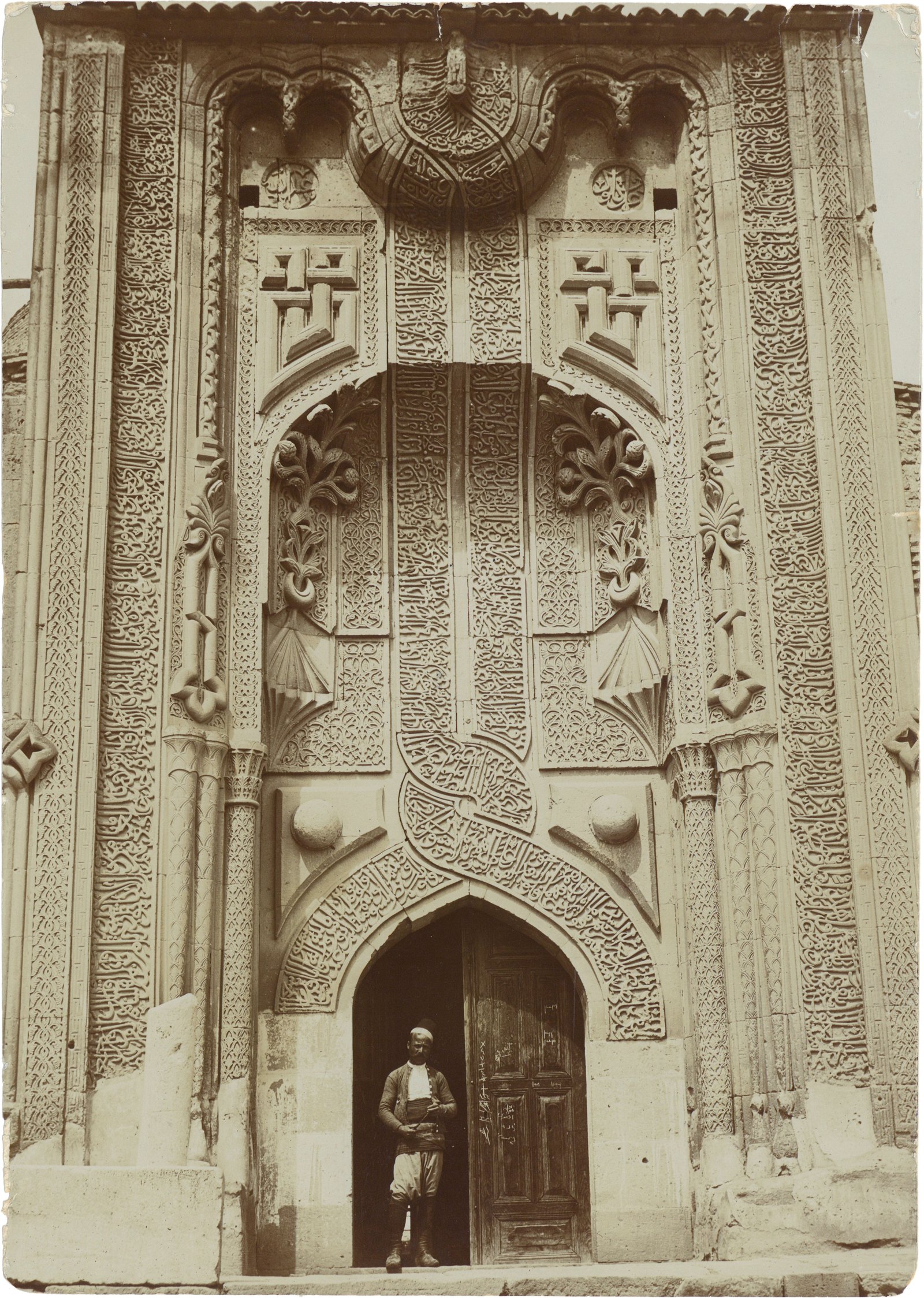
Portal of the İnce Minareli Medrese
The portal, considered a masterpiece of Seljuk stonework; the figure standing before it gives the scale of the building.
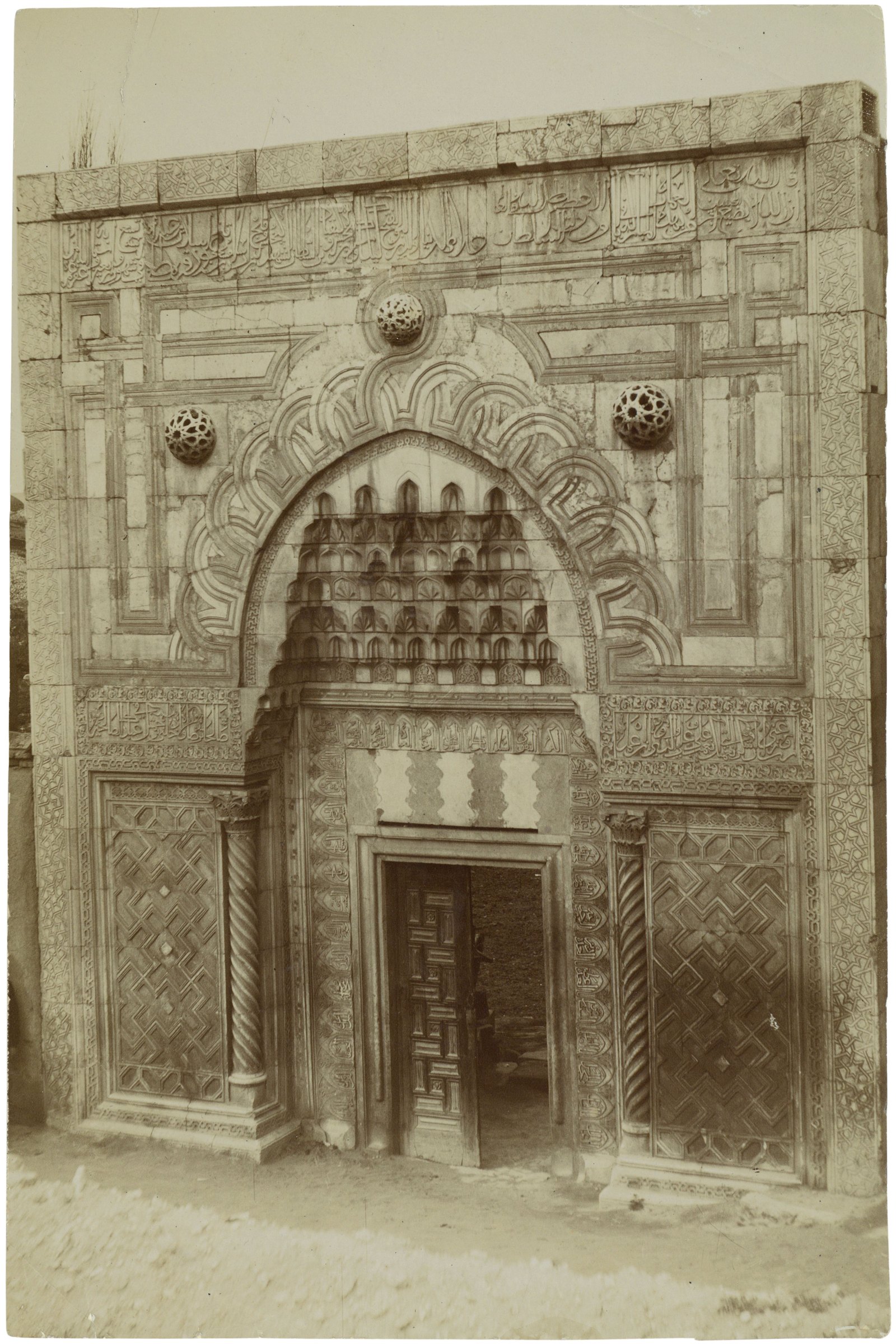
Portal of the Karatay Medrese
The marble portal of the medrese built by Celâleddin Karatay in 1251; the building houses the Tile Museum today.
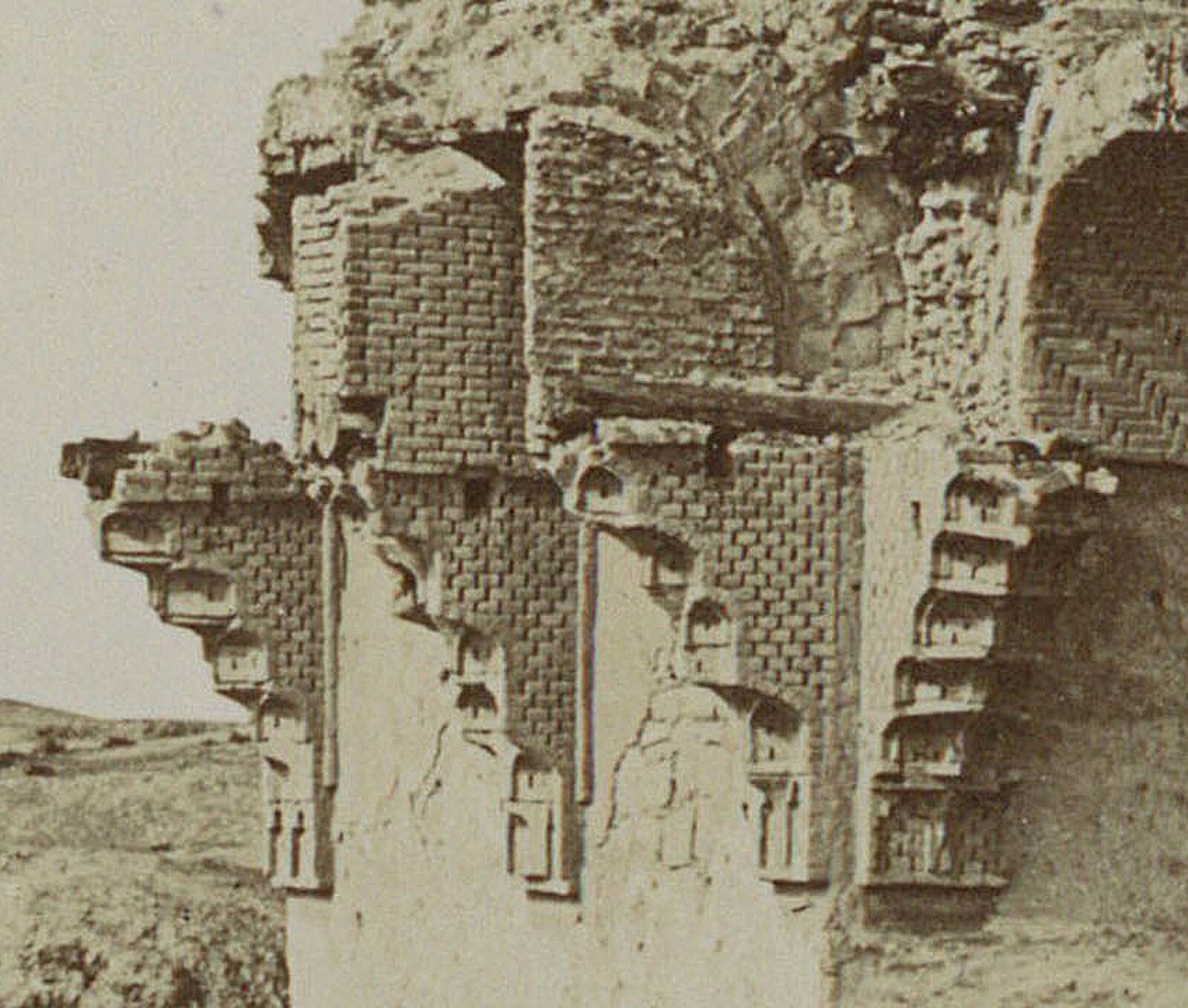
Crenellation detail of the kiosk
Detail of the brick crenellation and tilework at the top of the kiosk; most of this decoration was lost during the 20th century.

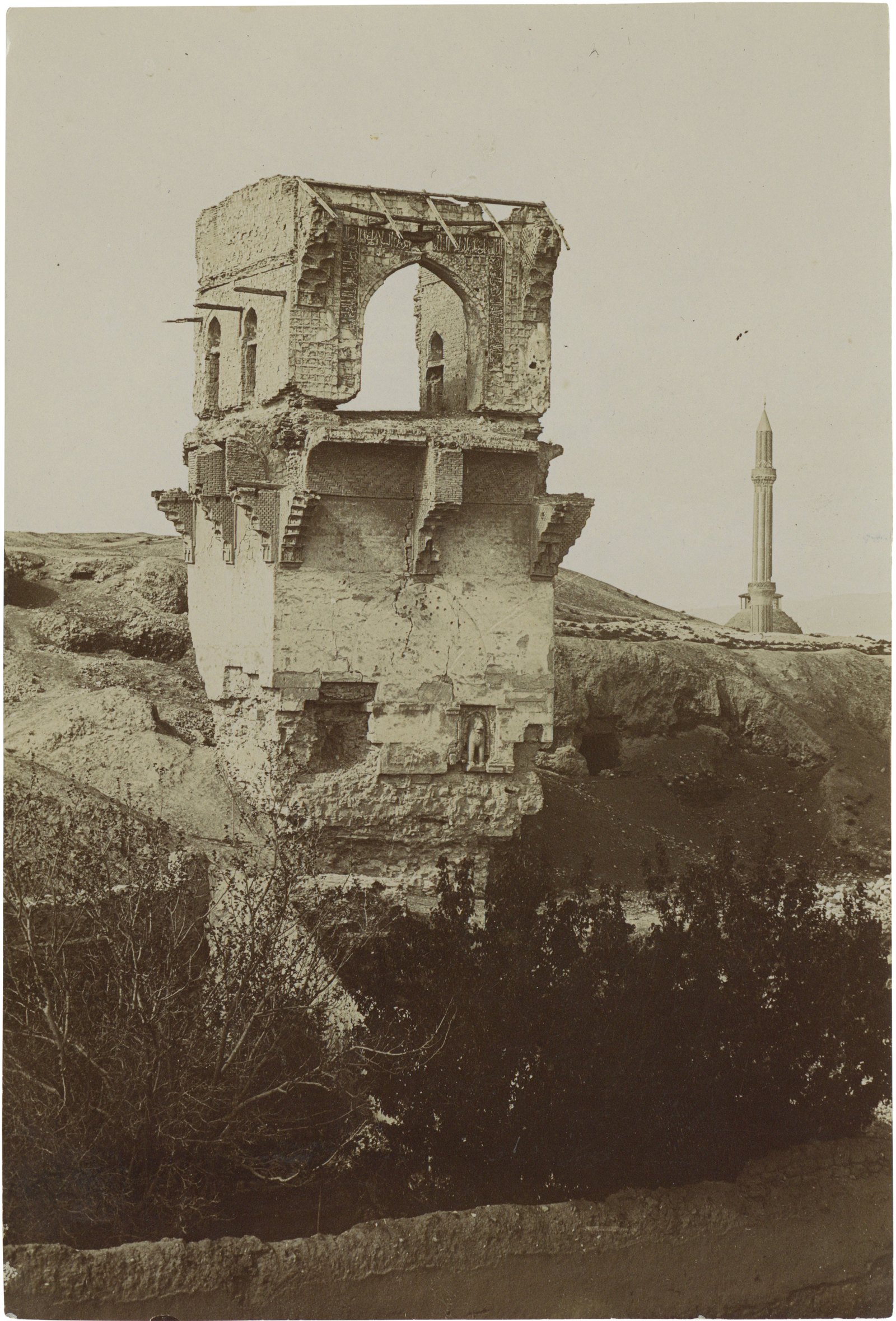
Kiosk of Kılıç Arslan II — Seljuk Palace
The surviving kiosk of the Seljuk palace on Alâeddin Hill, with the İnce Minaret behind. The structure now stands under a concrete shelter.
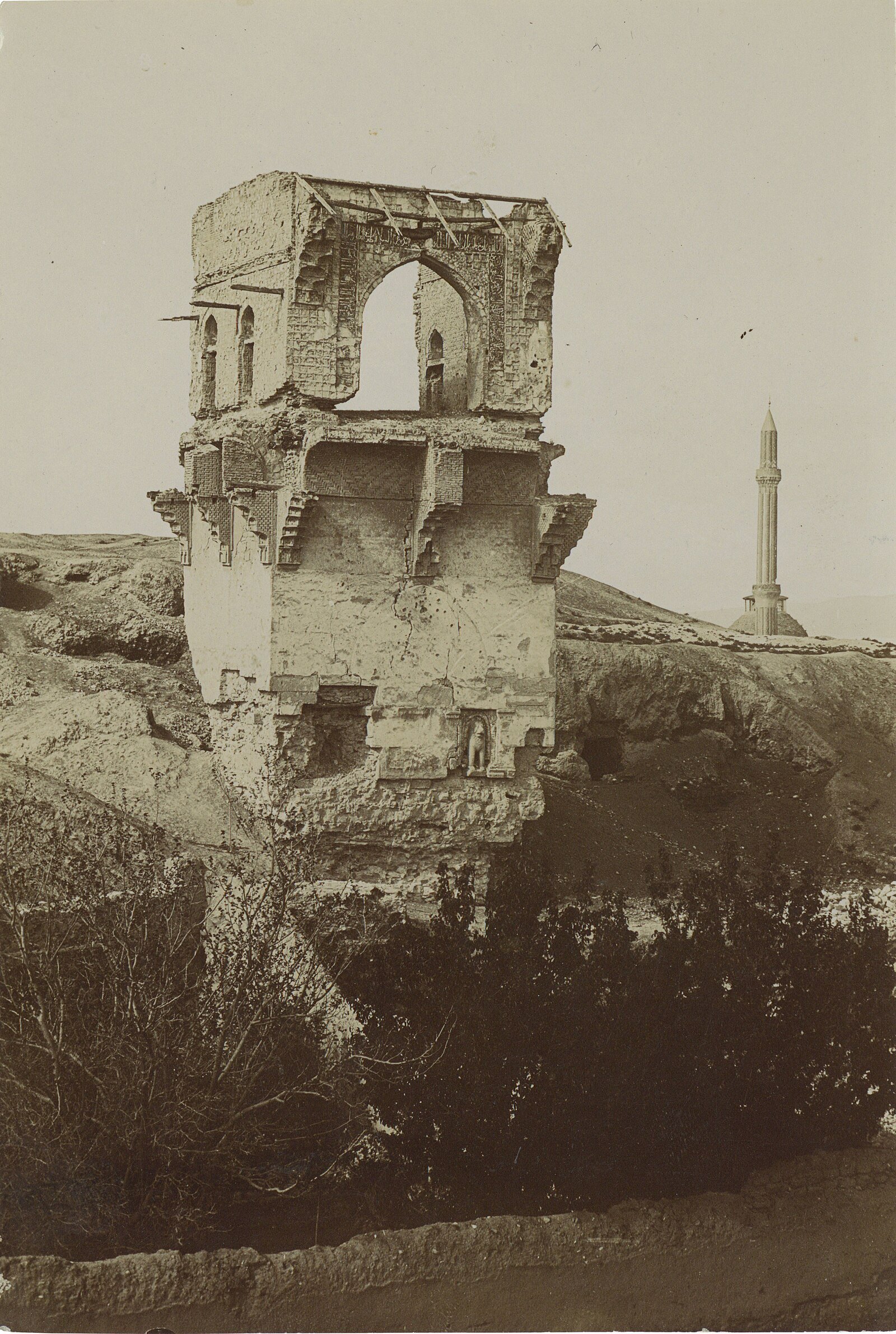
The Kiosk of Kılıç Arslan II
The surviving wall of the Seljuk palace kiosk, photographed by Garabed K. Solakyan, a photographer active in Konya in the 1890s and early 1900s.

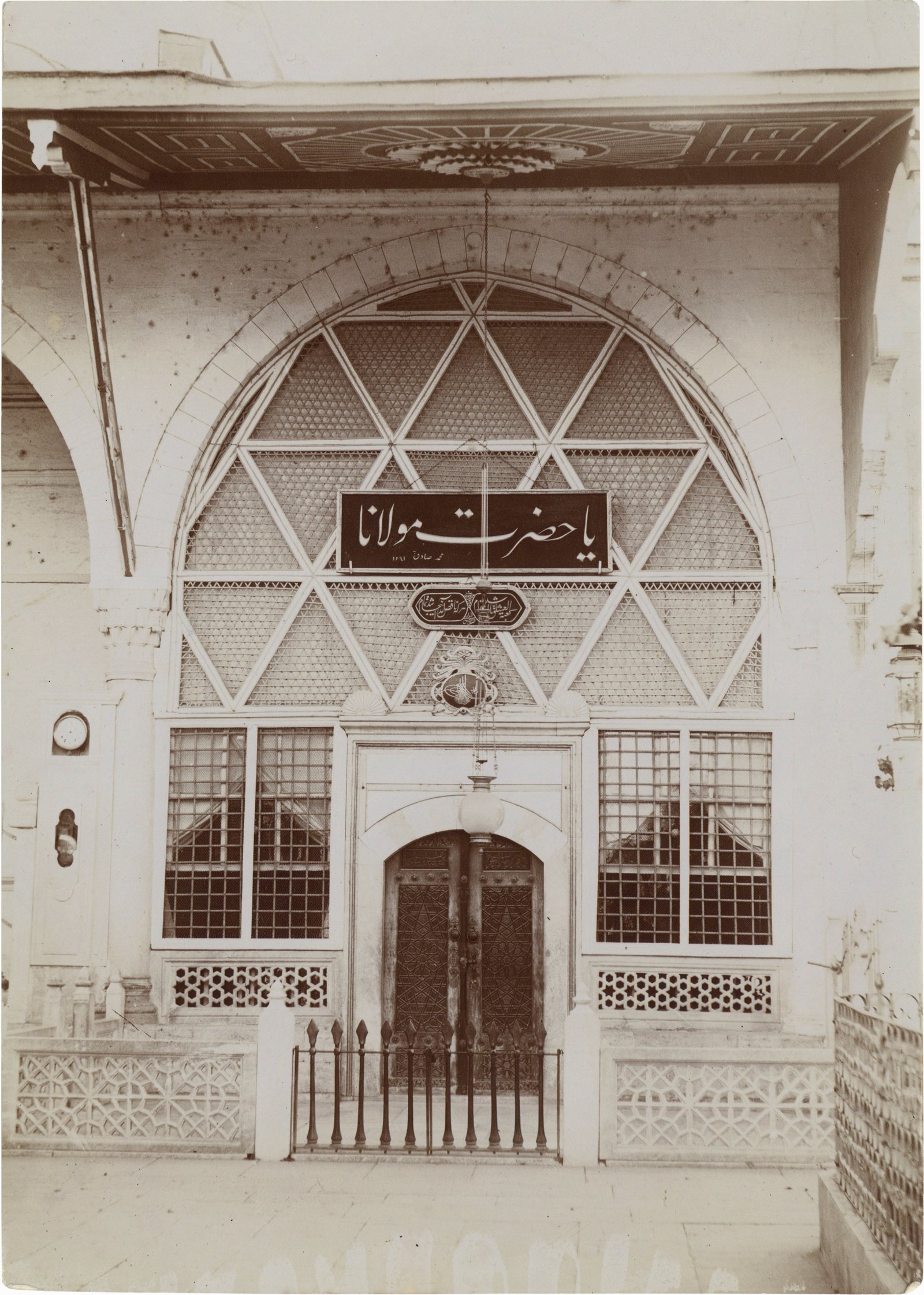
Entrance of the Mevlâna mausoleum
The entrance of the Mevlâna mausoleum before the lodge became a museum in 1926.
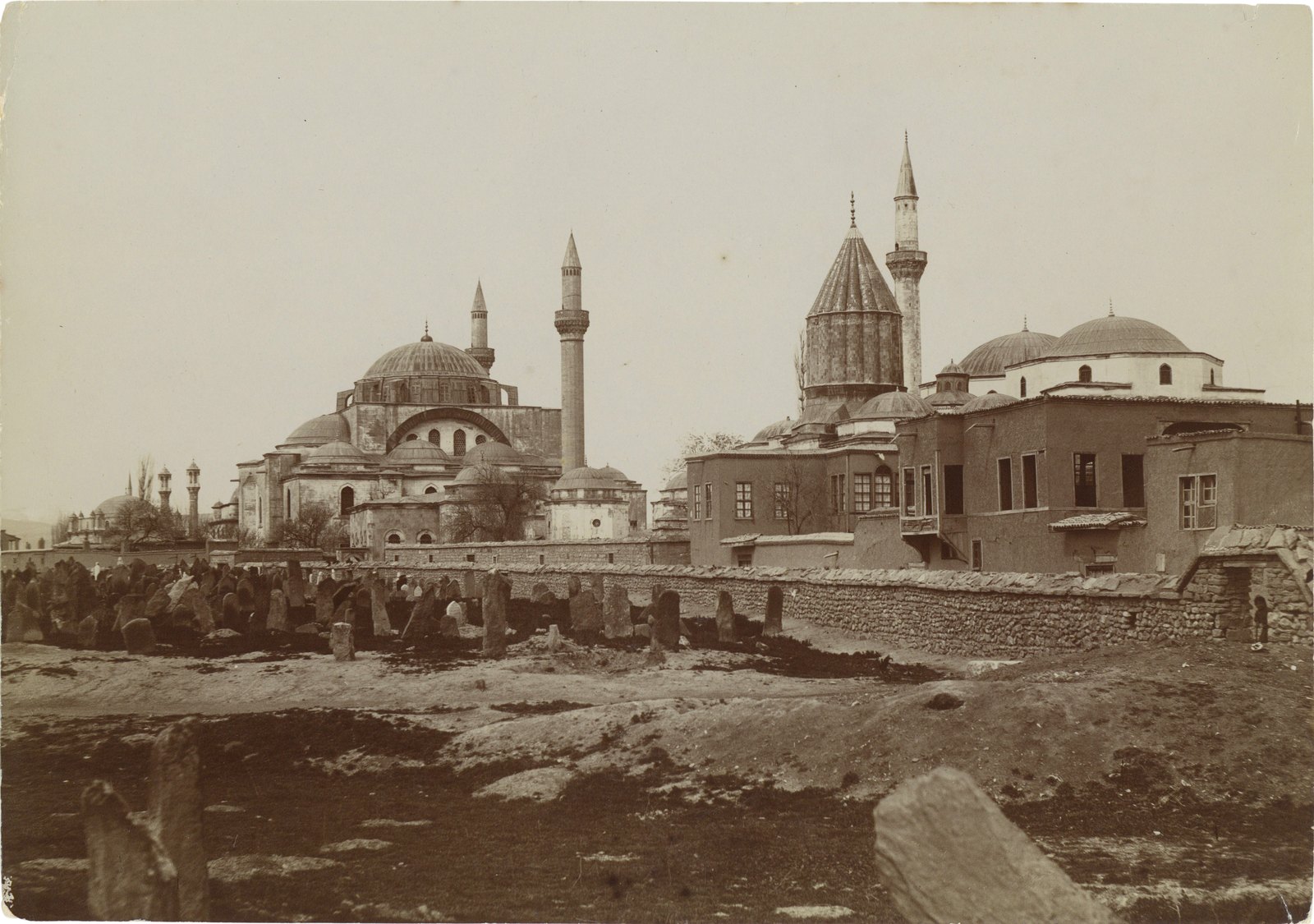
The Mevlâna mausoleum with the Selimiye and Aziziye mosques
Konya's emblematic skyline: the Green Dome of the Mevlâna mausoleum together with the Selimiye and Aziziye mosques, with still-empty ground in front.
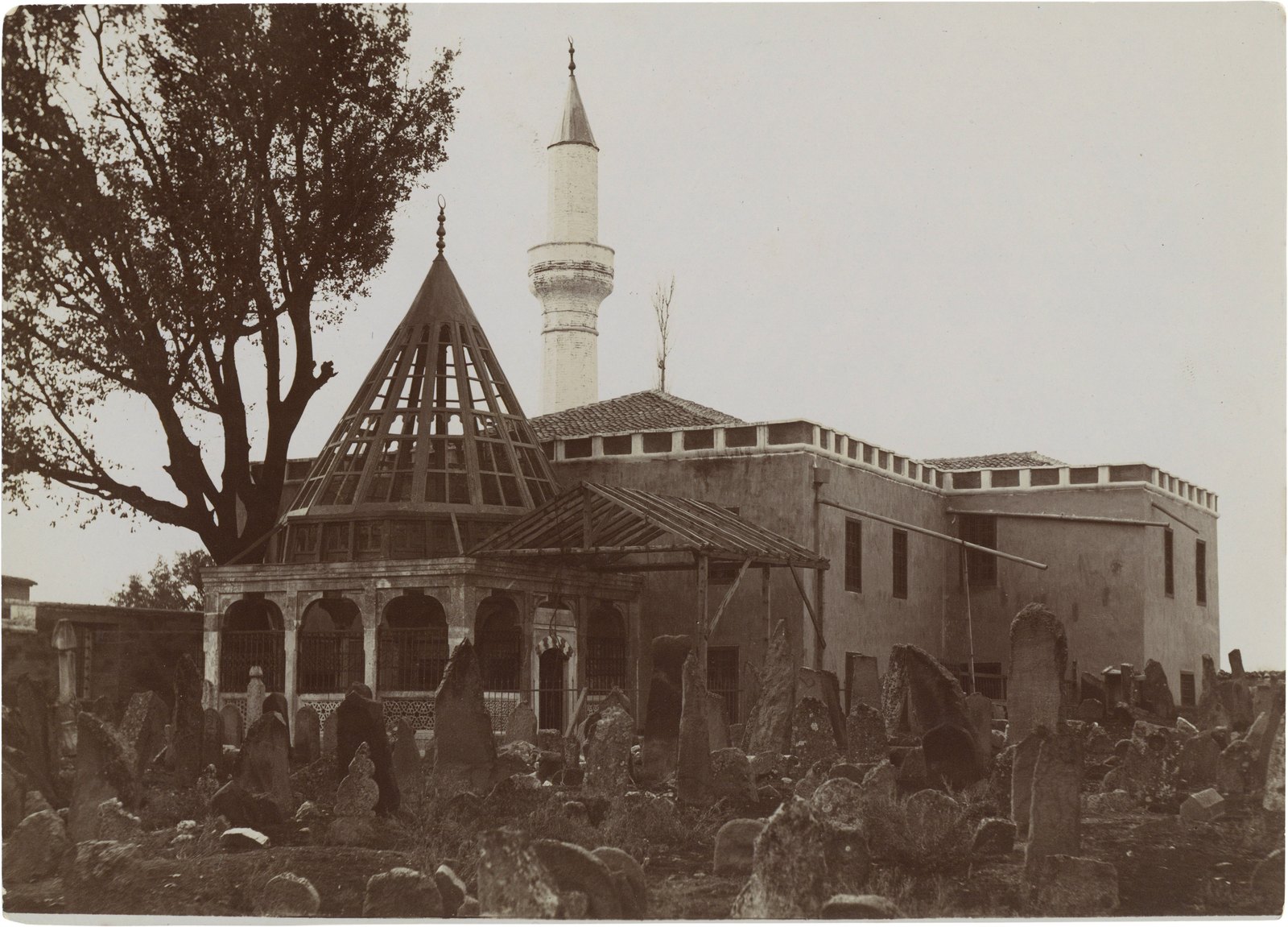
Mosque and tomb of Sheikh Sadreddin Konevî
The mosque and tomb of Sadreddin Konevî (d. 1274), contemporary of Rumi and a major interpreter of Ibn Arabi's tradition, with its open latticed tomb.
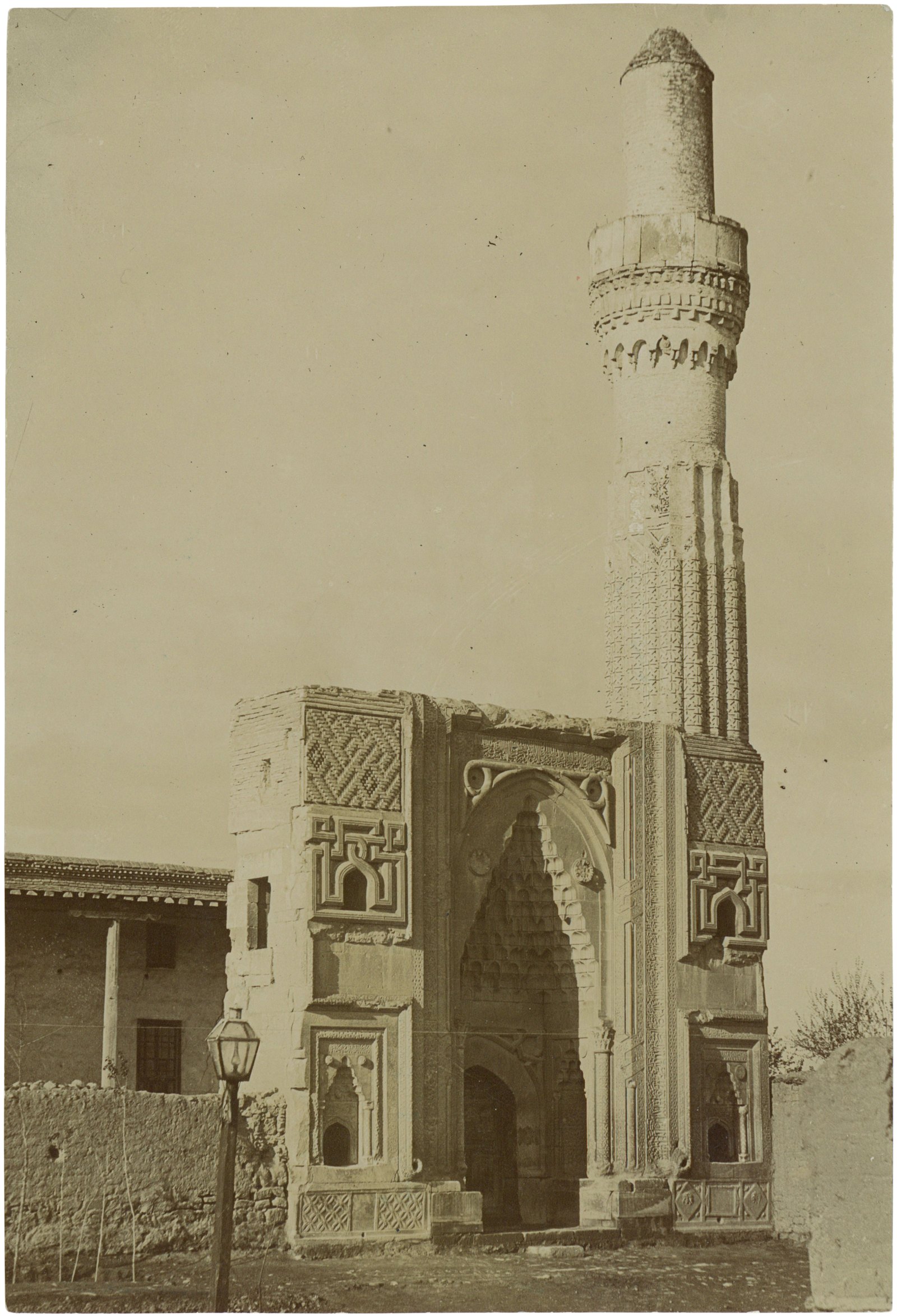
Portal of the Sahip Ata complex
The portal with its brick minaret of the complex founded in 1258 by the vizier Sahip Ata Fahreddin Ali.
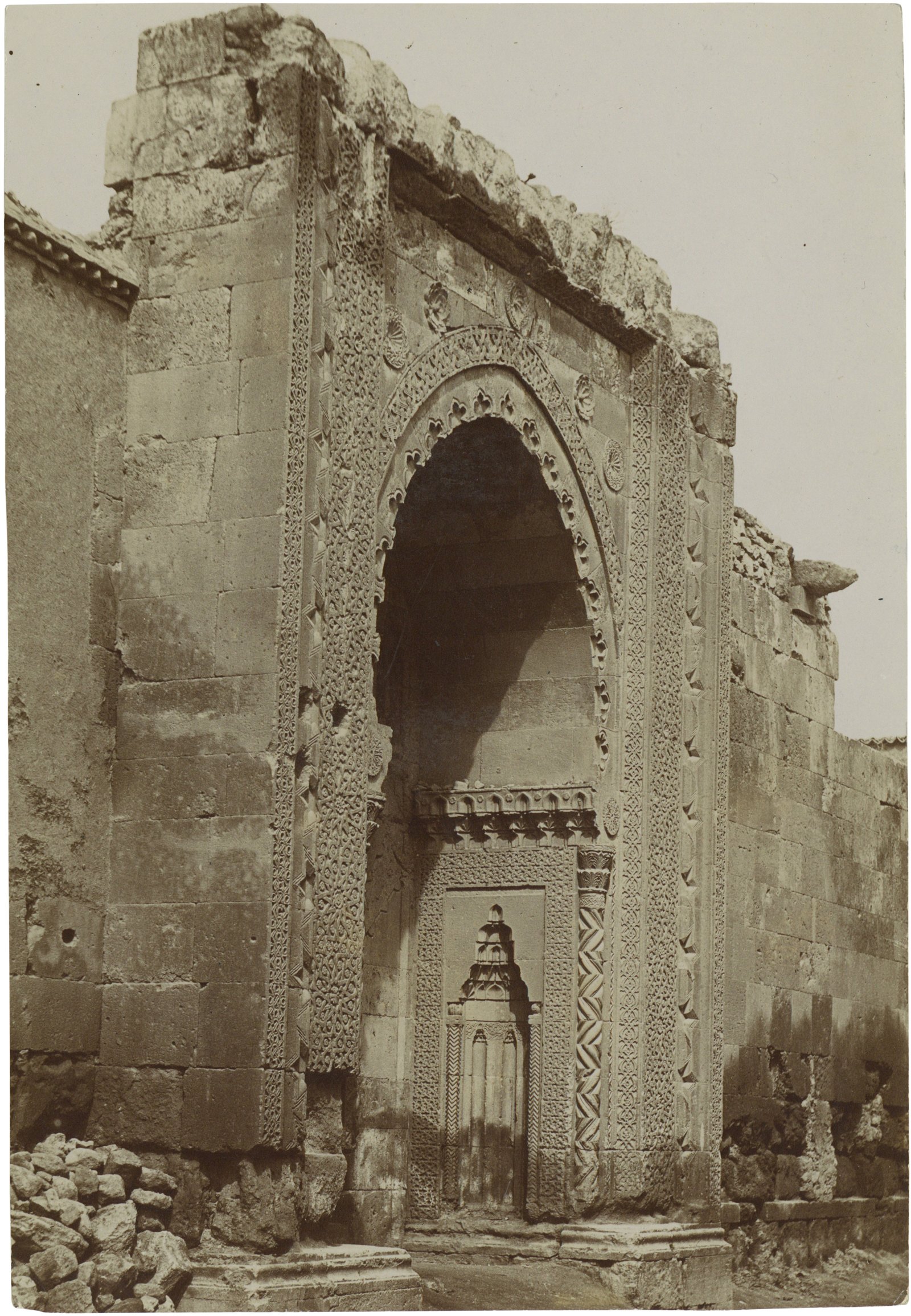
Portal of the Sırçalı Medrese
The portal of the Sırçalı Medrese of 1243 before any restoration; note the rubble around it.
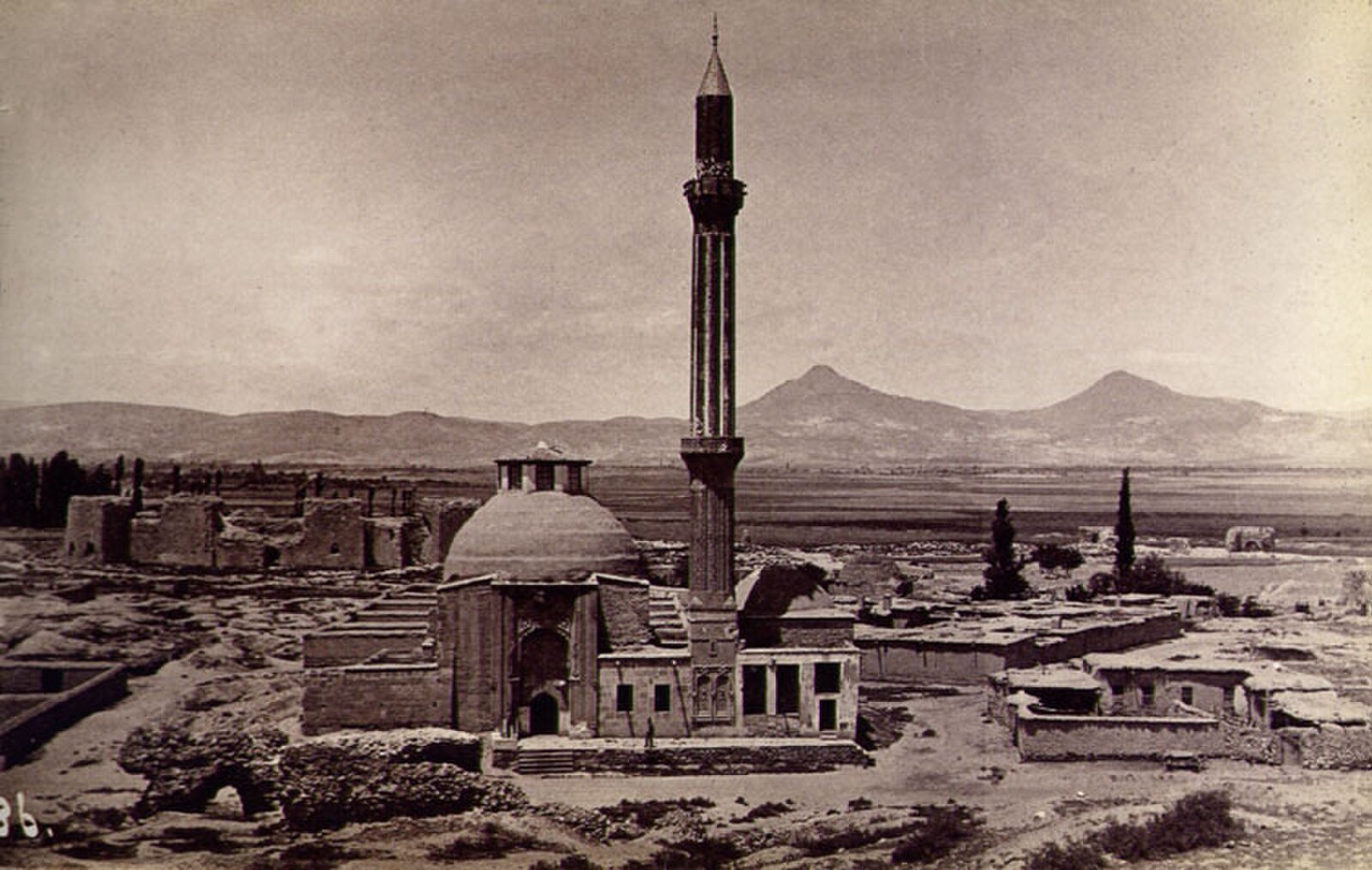
The İnce Minareli Medrese
Shot from a high vantage point by the American photographer John Henry Haynes: the İnce Minareli Medrese of 1258 with the remains of Zindankale behind it.

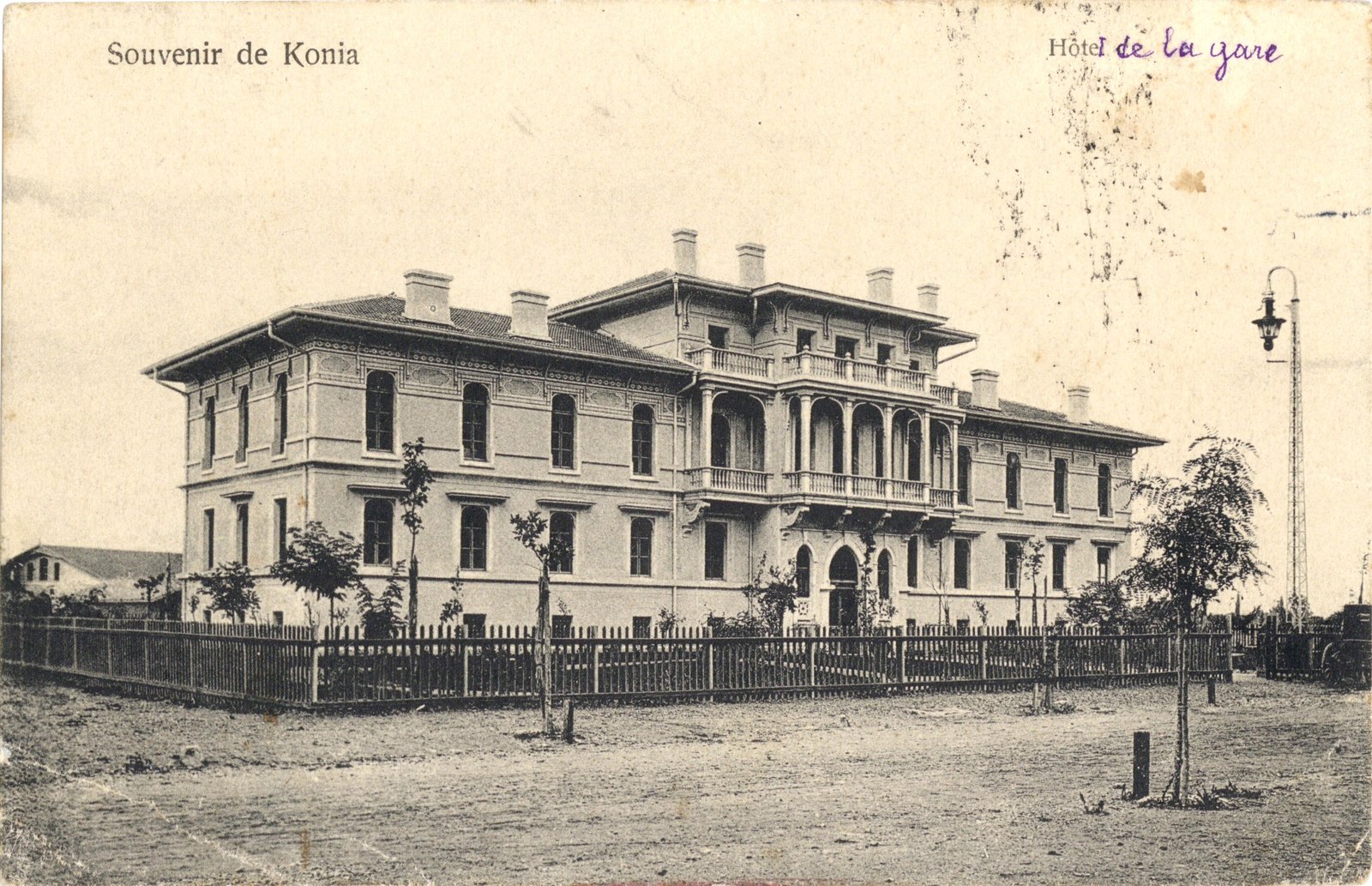
The Baghdad Hotel (Hôtel de la gare)
The Baghdad Hotel, opened near the station after the Baghdad Railway reached Konya; the postcard's front reads 'Souvenir de Konia. Hôtel de la gare'.
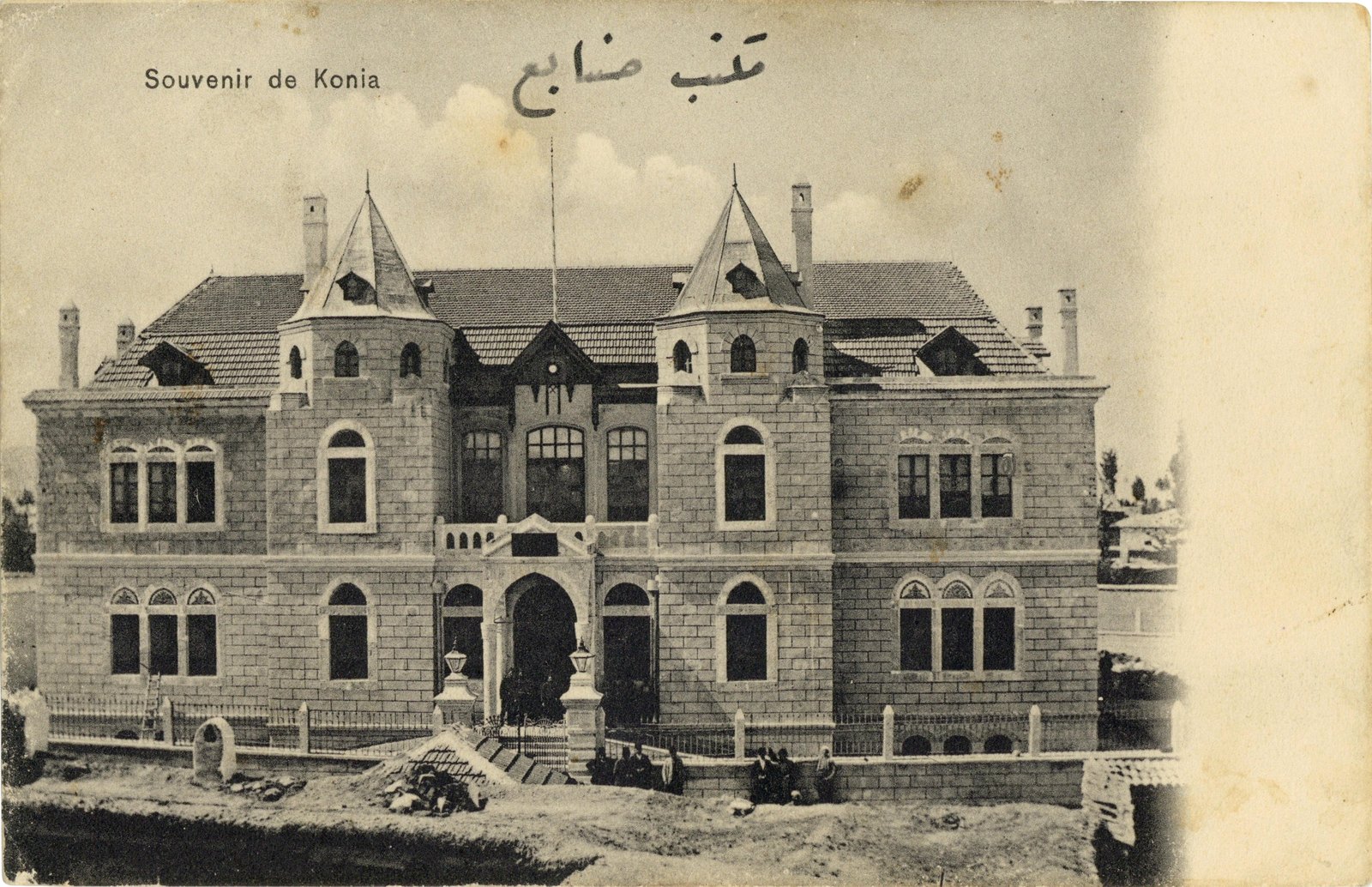
The Konya Industry School
A 'Souvenir de Konia' postcard showing the Konya Industry School, opened in 1901. The building today houses the provincial council.
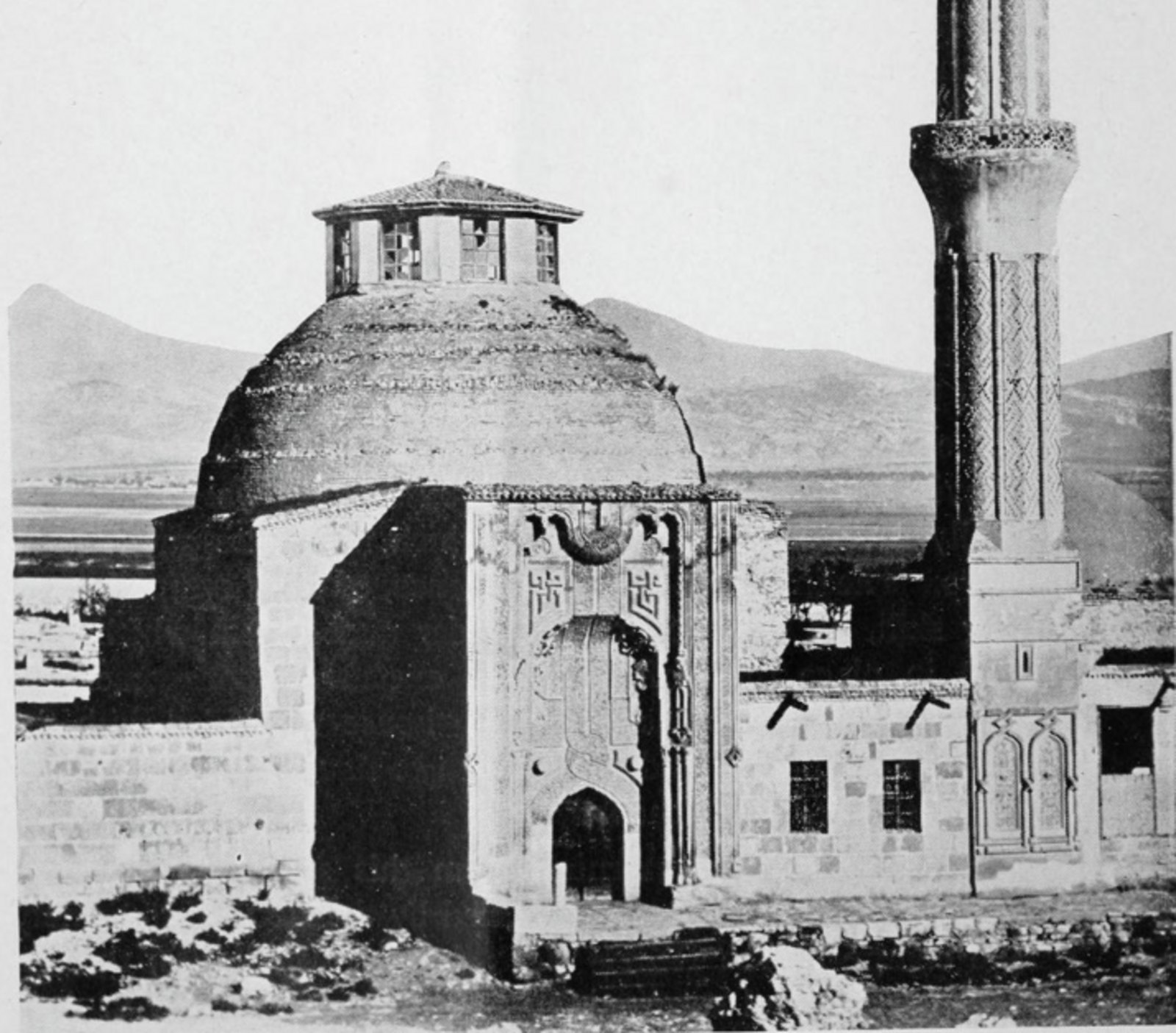
The İnce Minaret in 1913
The dome and minaret of the İnce Minareli Medrese in 1913. The upper part of the minaret had been destroyed by lightning in 1901; the photograph records that…

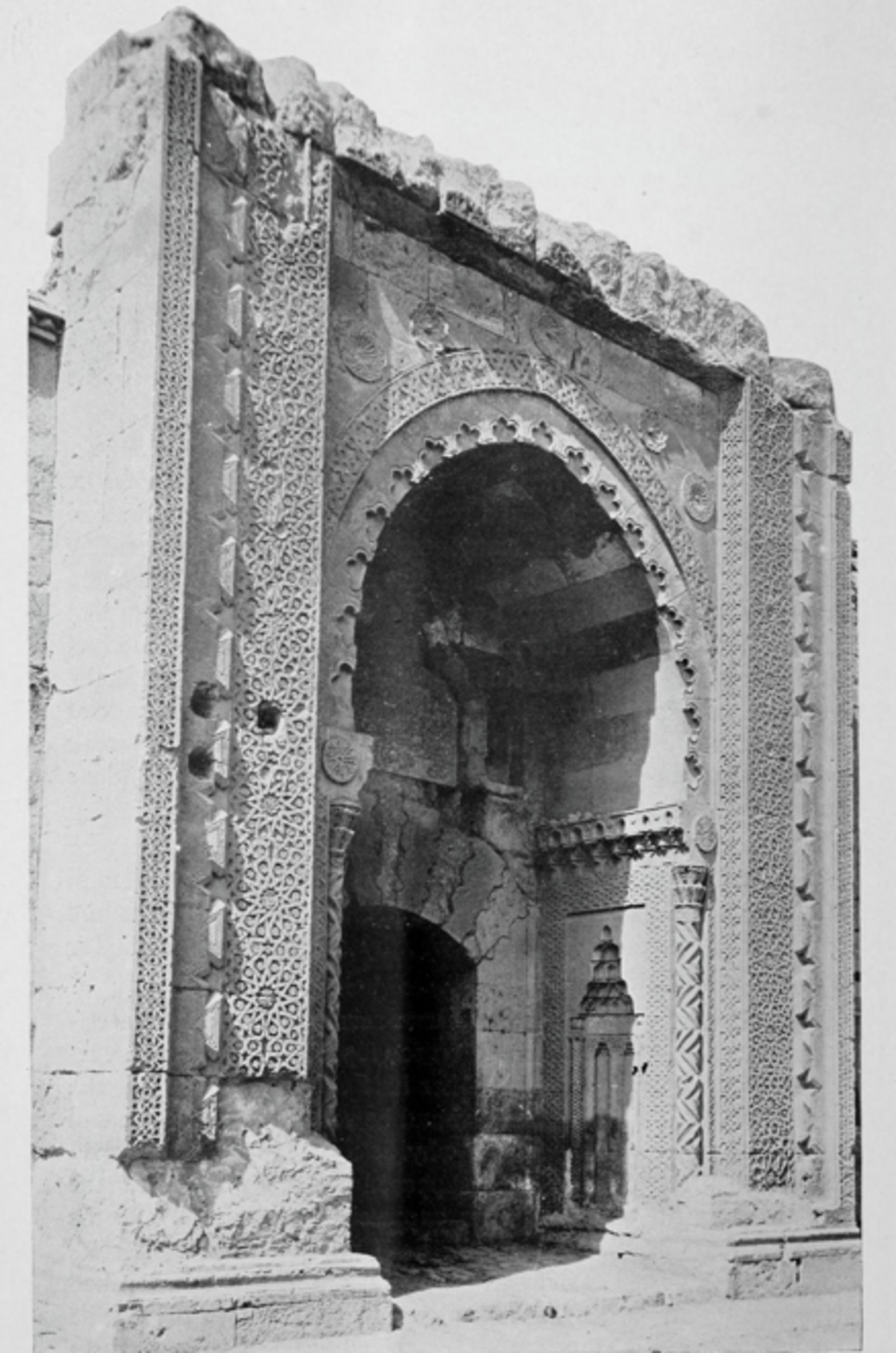
Portal of the Sırçalı Medrese
The crown portal of the Sırçalı Medrese, built in 1243, photographed in 1913. It owes its name to the turquoise tiles that line its interior.

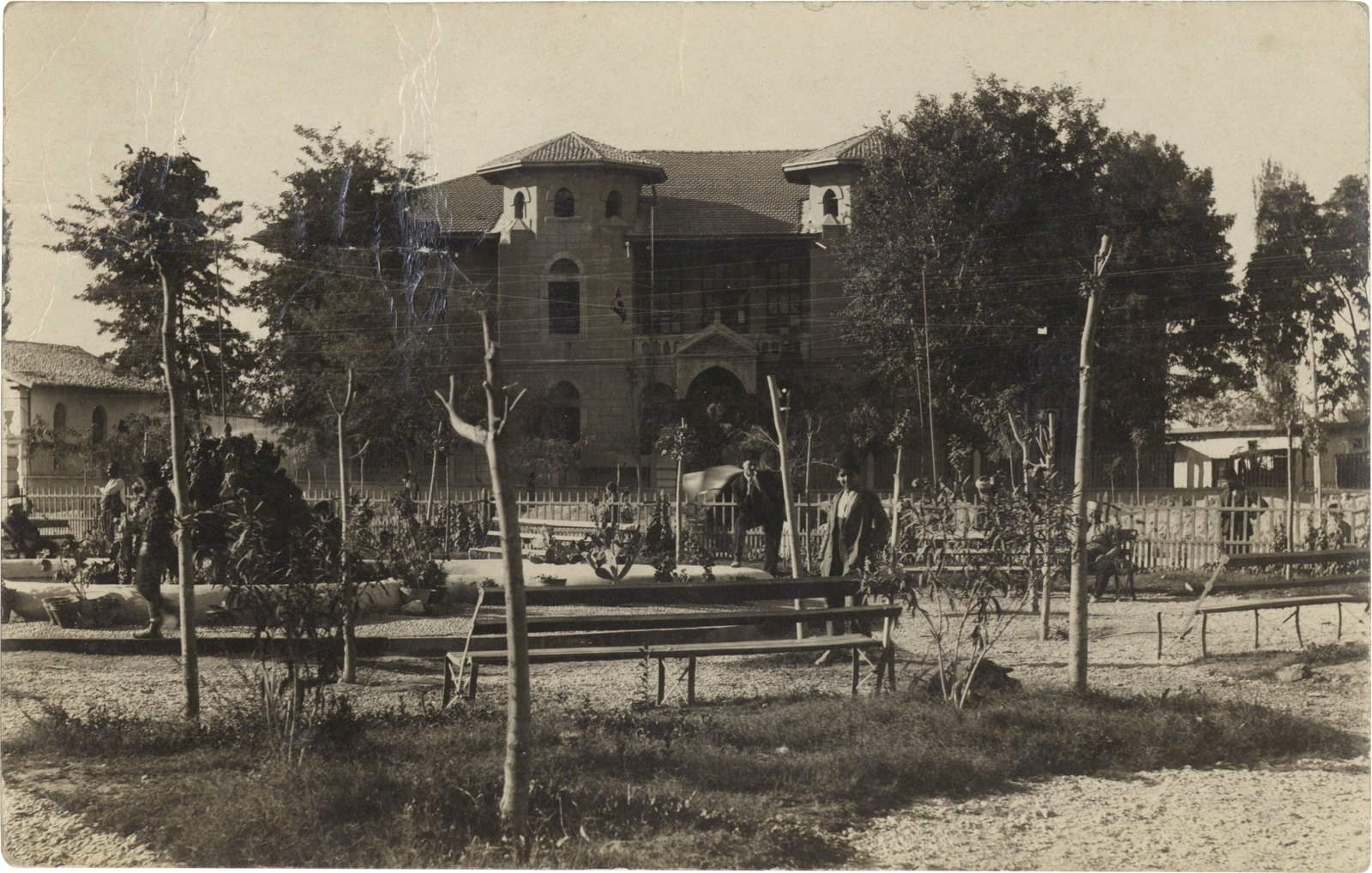
The Industry School building and its garden
A photocard taken from the garden of the Konya Industry School, with newly planted trees and an unpaved road.
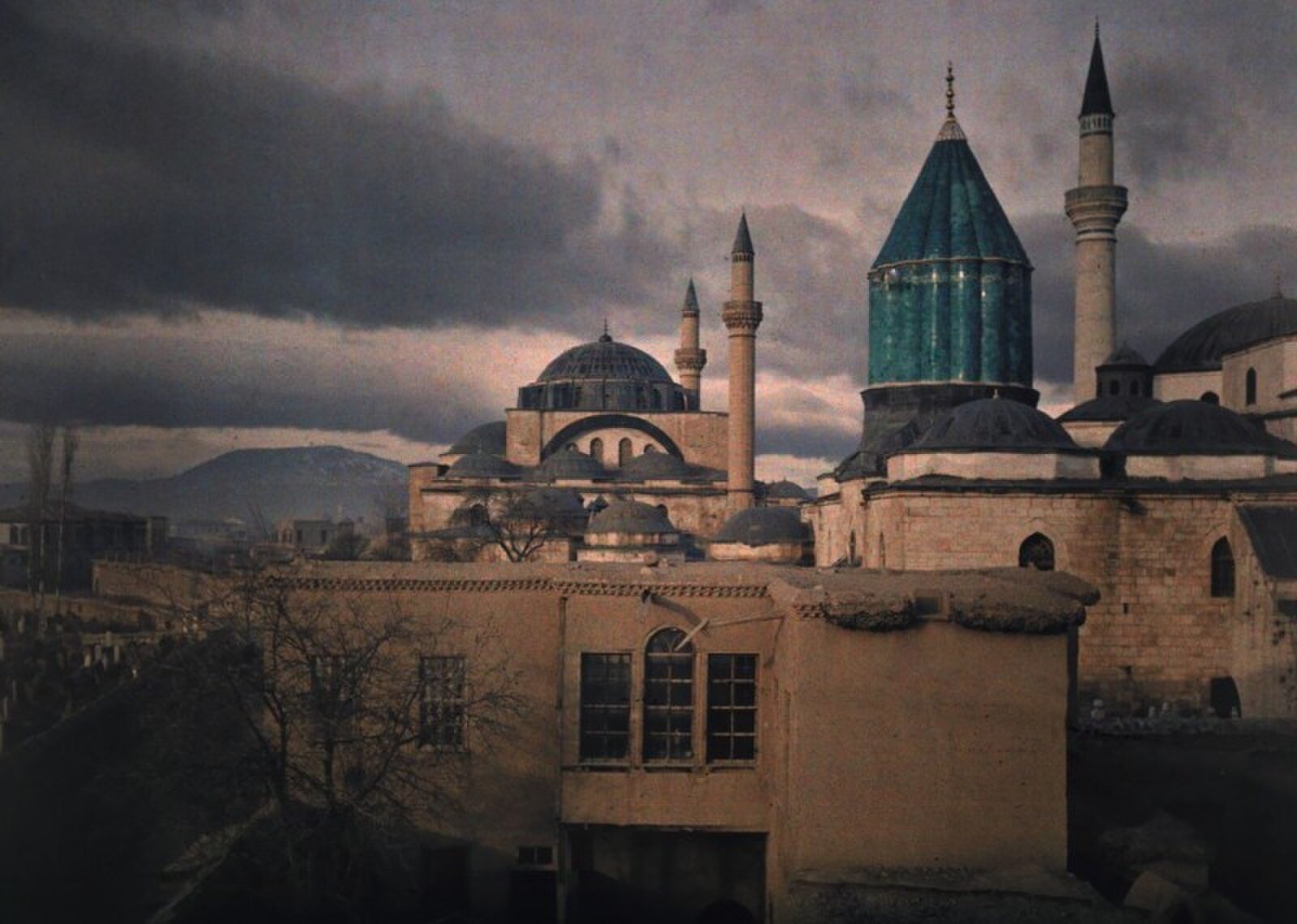
The Mevlâna Lodge
The Mevlâna Lodge and its Green Dome in 1923. The lodge was turned into a museum in 1926.

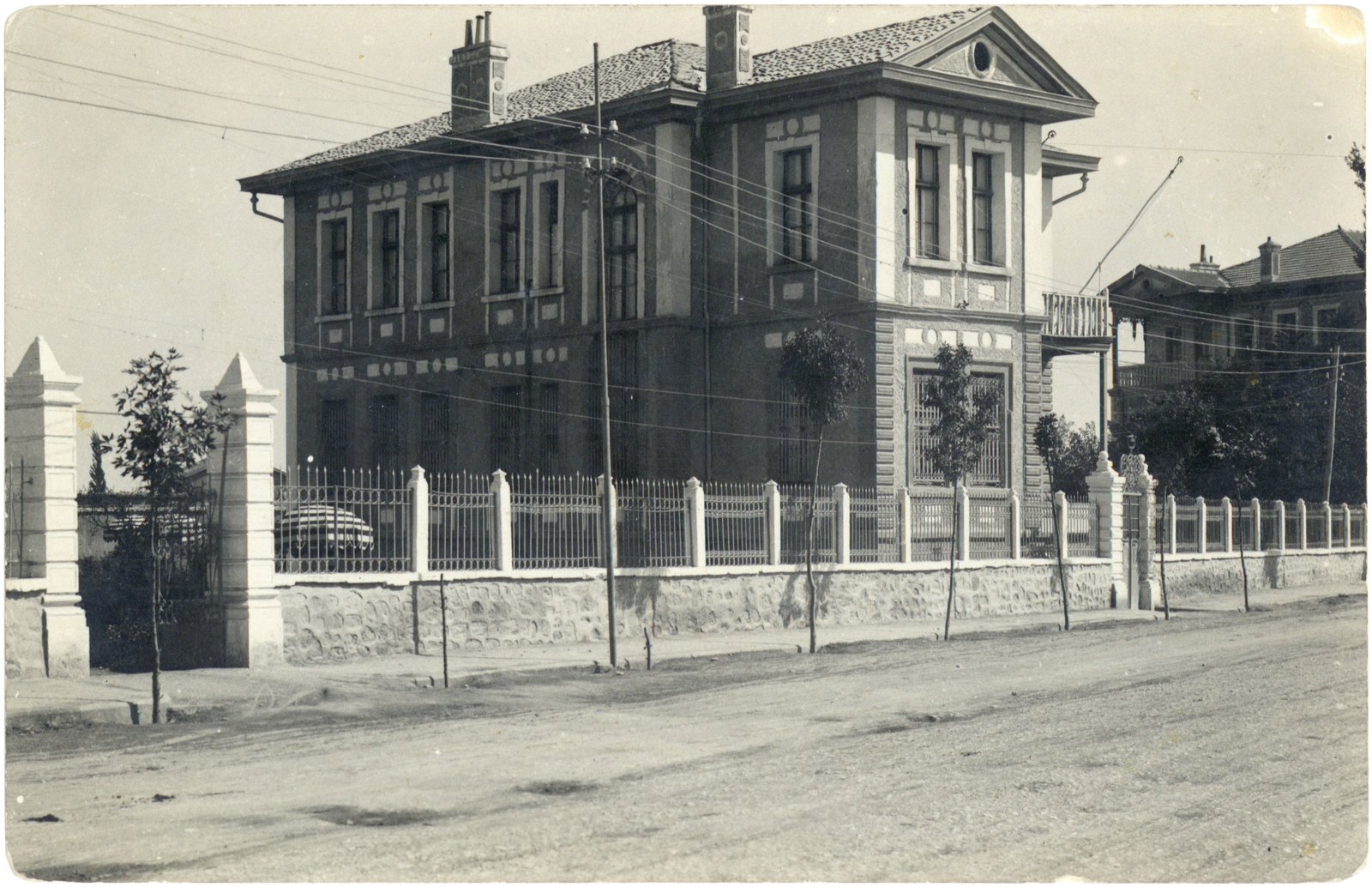
The Gazi Kiosk
The caption on the postcard reads: 'the kiosk Konya presented to the Gazi'. The building is the Atatürk House Museum today.
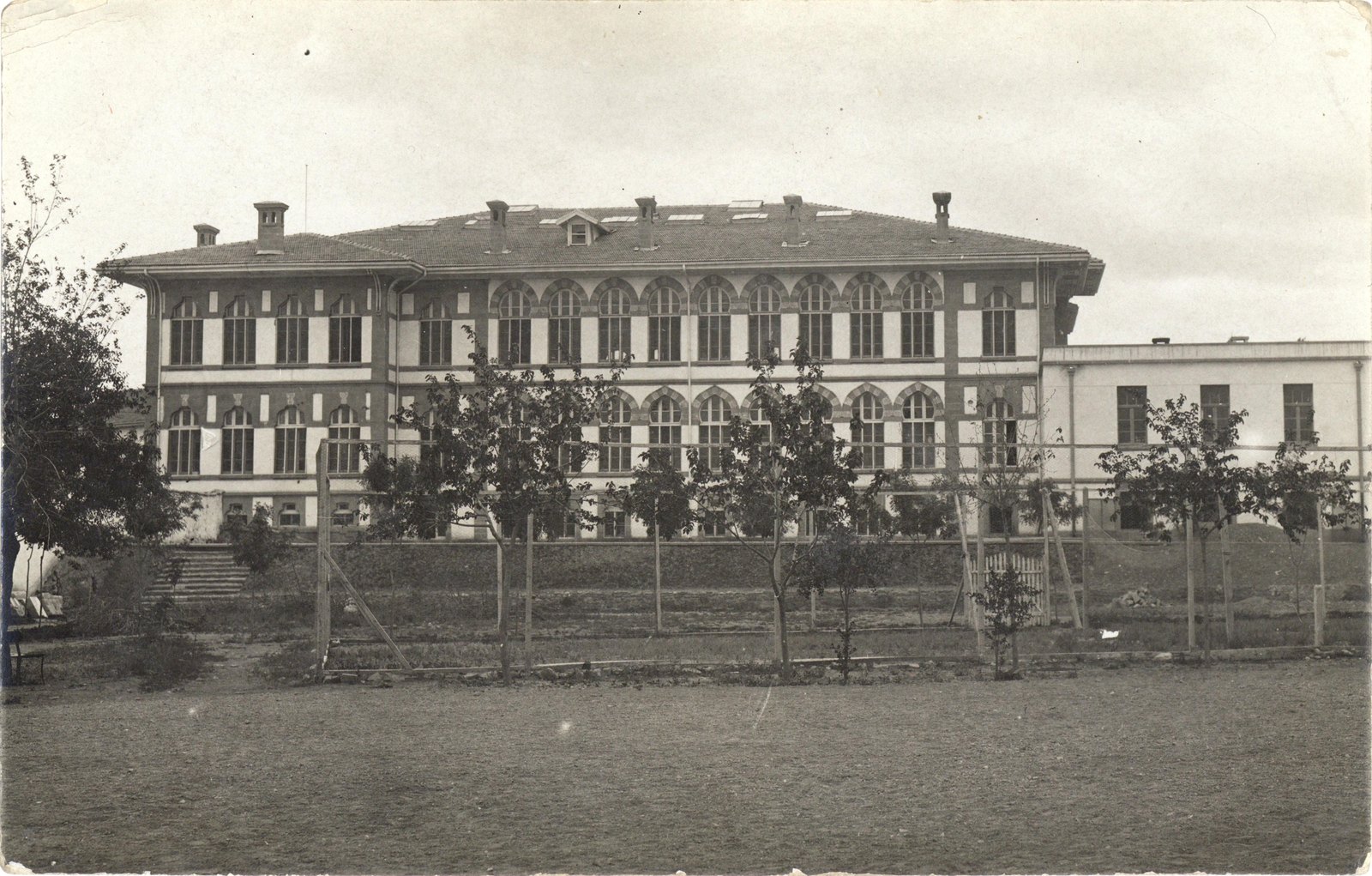
The Teachers' Training School for Girls
The main building of the Konya Teachers' Training School for Girls; it now serves as the rectorate of Selçuk University.
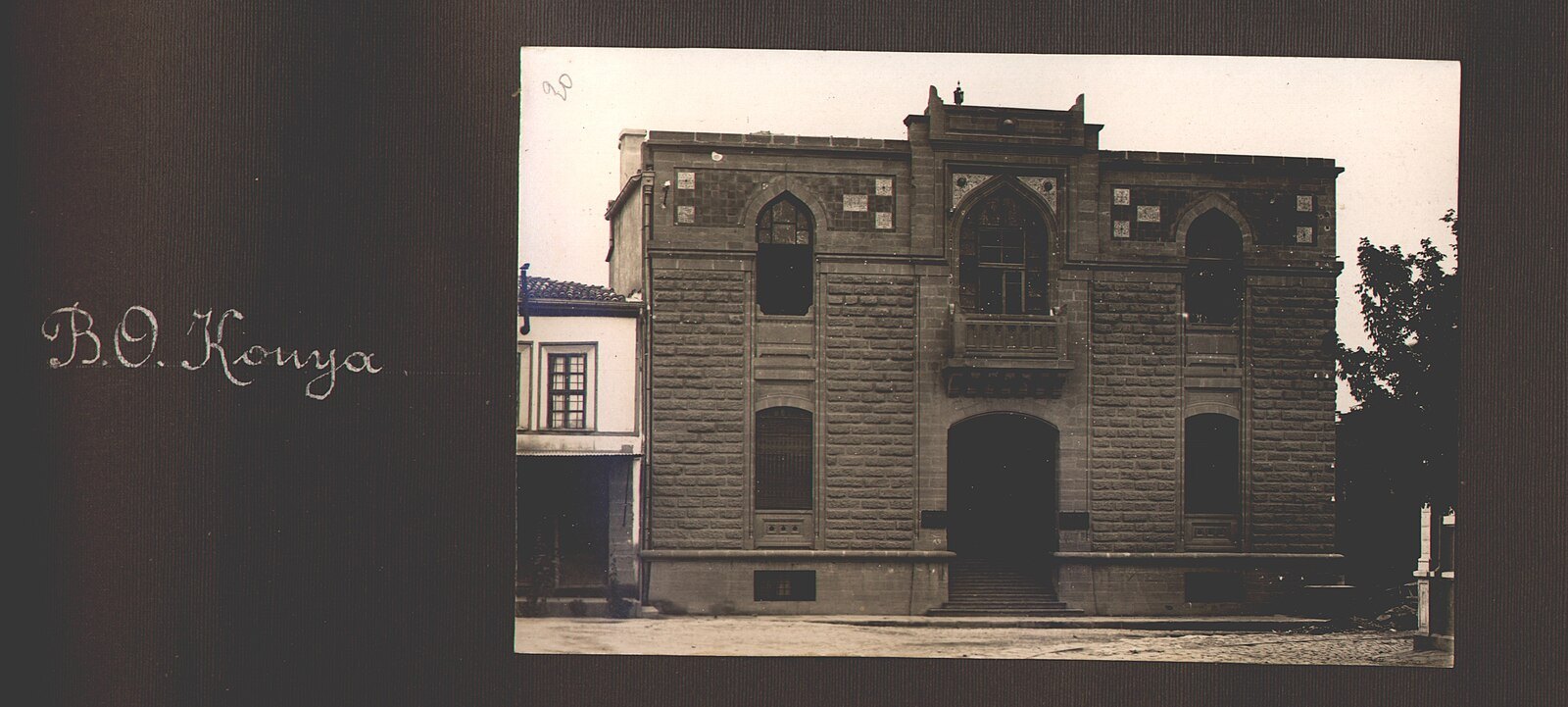
Ottoman Bank, Konya branch
The Konya branch of the Ottoman Bank in 1930, standing in the commercial centre of the city in the early years of the Republic.

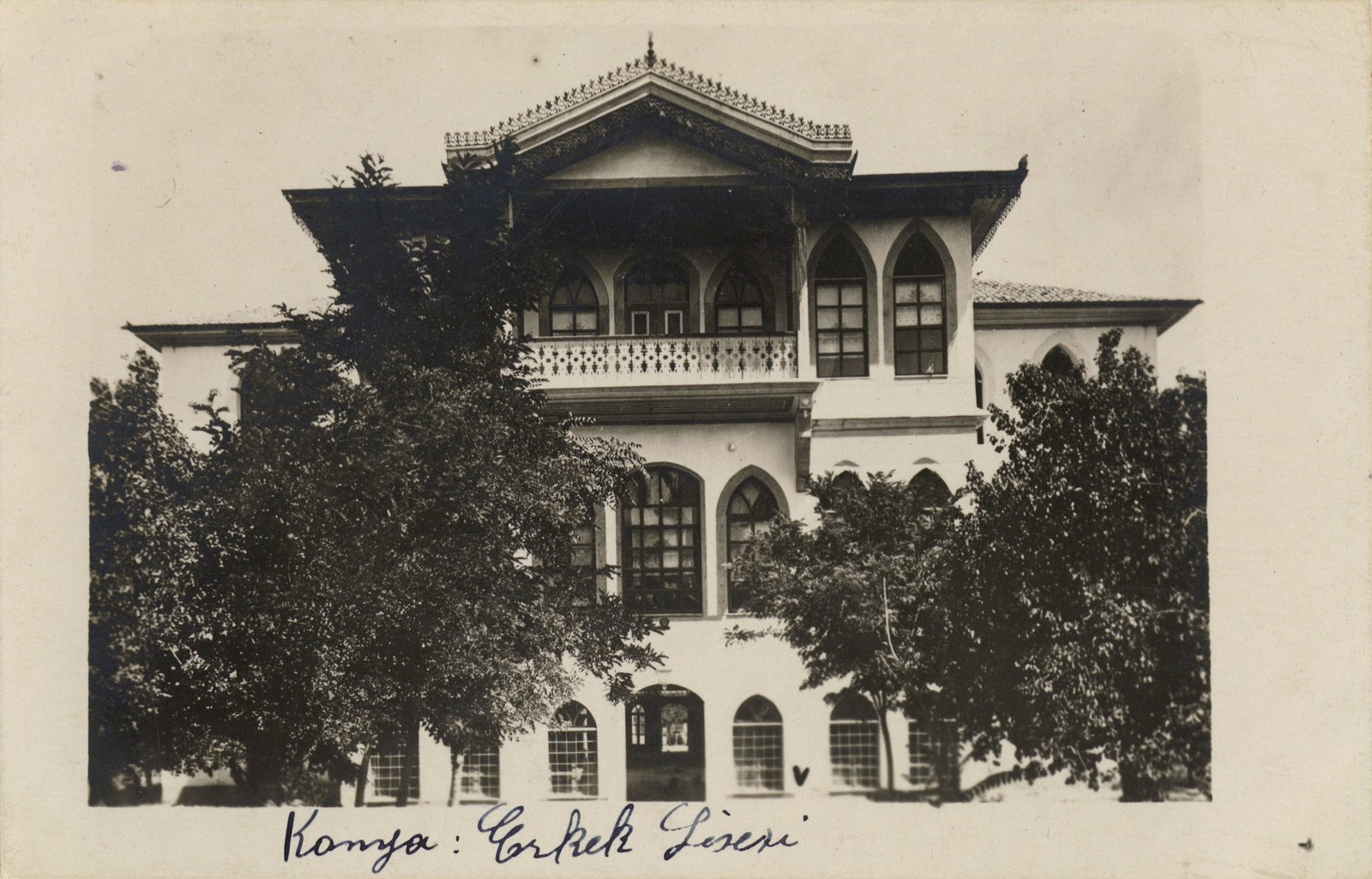
Konya Boys' High School
The main entrance of the Konya Boys' High School with its wooden bay; the card is hand-captioned 'Konya: Erkek Lisesi'.
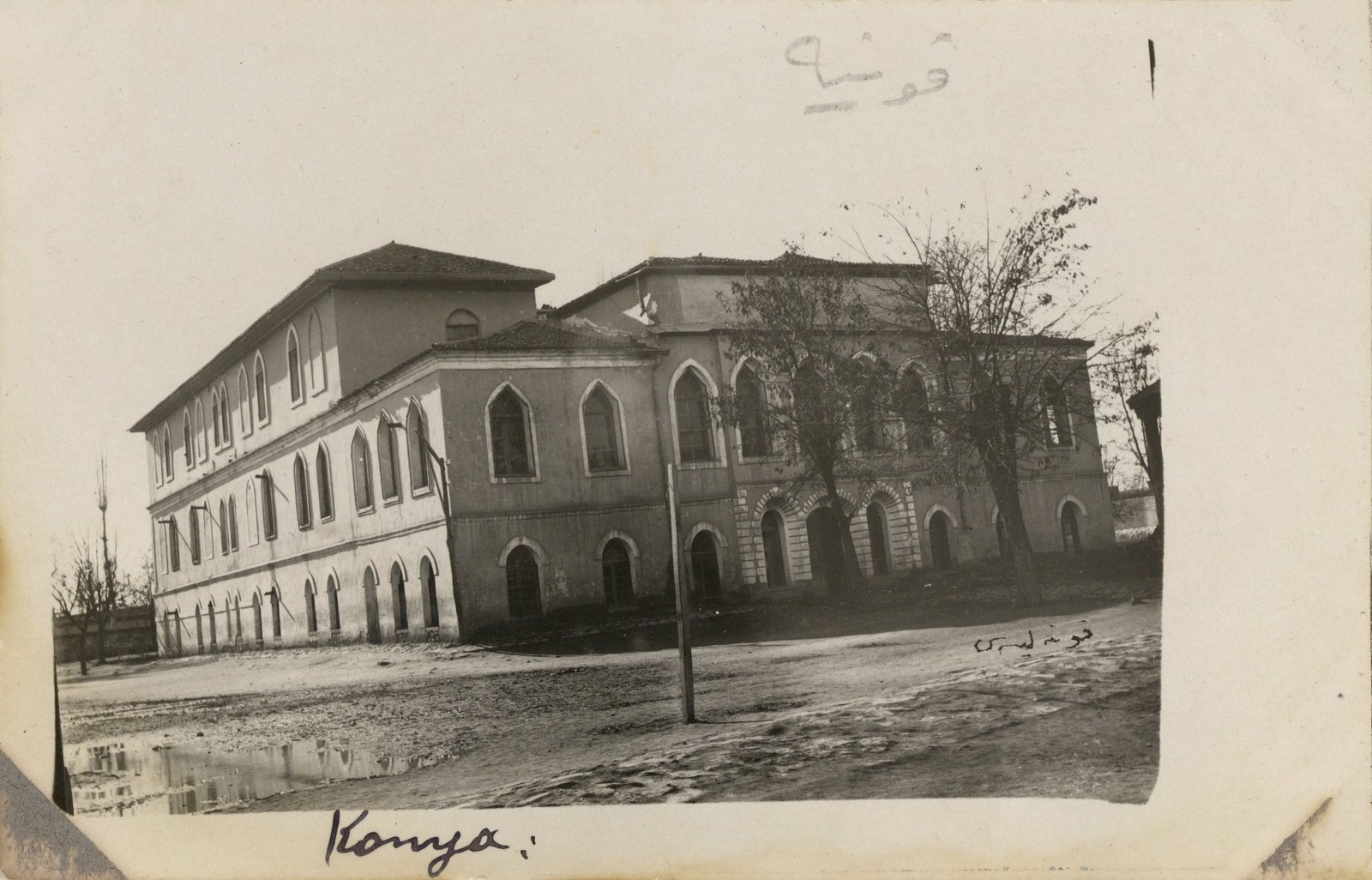
Konya High School
The corner façade of Konya High School; the card carries the word 'Konya' in both Ottoman and Latin script.
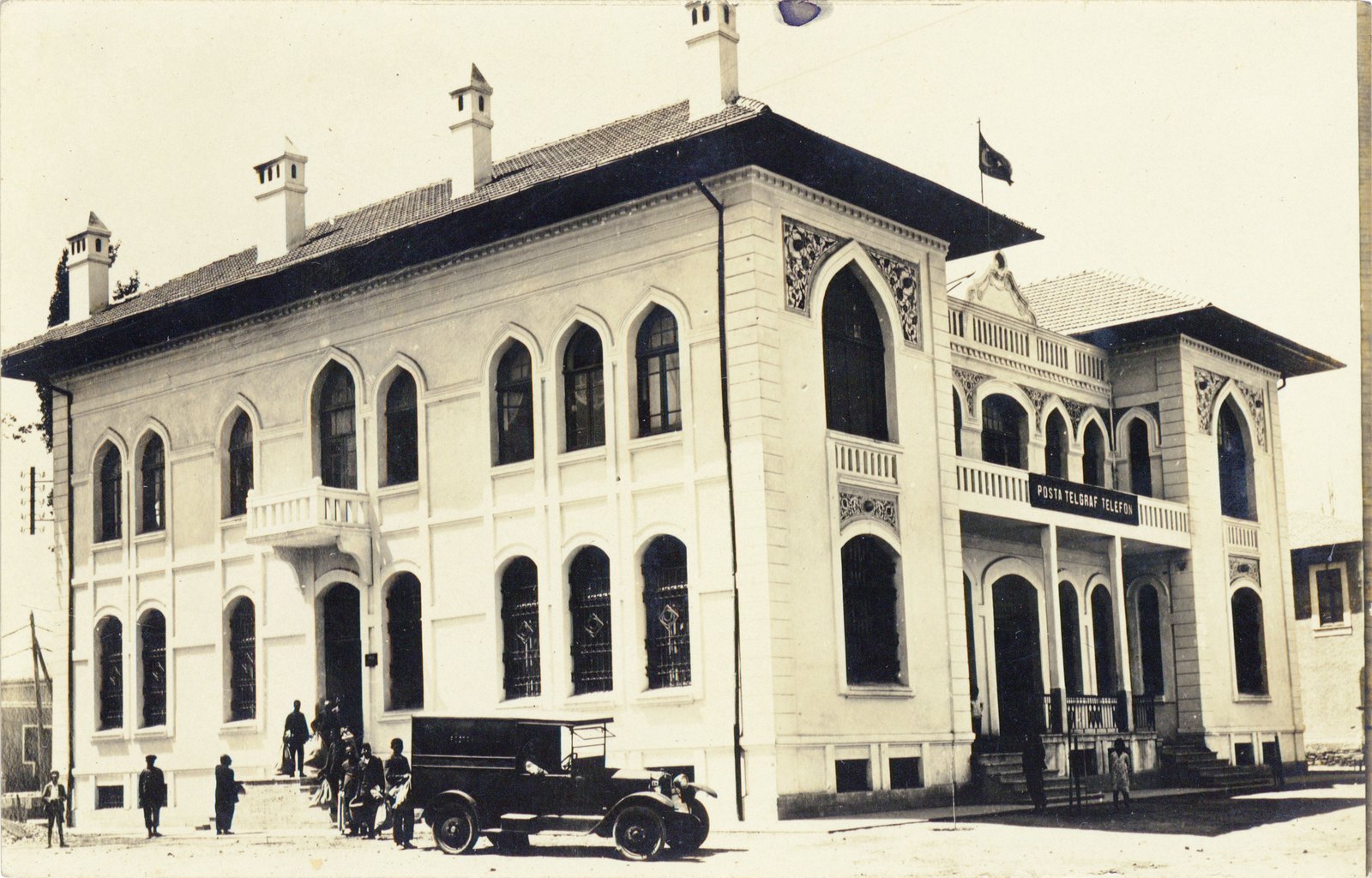
The Konya Post, Telephone and Telegraph building
The Konya PTT building with a period automobile in front. It reflects the 'First National Architecture' style of the Republic's first decades.
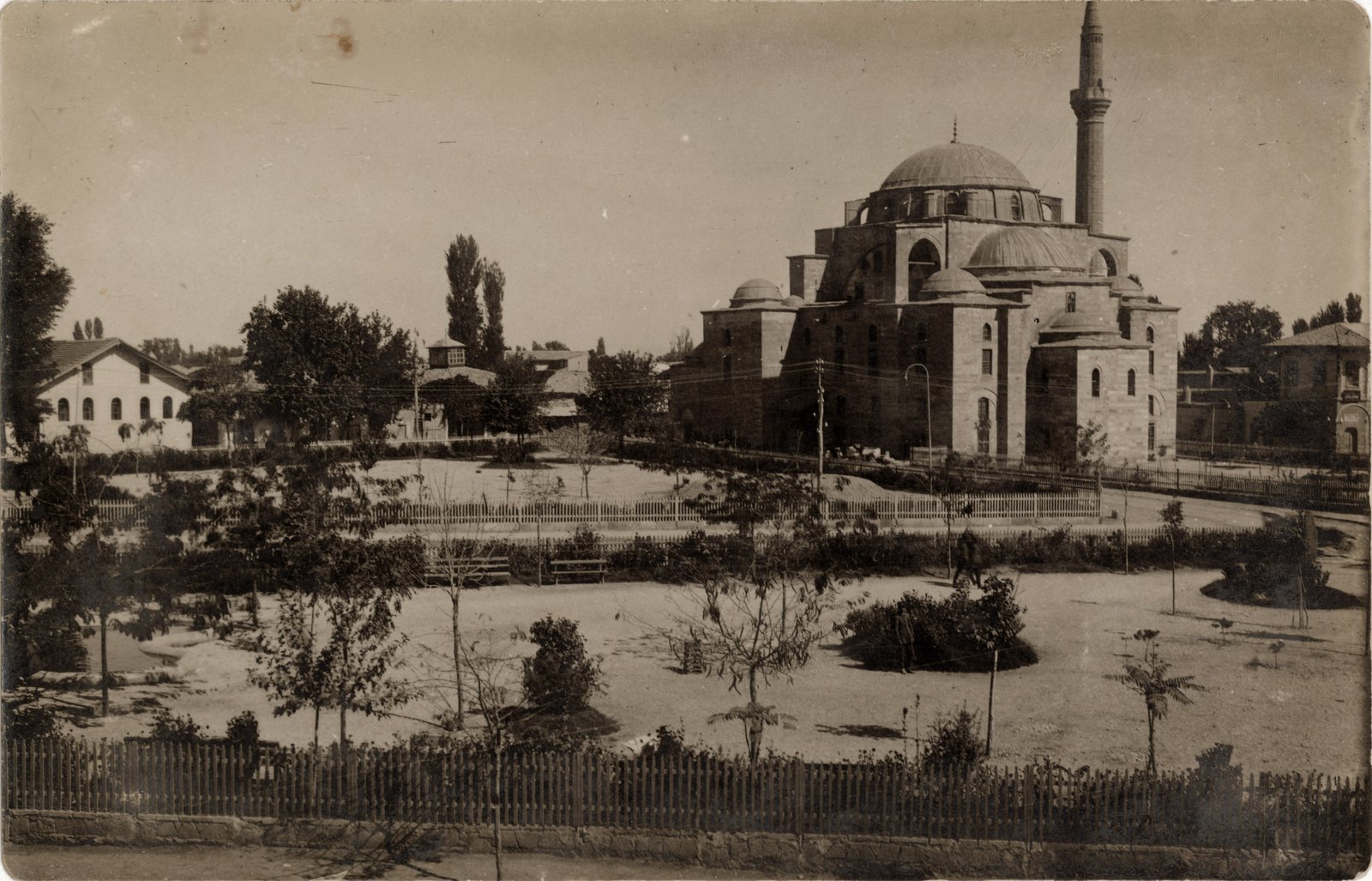
The Şerafettin Mosque
The Şerafettin Mosque, which took its present form in the 16th century, and the newly laid-out square in front of it, its trees still saplings.
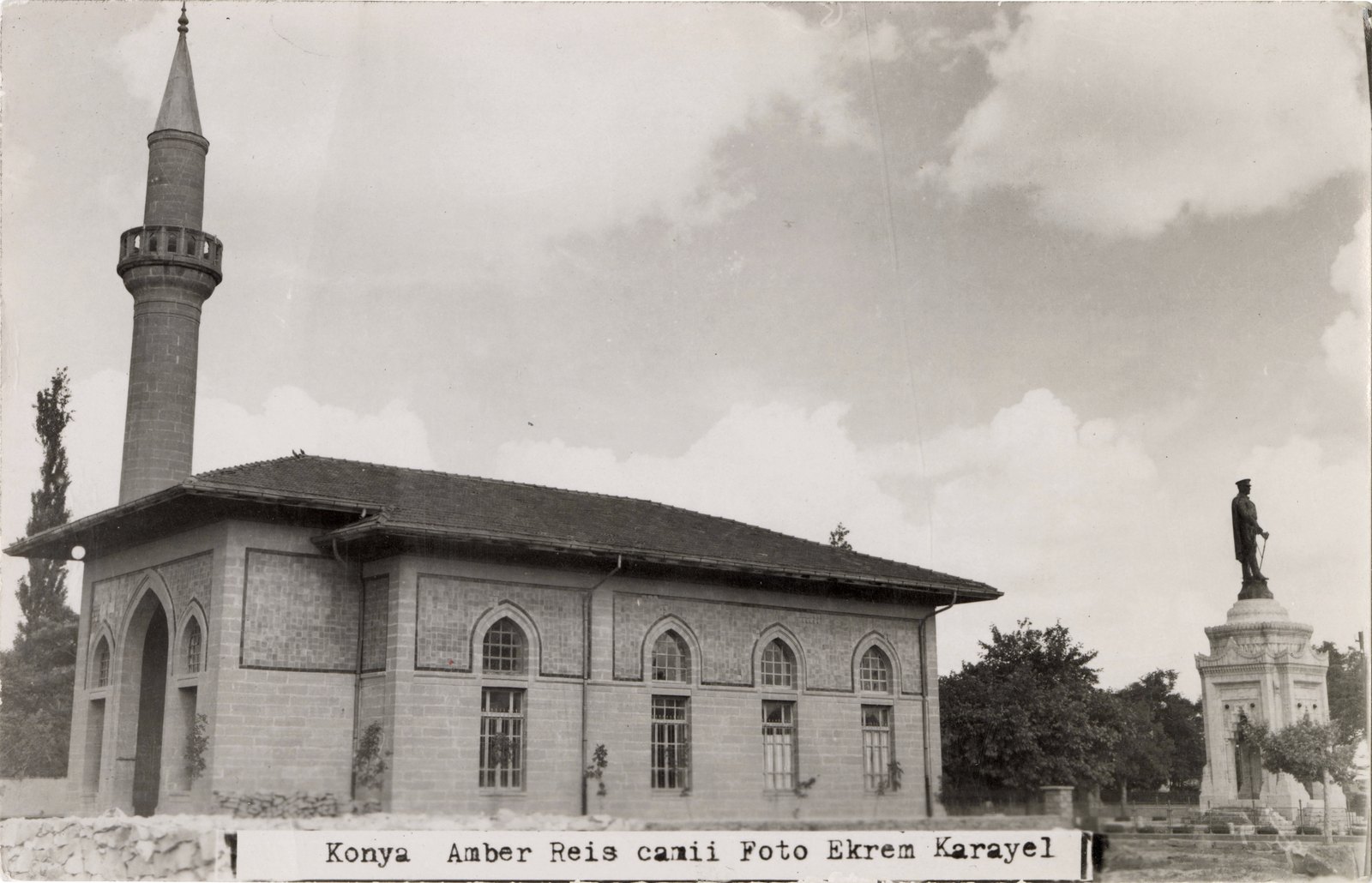
The Amber Reis Mosque
The Amber Reis Mosque with a bust of Atatürk beside it; the card is signed 'Foto Ekrem Karayel'.
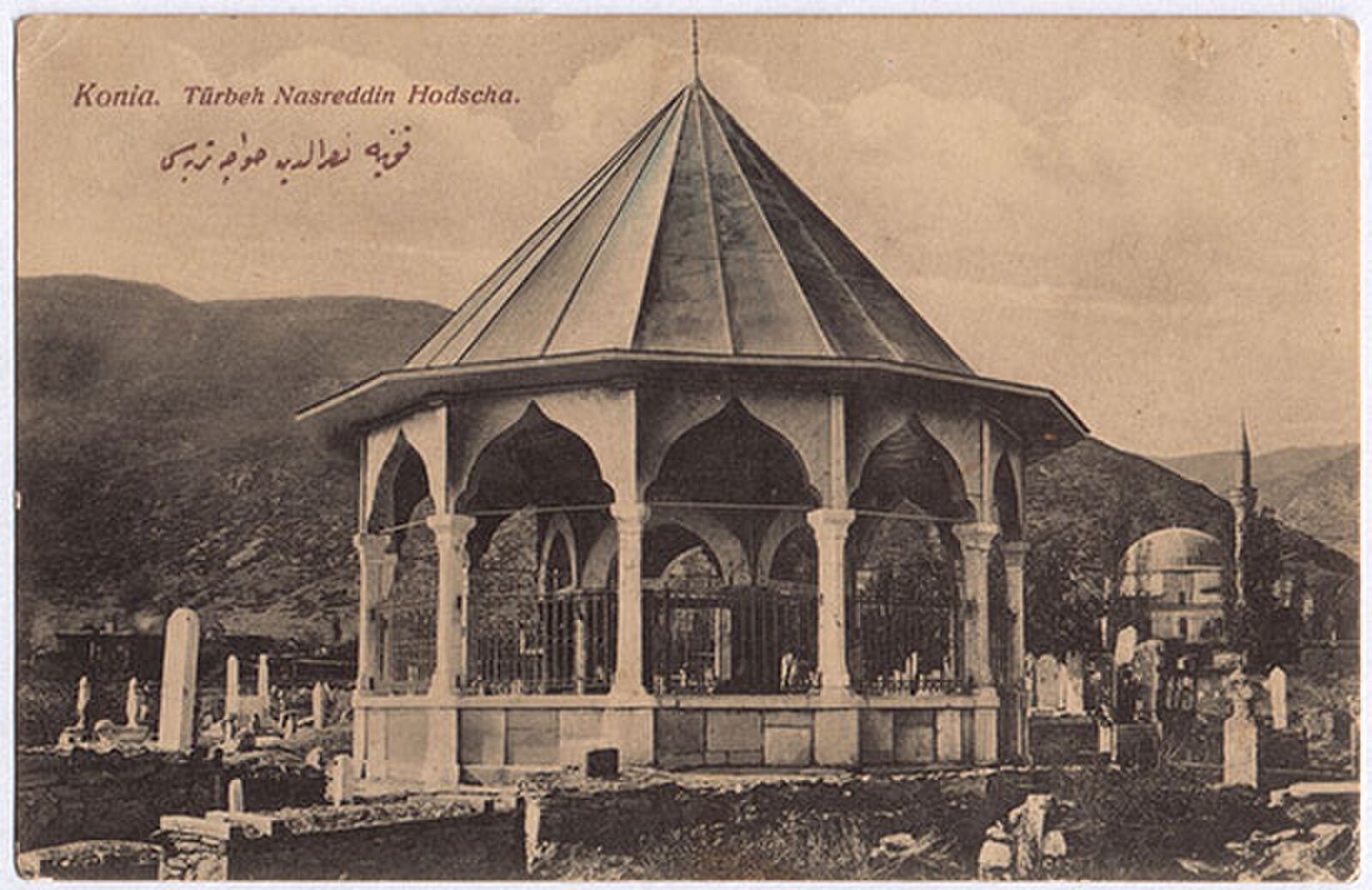
The tomb of Nasreddin Hodja
The open-domed tomb of Nasreddin Hodja at Akşehir, from an Ottoman-era postcard published by Boghos Tatéossian.

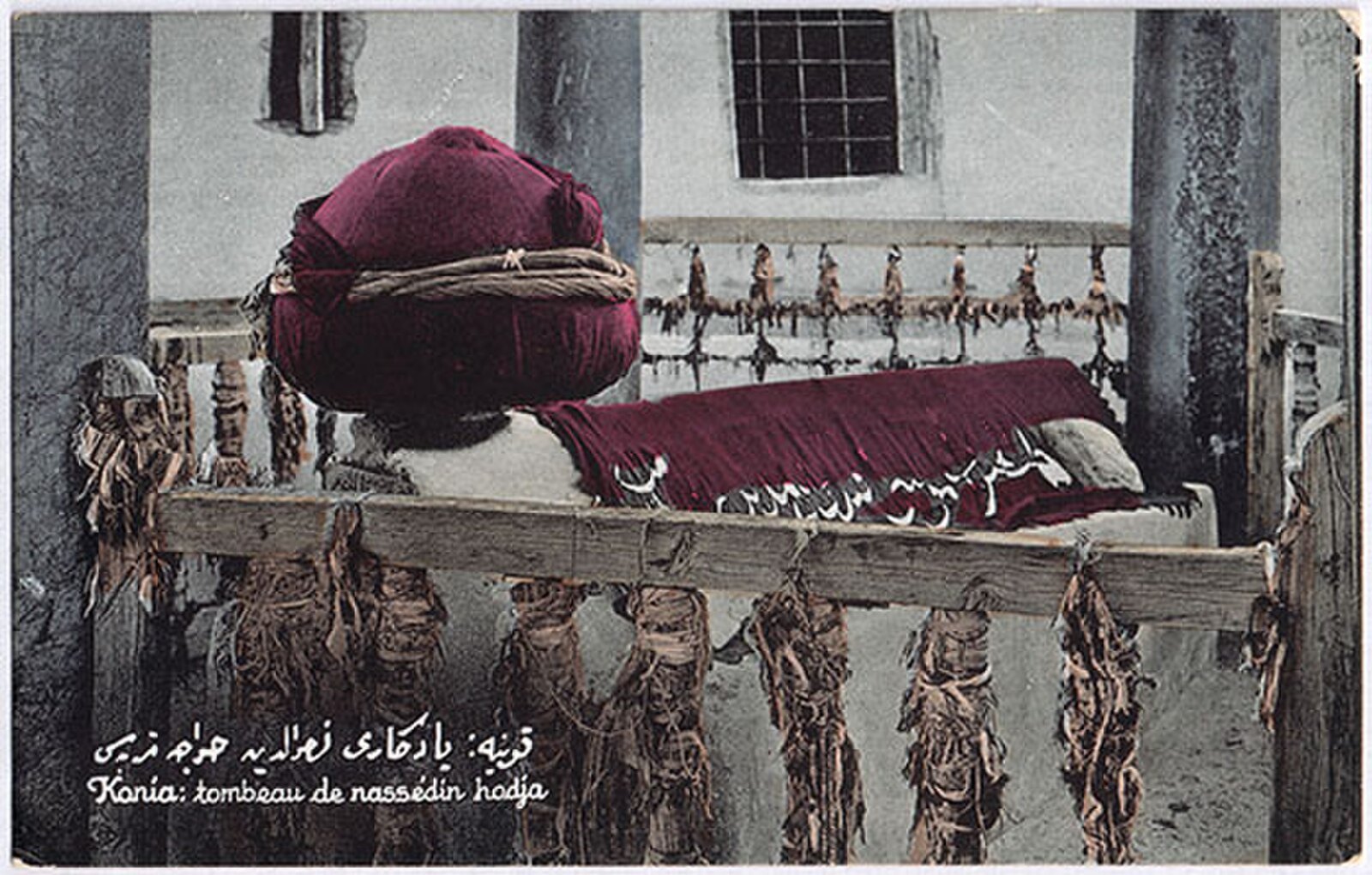
Souvenir of the tomb of Nasreddin Hodja
A second postcard from the same series: the cenotaph of the tomb and its covers.

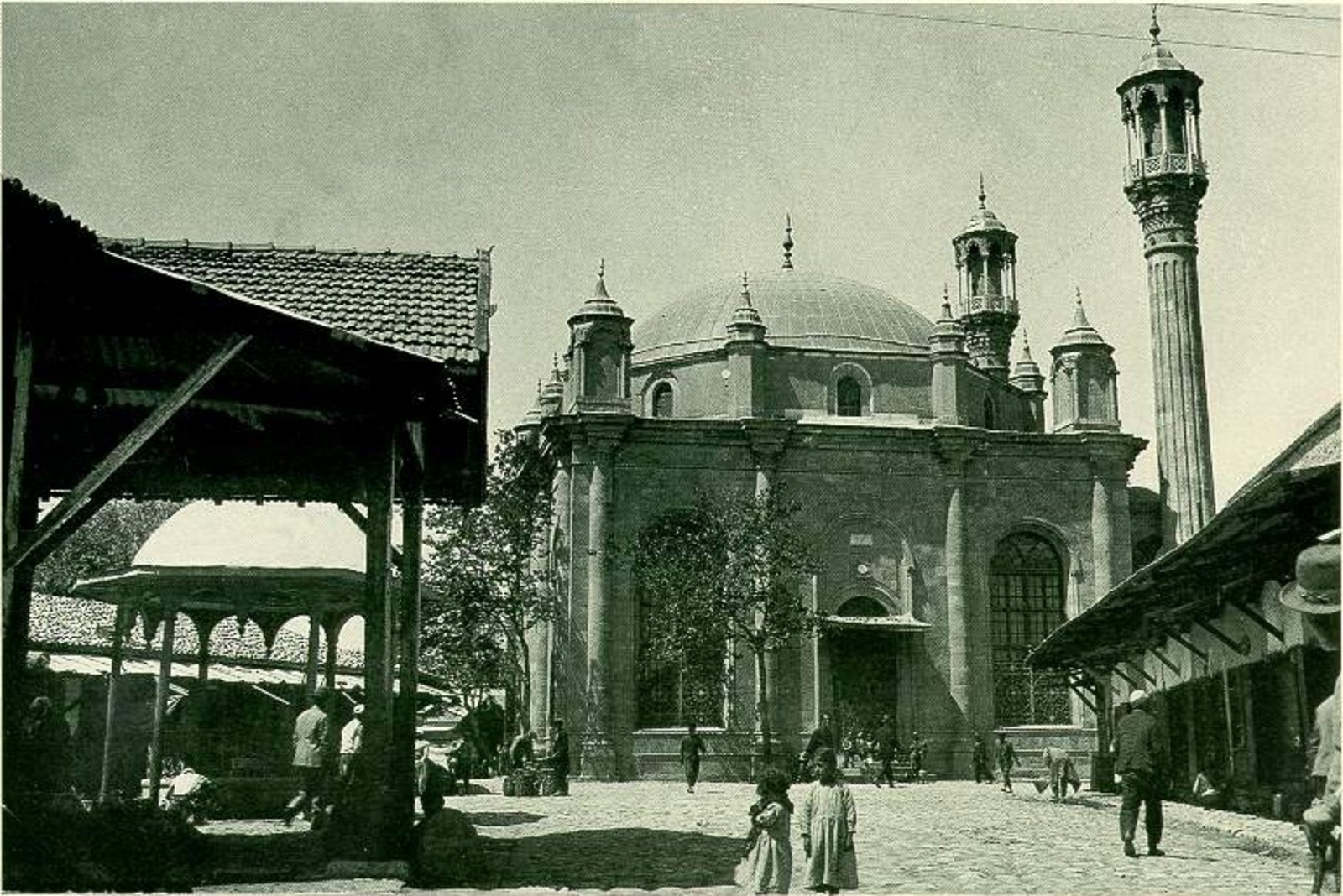
The Aziziye Mosque
The Aziziye Mosque in the middle of the Konya bazaar in earlier days, with its baroque minarets and the shops around it.

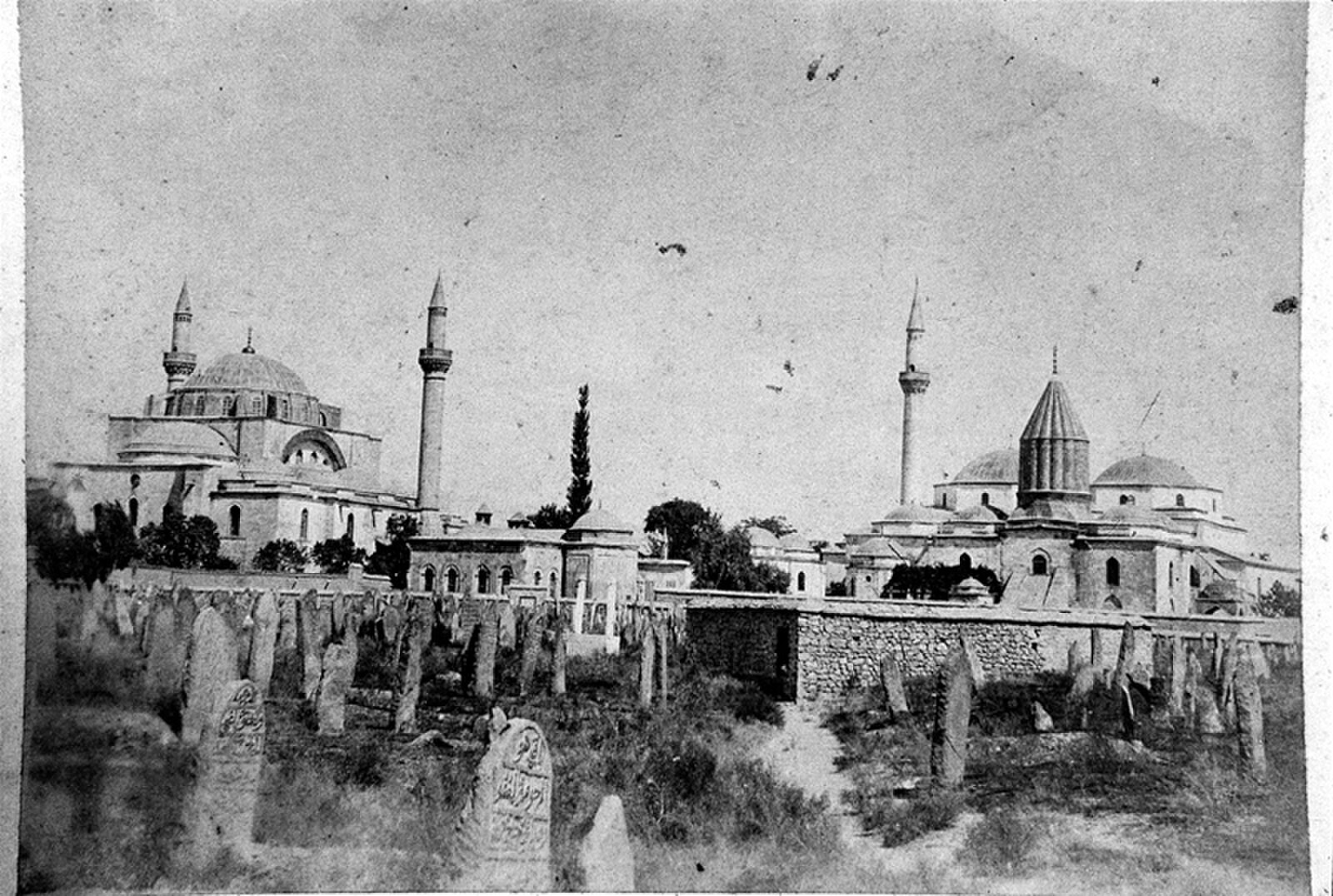
Üçler cemetery with the Mevlâna Lodge and Selimiye Mosque behind
Looking from the Üçler cemetery towards the Mevlâna mausoleum and the Sultan Selim Mosque — one of Konya's most repeated views, as it was at the turn of the…
