
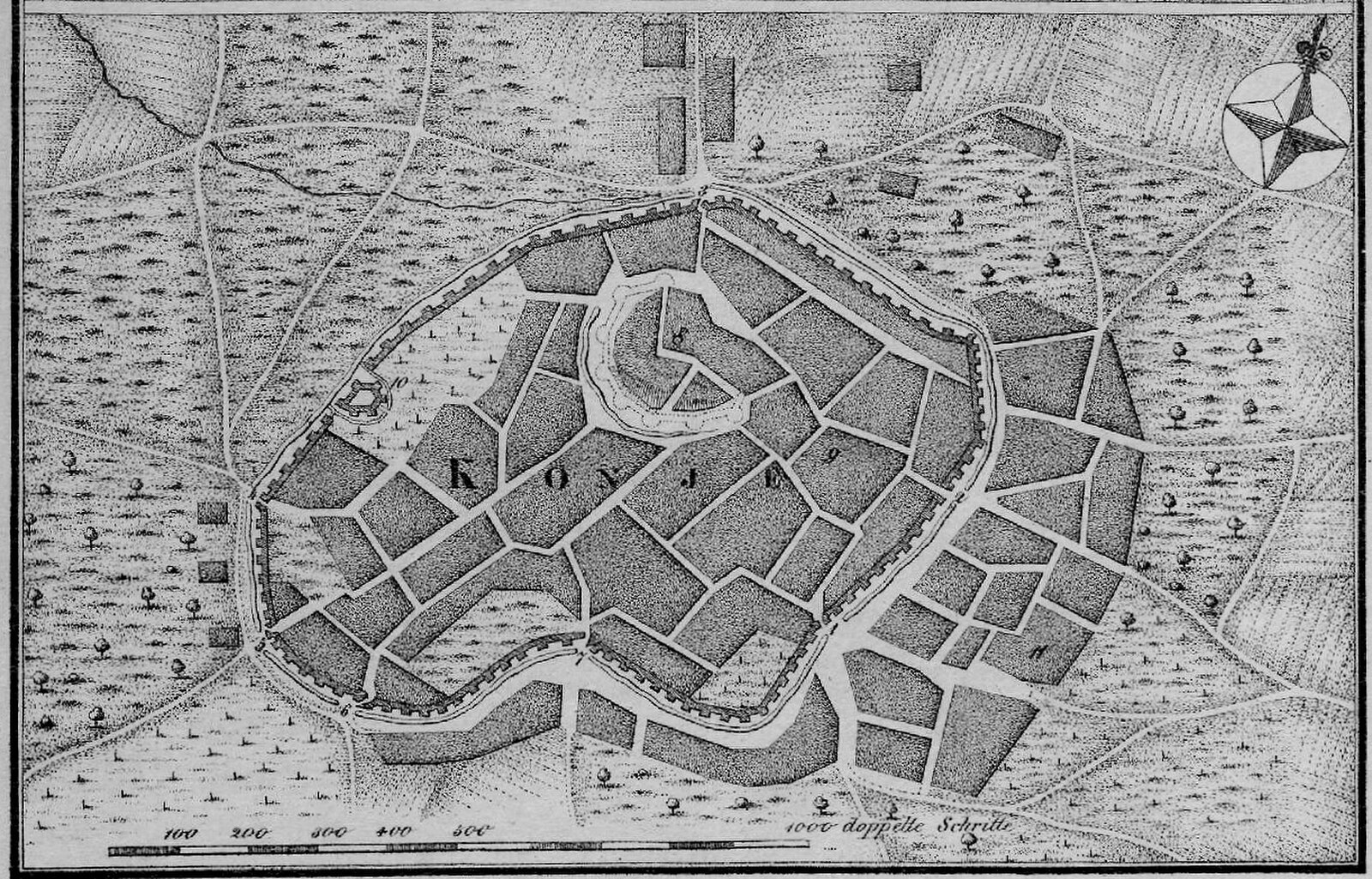
Plan of Konya by Carsten Niebuhr
Plan of Konya drawn in 1766 by the Danish traveller Carsten Niebuhr — the earliest detailed plan showing the city walls, the citadel on Alâeddin Hill and the…

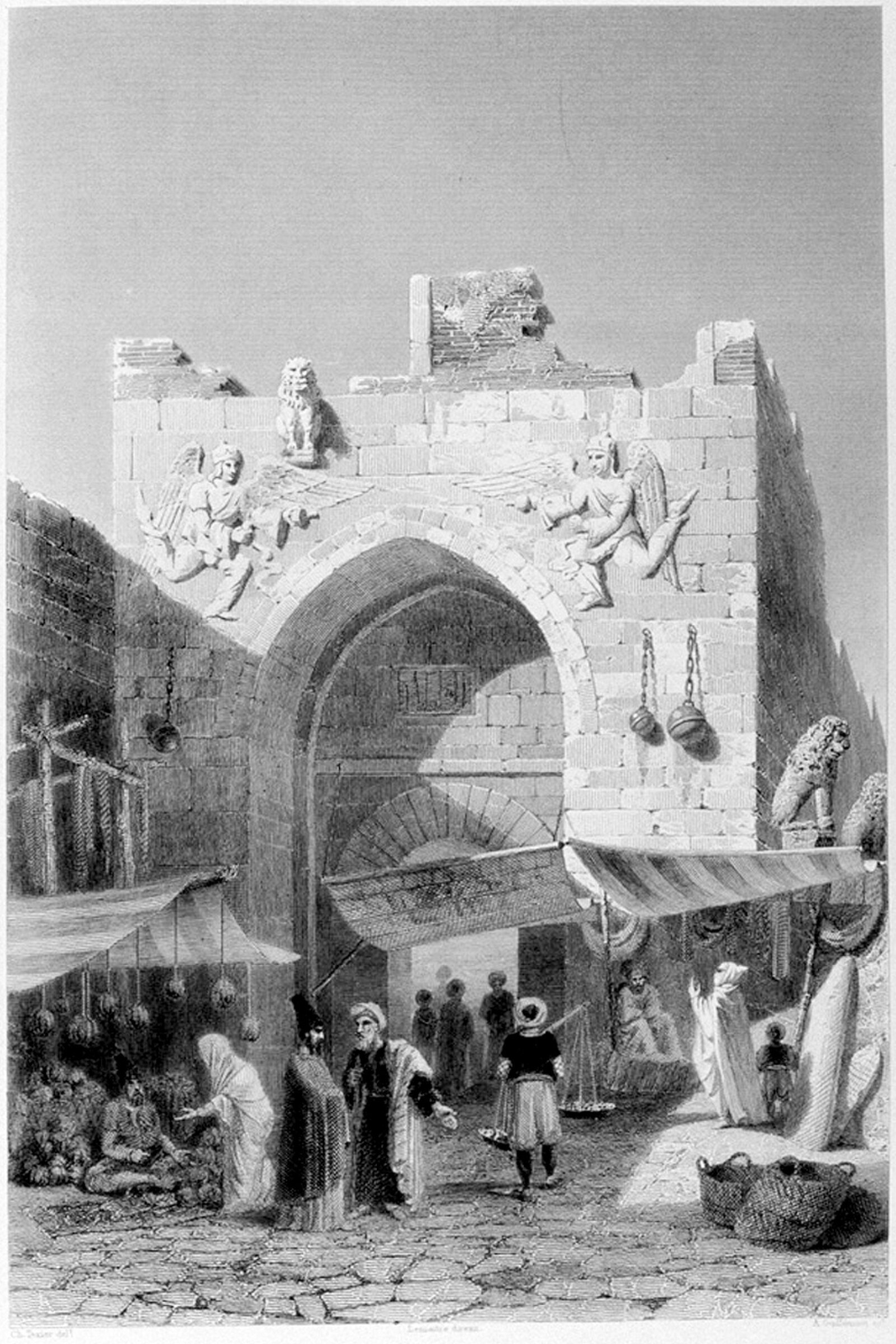
The Bazaar Gate of Konya
The bazaar gate of Konya as drawn by the French archaeologist Charles Texier between 1833 and 1837, with Seljuk spolia reliefs above the arch and daily life…

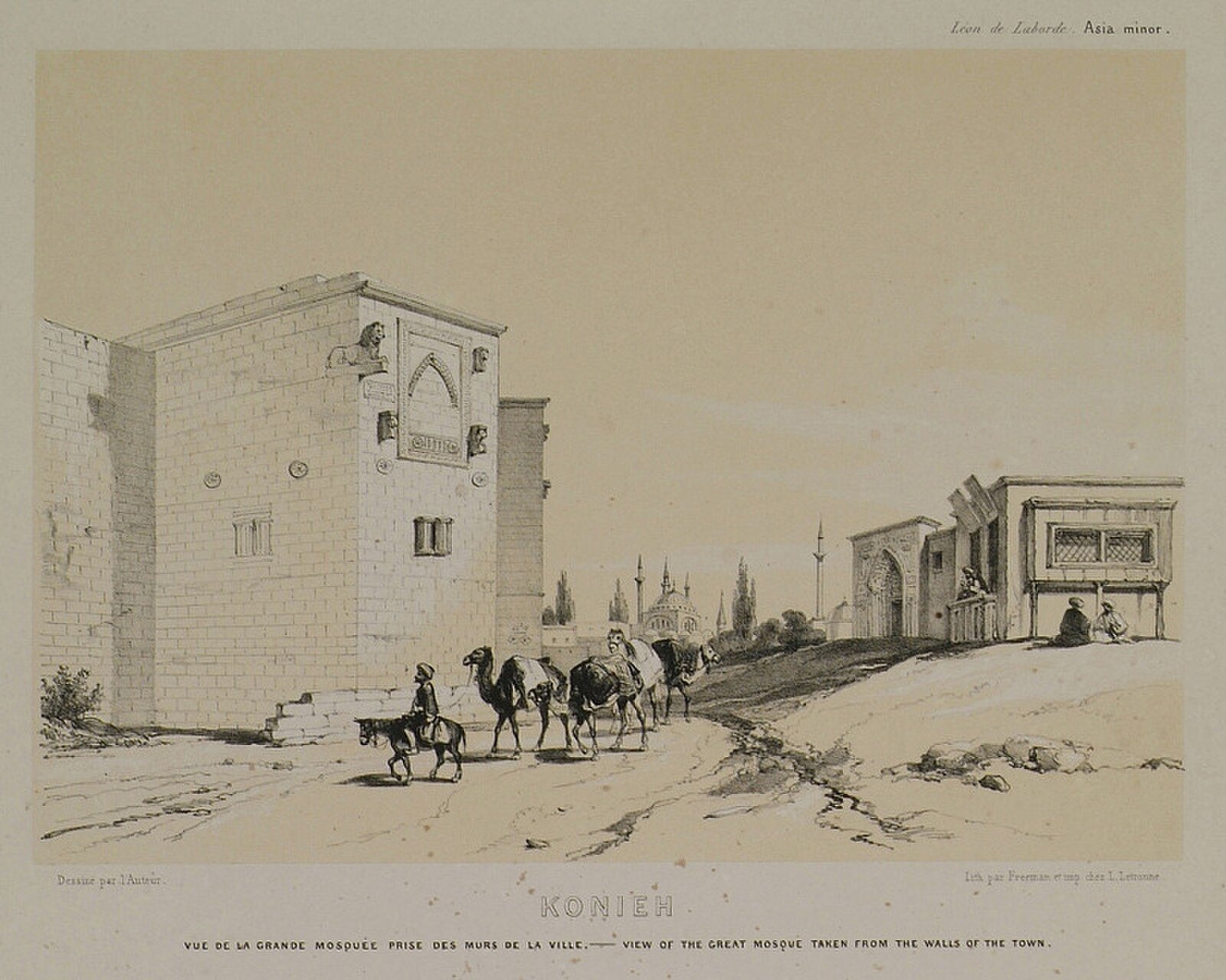
The Great Mosque seen from the city walls
The Alâeddin Mosque (1220) on Alâeddin Hill seen from the city walls — one of the earliest images documenting both the mosque and the ruins of the Seljuk…

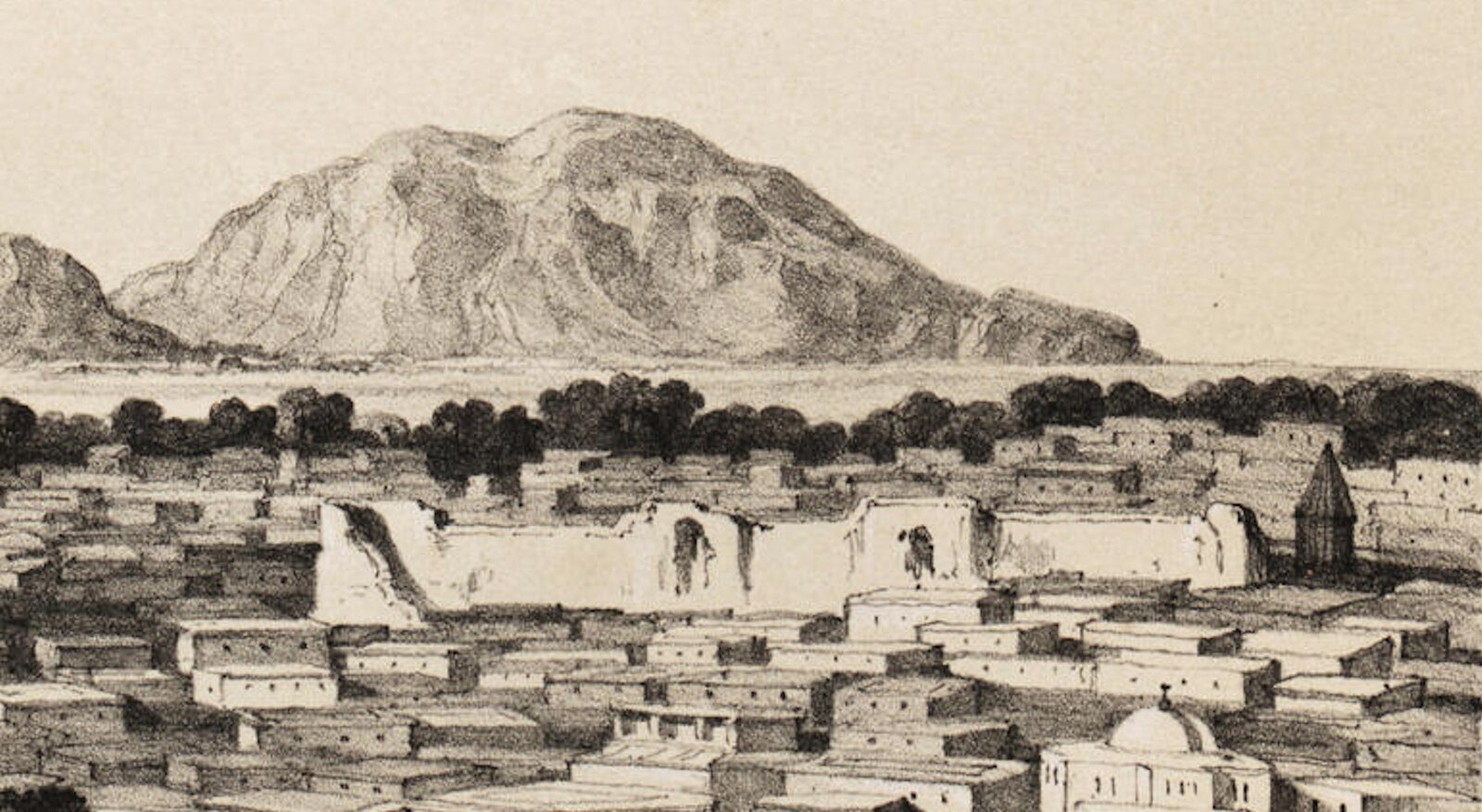
Konya citadel from the east
The citadel of Konya seen from the east in 1838. It was demolished at the end of the 19th century; today Alâeddin Hill park stands in its place.

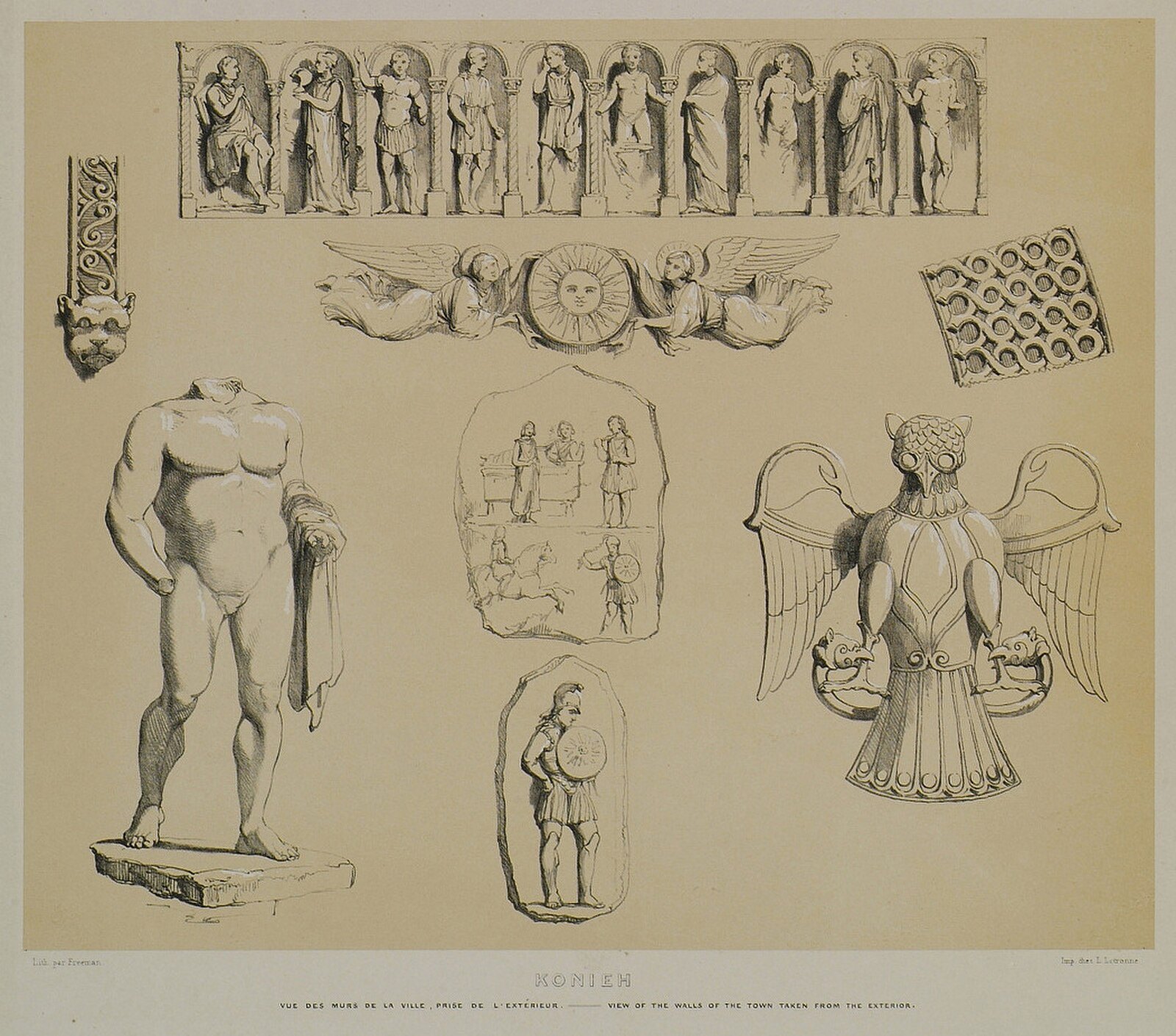
The walls of Konya seen from outside
From Léon de Laborde's 'Voyage de l'Asie Mineure' (Paris, 1838): the city walls of Konya — now completely vanished — with their towers and the life at their…

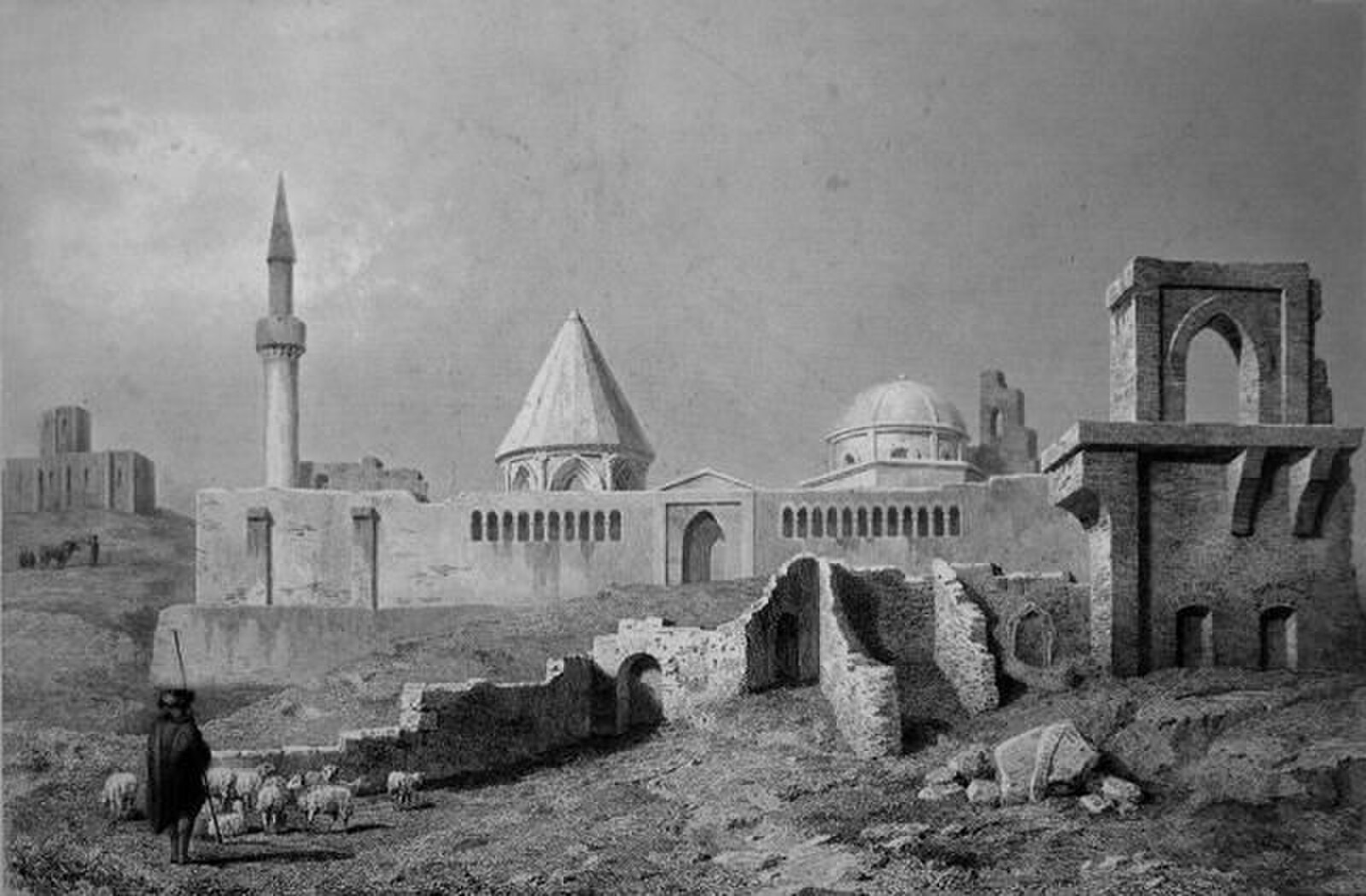
Ruins of the Alâeddin Kiosk
The Seljuk palace remnant known as the Kiosk of Kılıç Arslan II, photographed in 1865. Only a single fragment of wall survives today, sheltered by a concrete…

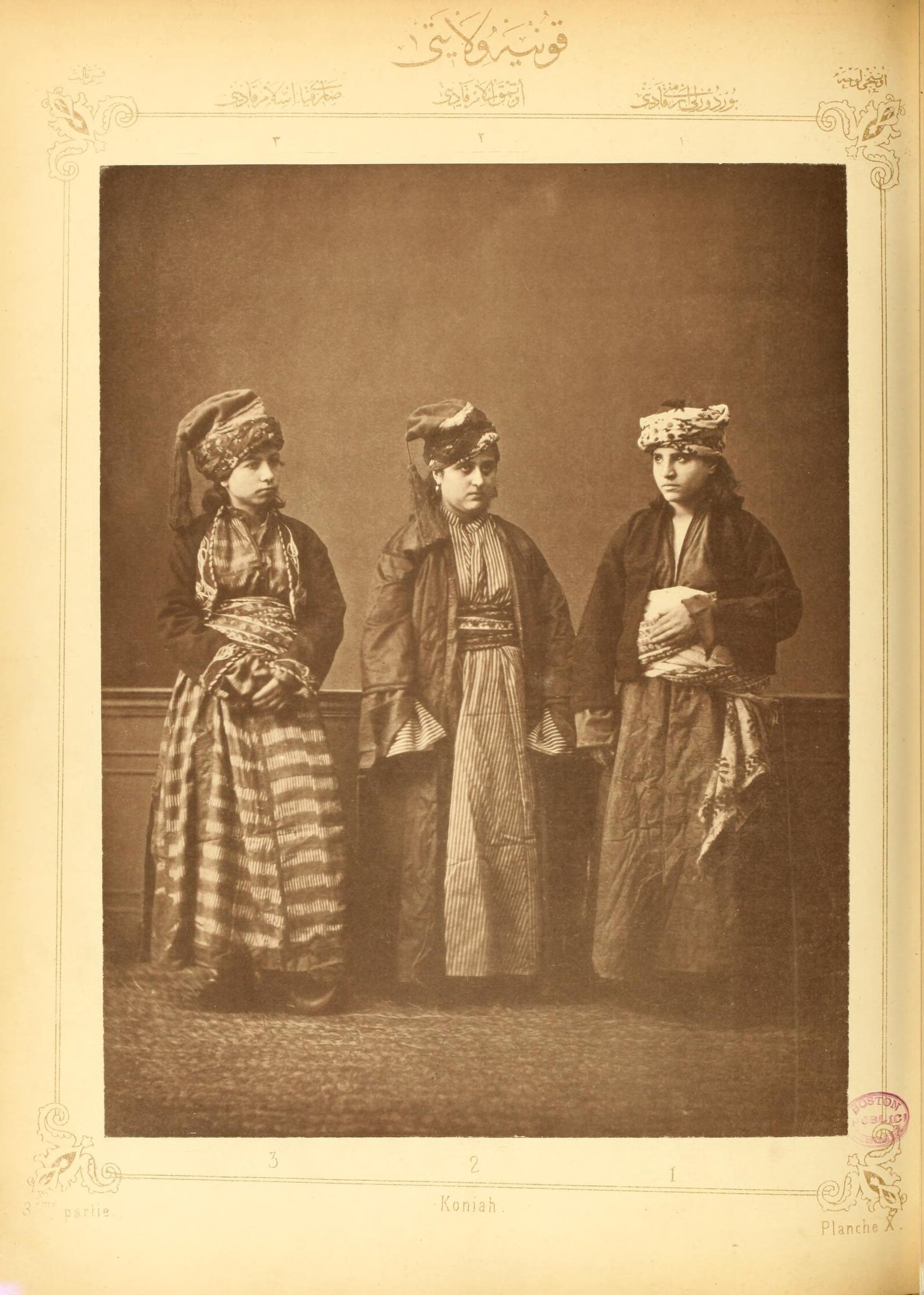
Popular costumes of the Konya vilayet — plate X
From the same album: an Armenian woman of Burdur, a Turkmen woman from the village of Utmuk and a Kurdish woman from Sarıkaya.

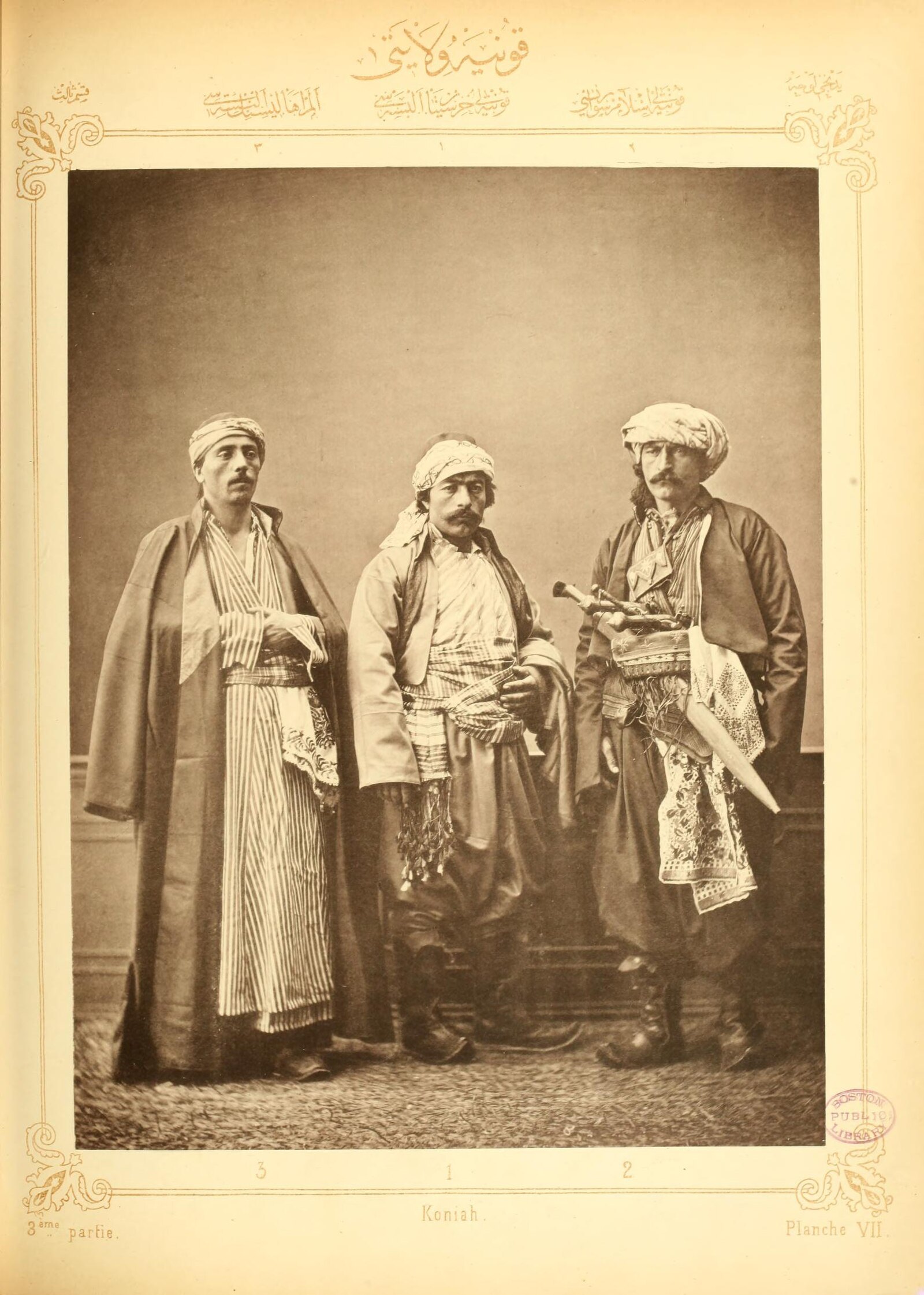
Popular costumes of the Konya vilayet — plate VII
From the album 'Les costumes populaires de la Turquie', photographed by Pascal Sébah for the 1873 Vienna World Exposition: a Christian of Konya, a Muslim…

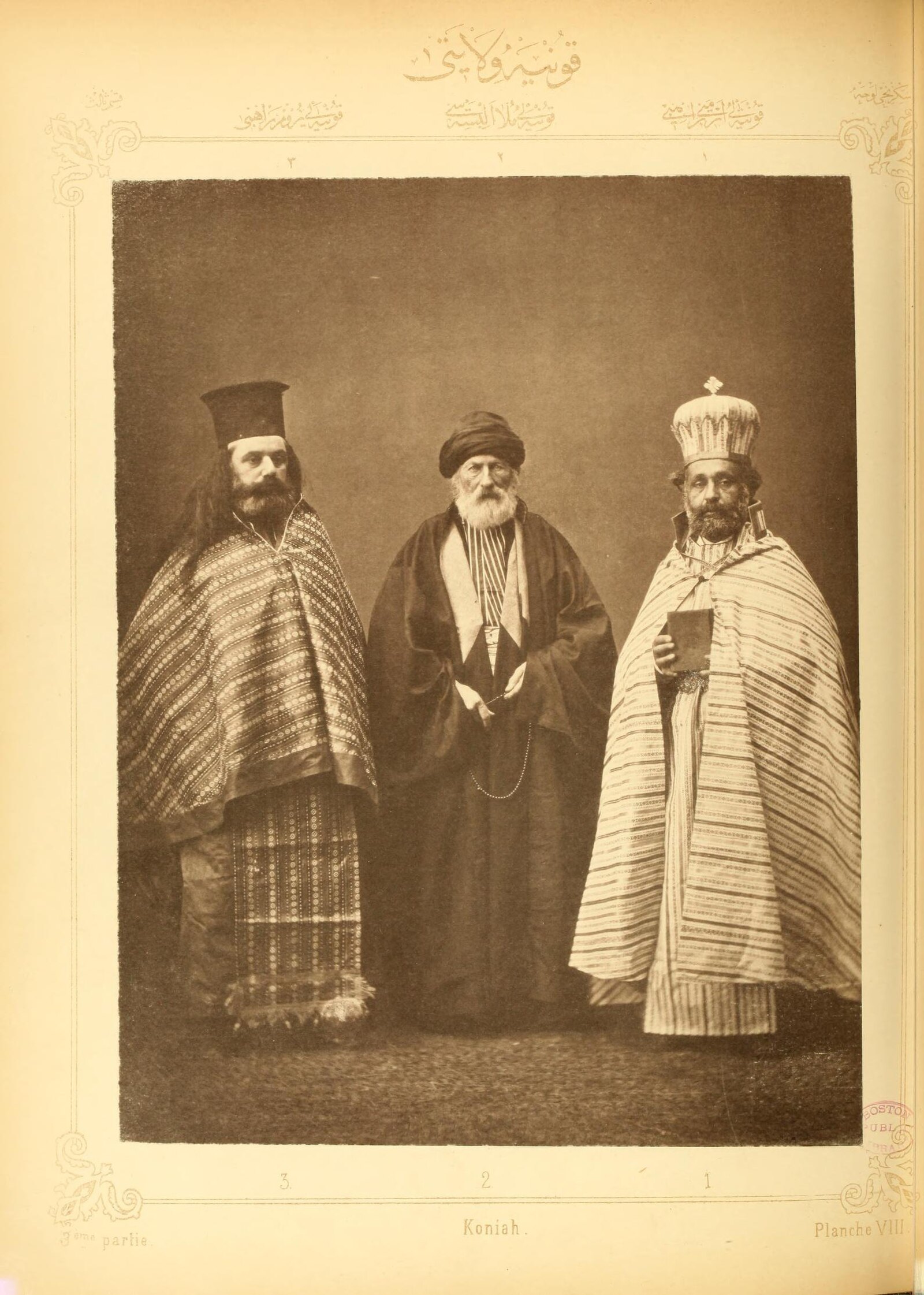
Popular costumes of the Konya vilayet — plate VIII
From the same album: an Armenian priest, a mullah and a Greek priest of Konya — the dress of the city's three religious communities documented side by side.

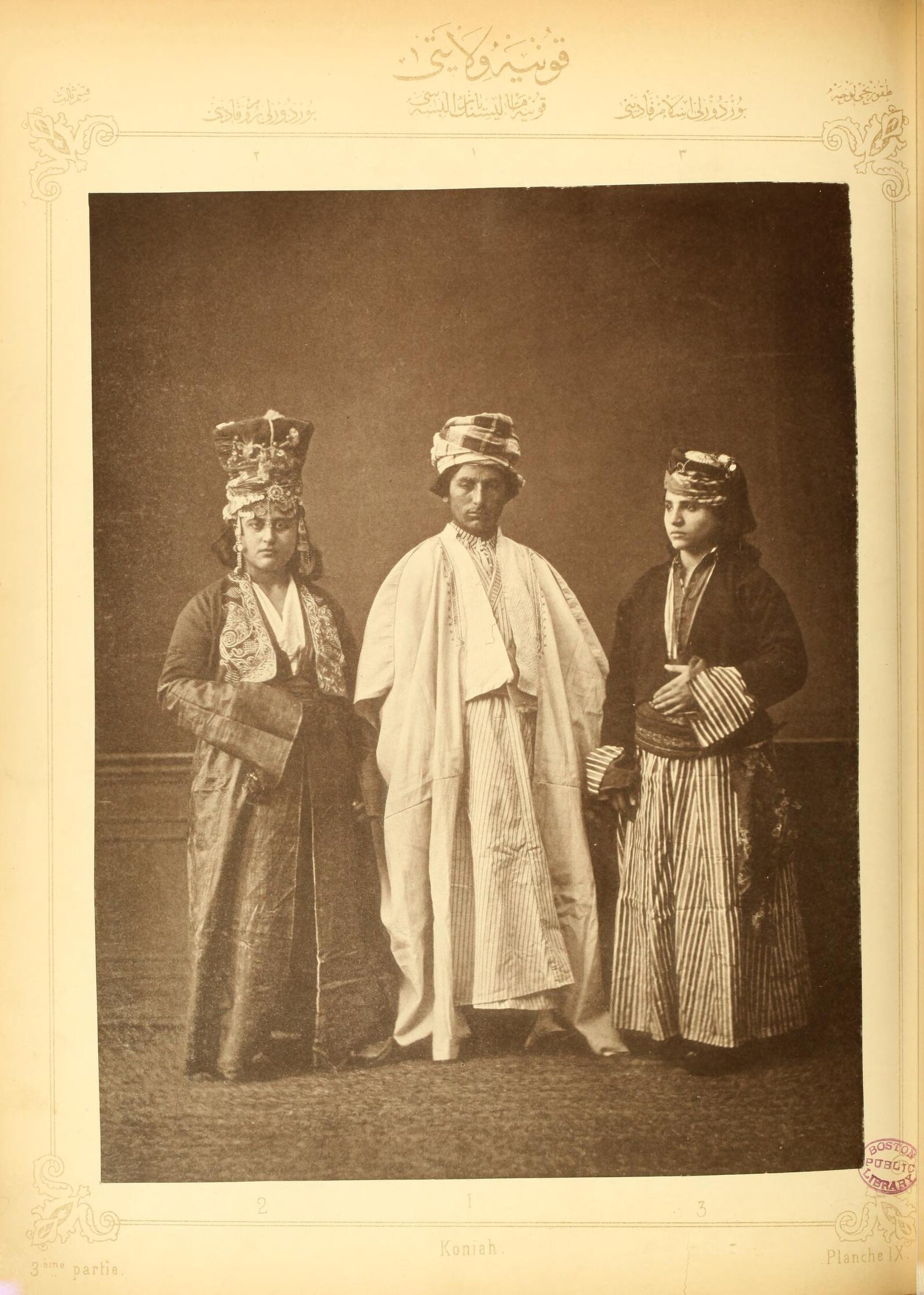
Popular costumes of the Konya vilayet — plate IX
From the same album: a notable of Konya, a Greek woman of Burdur and a Muslim woman of Burdur.

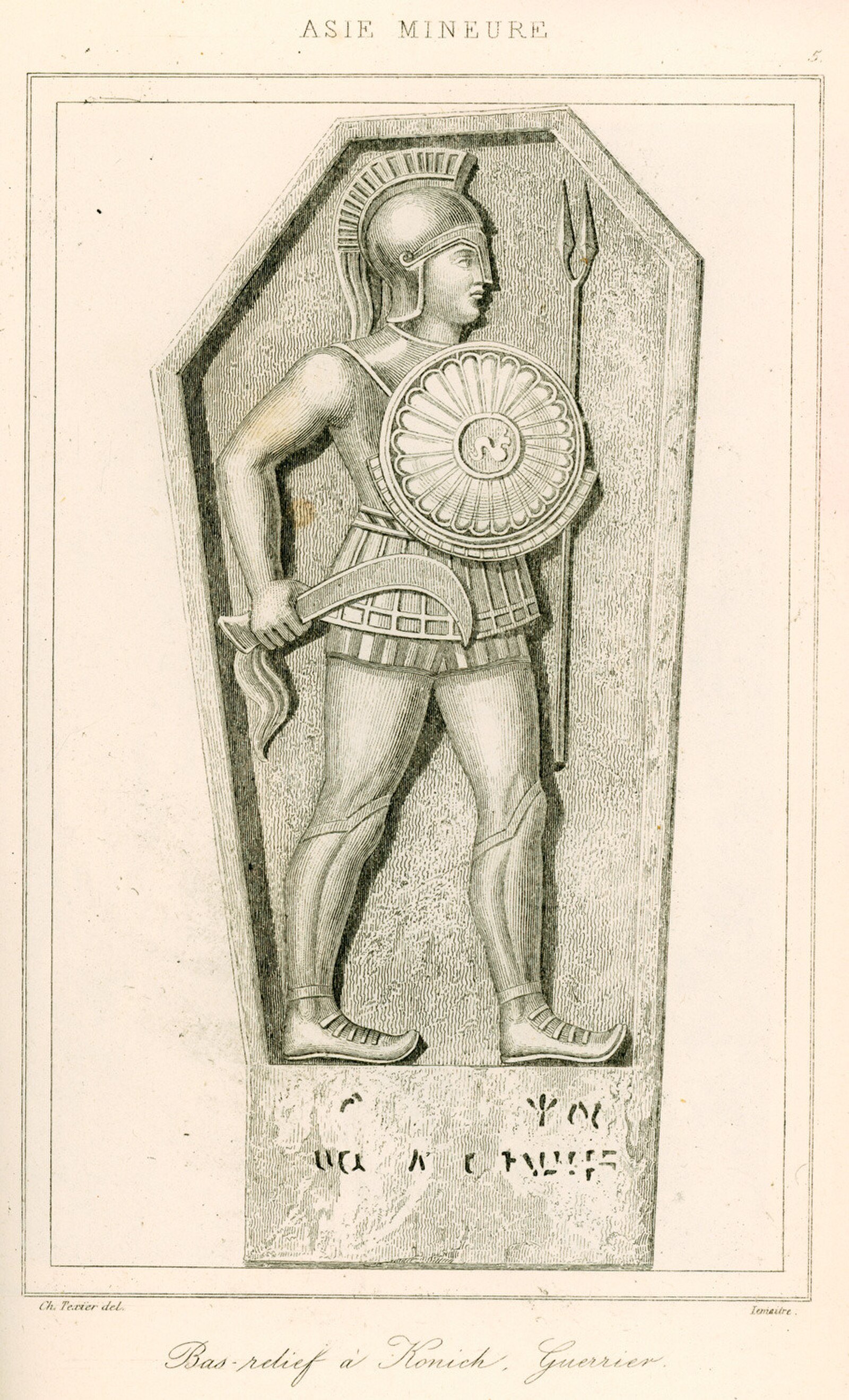
Warrior relief found in Konya
An ancient warrior relief reused as spolia in the city walls of Konya, documented in Texier's 1882 work.

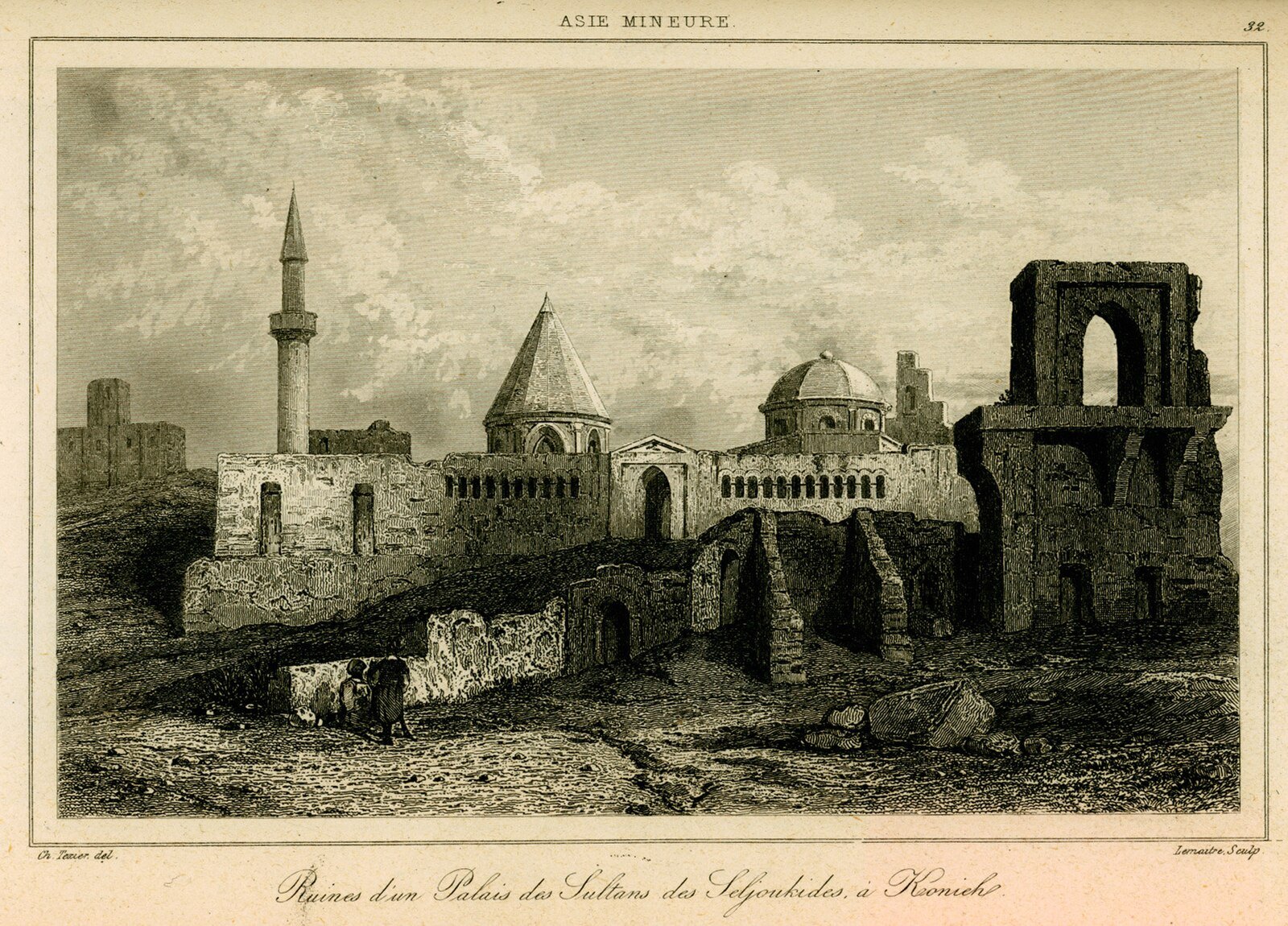
Palace of the Seljuk sultans
An engraving reconstructing the Seljuk palace of Konya, from Charles Texier's 'Asie Mineure' (Paris, 1882).

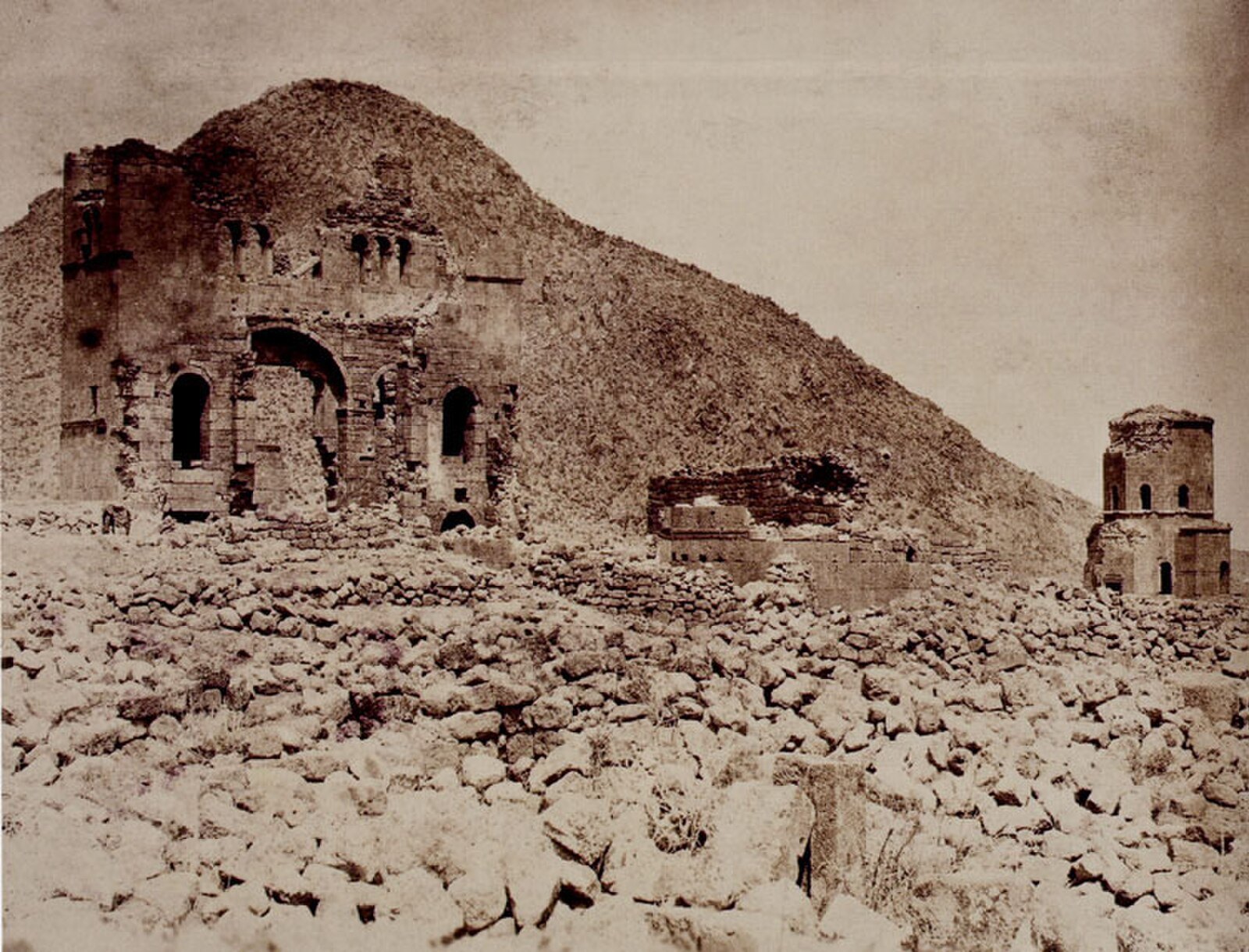
Binbirkilise, churches 13 and 18
Early Christian churches at Binbirkilise, south-east of Konya, in 1887. (The site is in Karaman province today; at the time it belonged to the Konya vilayet.)

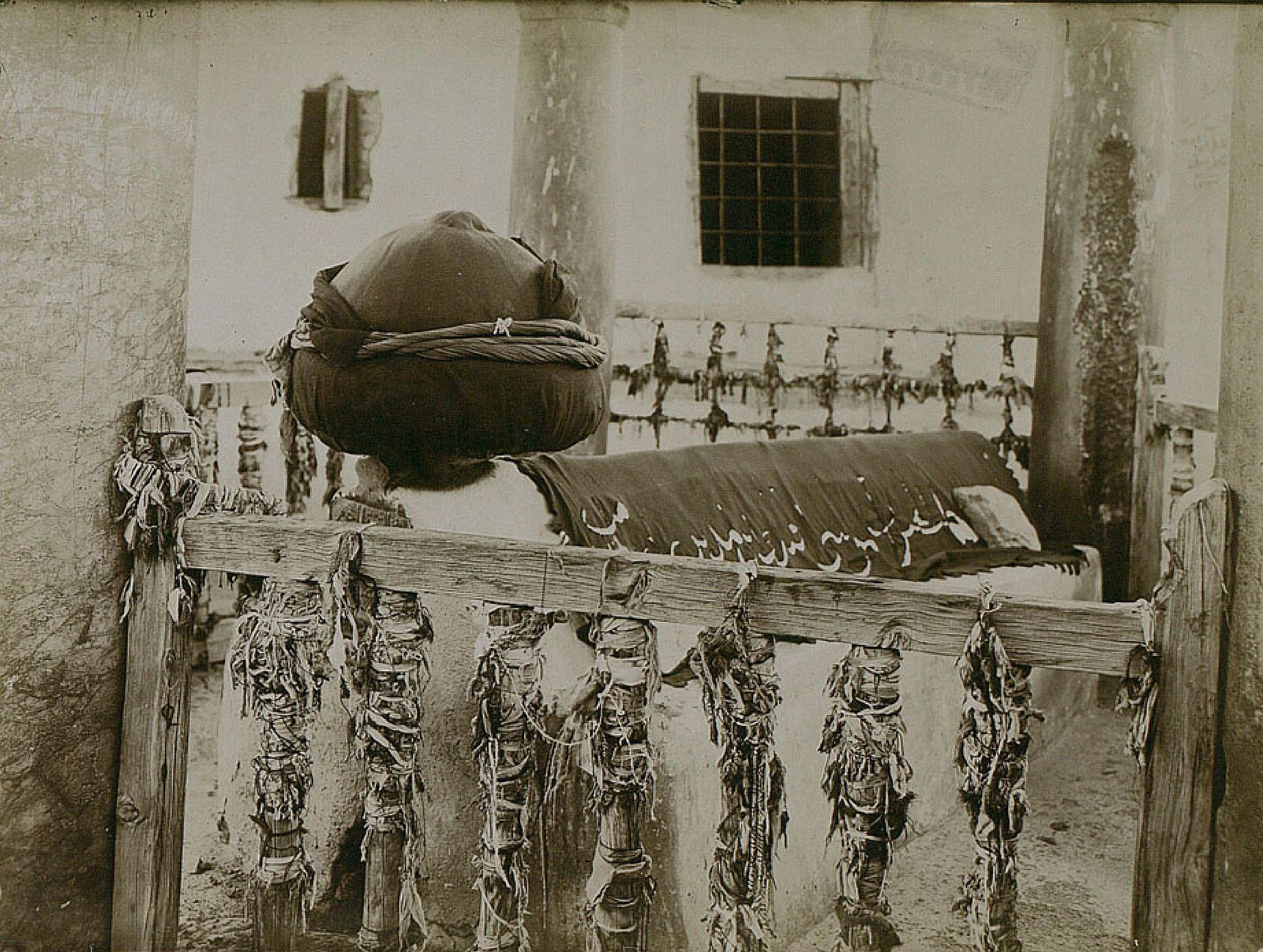
Interior of the tomb of Nasreddin Hodja
The cenotaph in the tomb of Nasreddin Hodja at Akşehir, photographed by Garabet Kirkor Solakyan in the late 1890s or early 1900s.

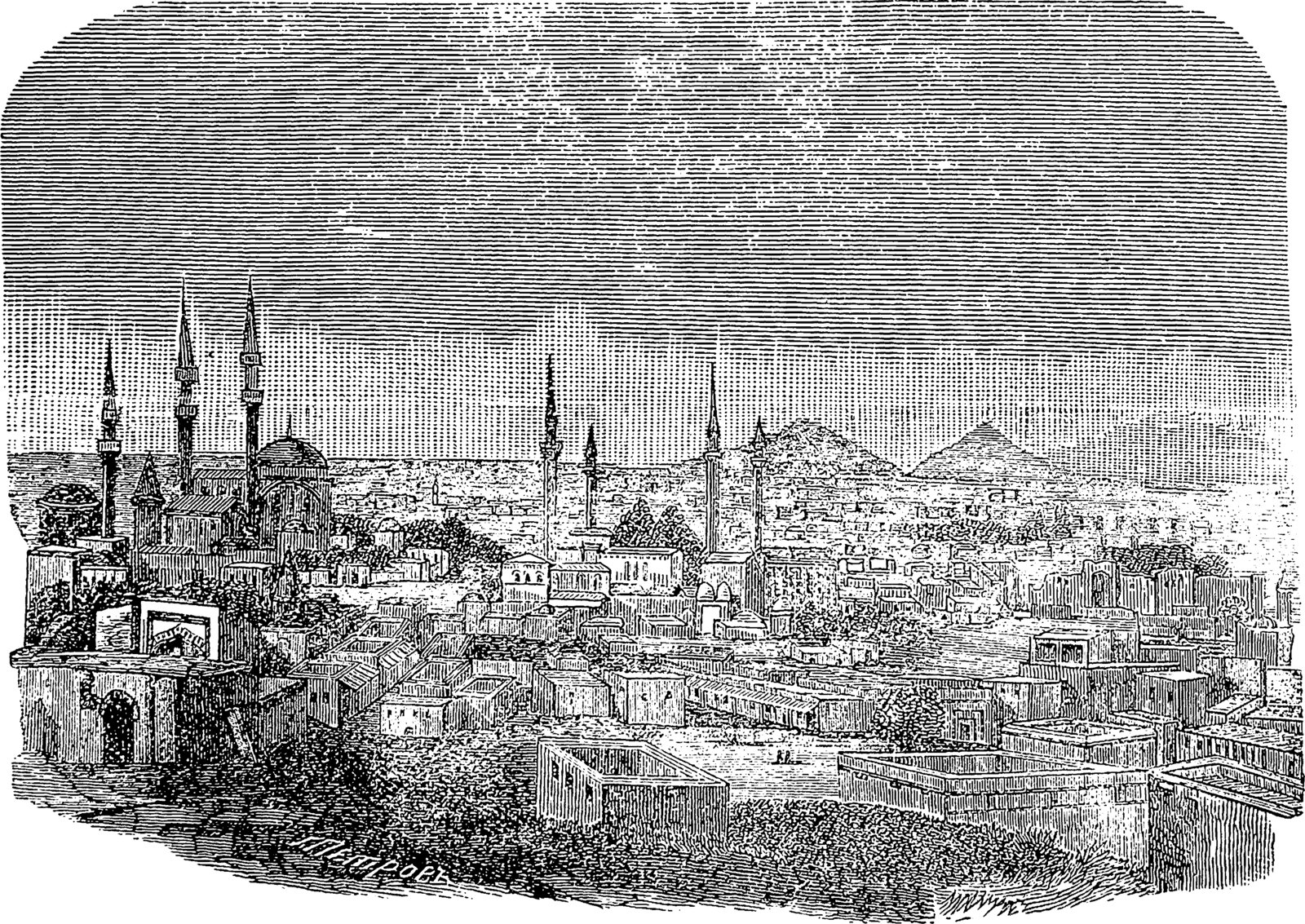
General view of Konya (Iconium)
Panorama of Konya published in a Russian biblical encyclopaedia in 1892, showing the Ottoman-era skyline with its minarets.

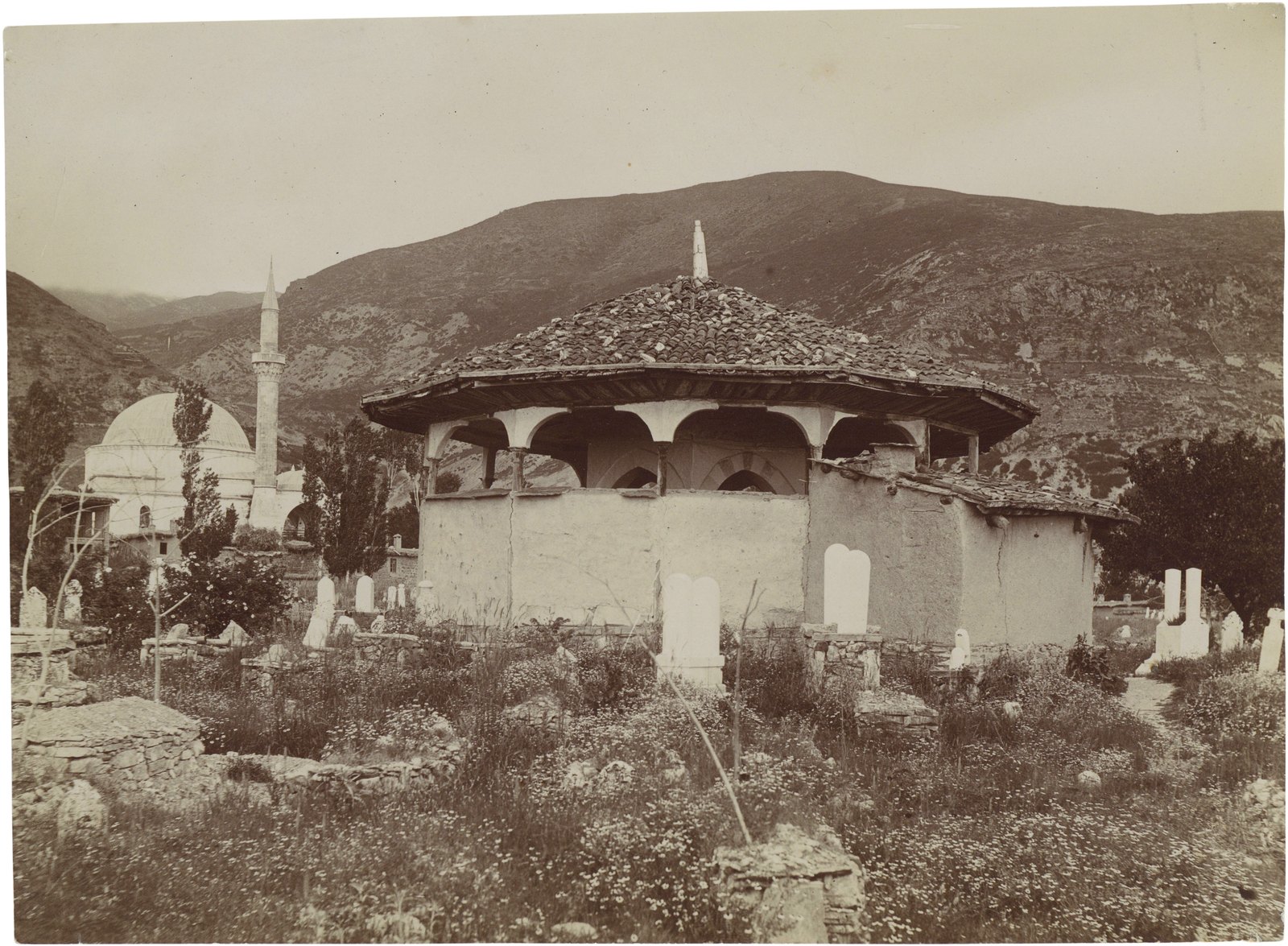
The tomb of Nasreddin Hodja in Akşehir
The tomb of Nasreddin Hodja in Akşehir with the old cemetery around it and the mountains of Akşehir behind.
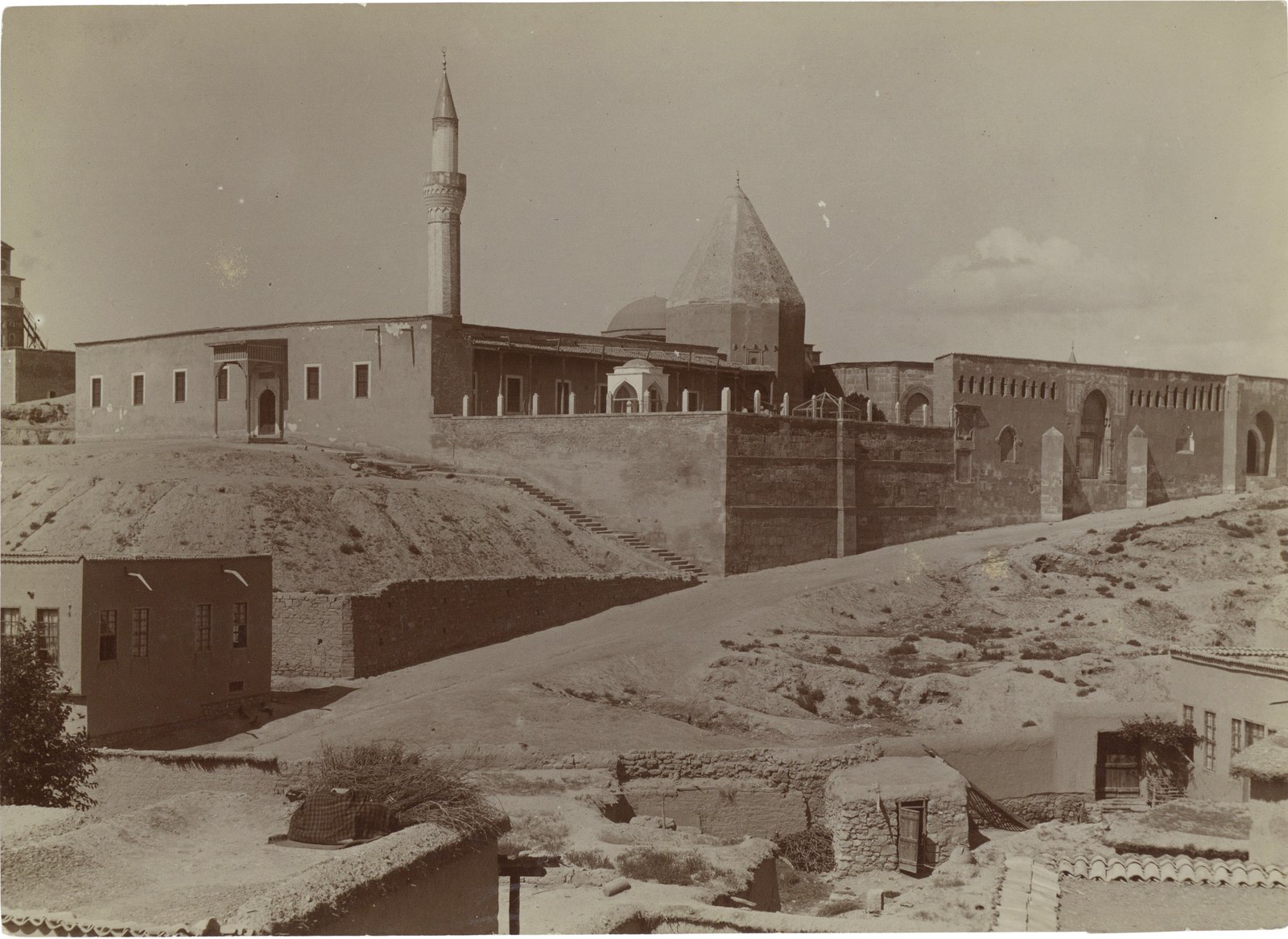
The Alâeddin Mosque
The Alâeddin Mosque (1220) on Alâeddin Hill at the turn of the century, photographed by Garabed K. Solakian, active in Konya between 1890 and 1910.
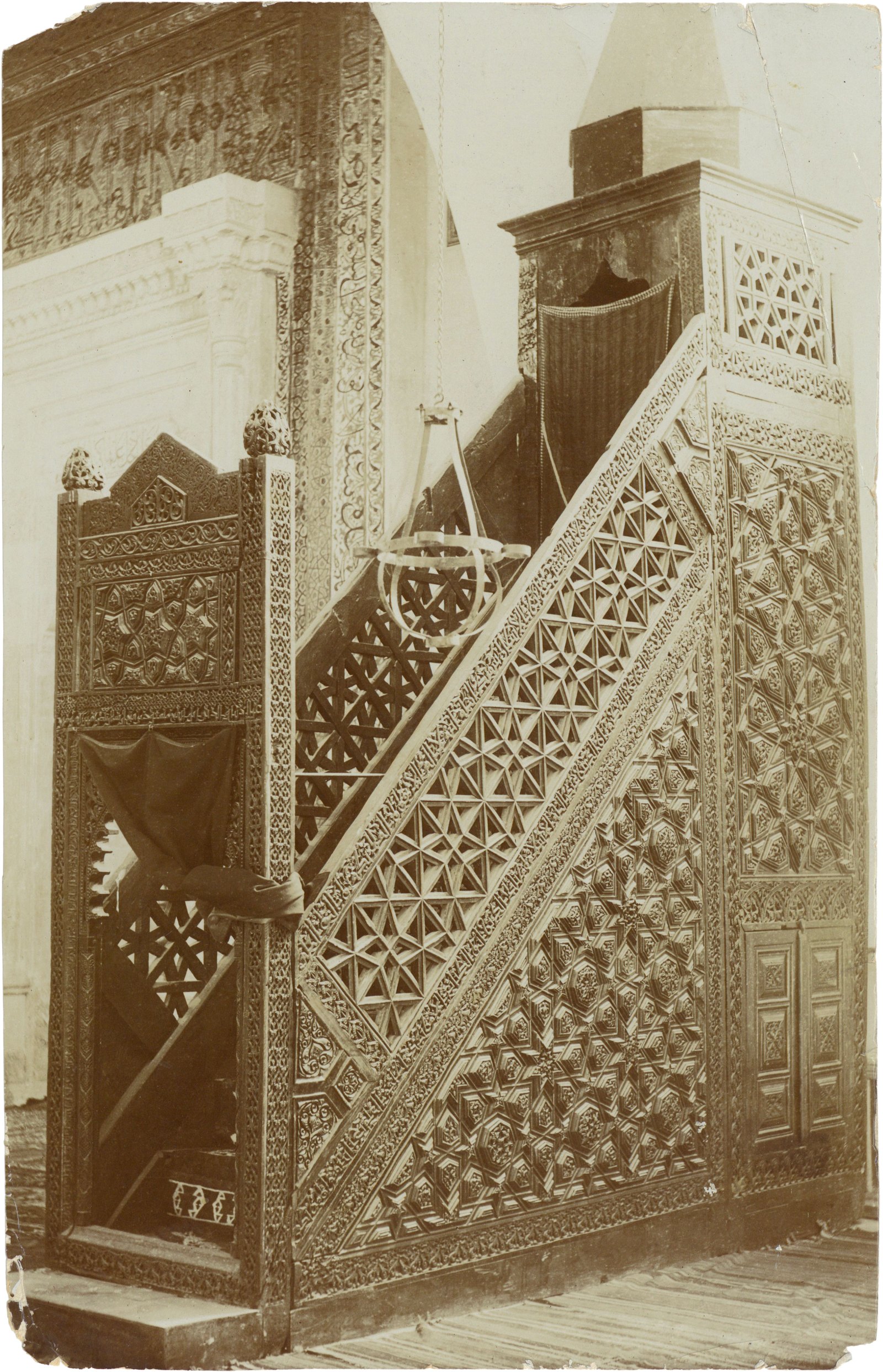
The minbar of the Alâeddin Mosque
The ebony minbar of the Alâeddin Mosque, dated 1155 — made by the kündekâri interlocking technique, without nails or glue.
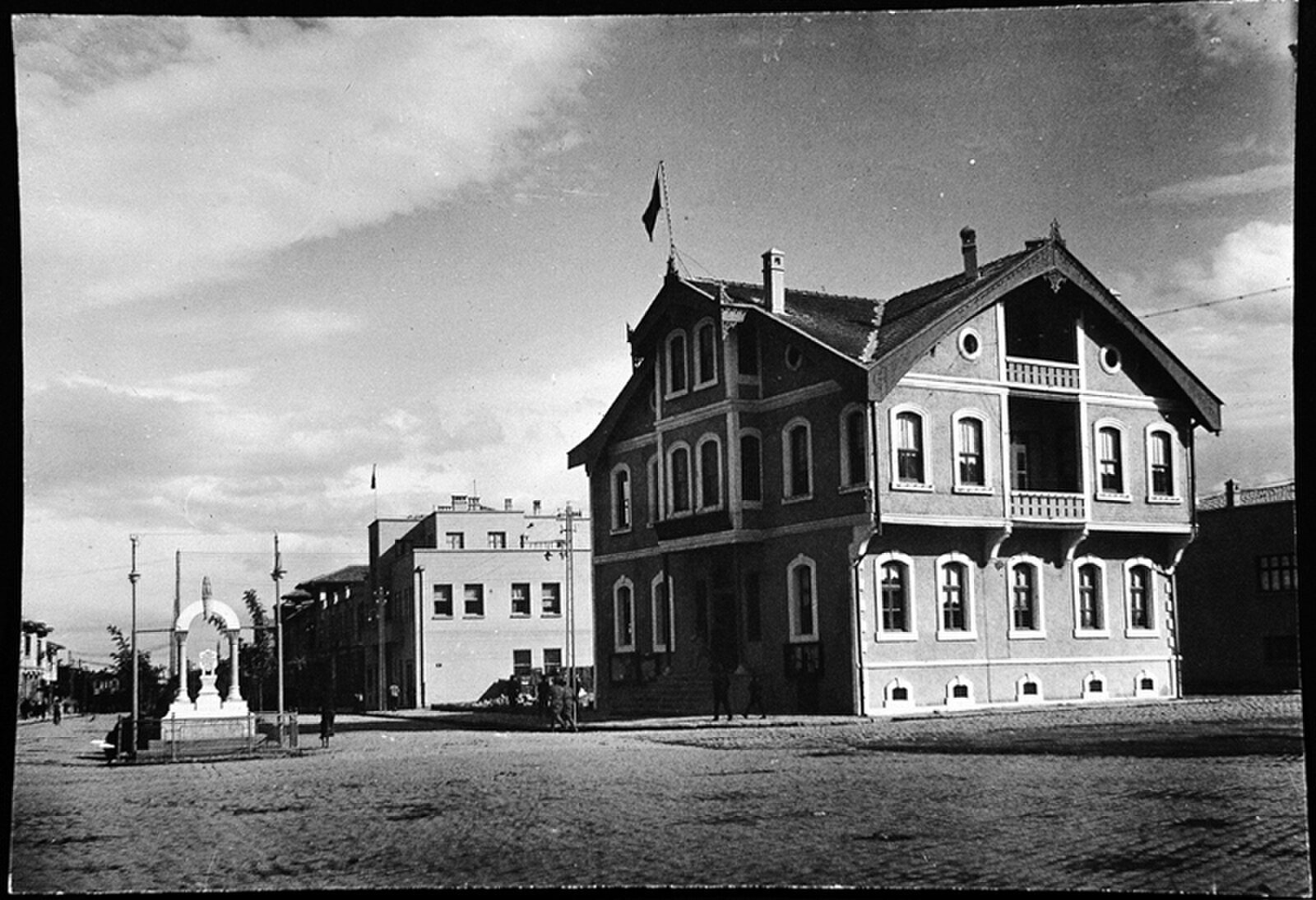
A street in Konya
A wide street in Konya at the turn of the 20th century with a two-storey building with wooden bay windows; the lamp posts are still gas-lit.

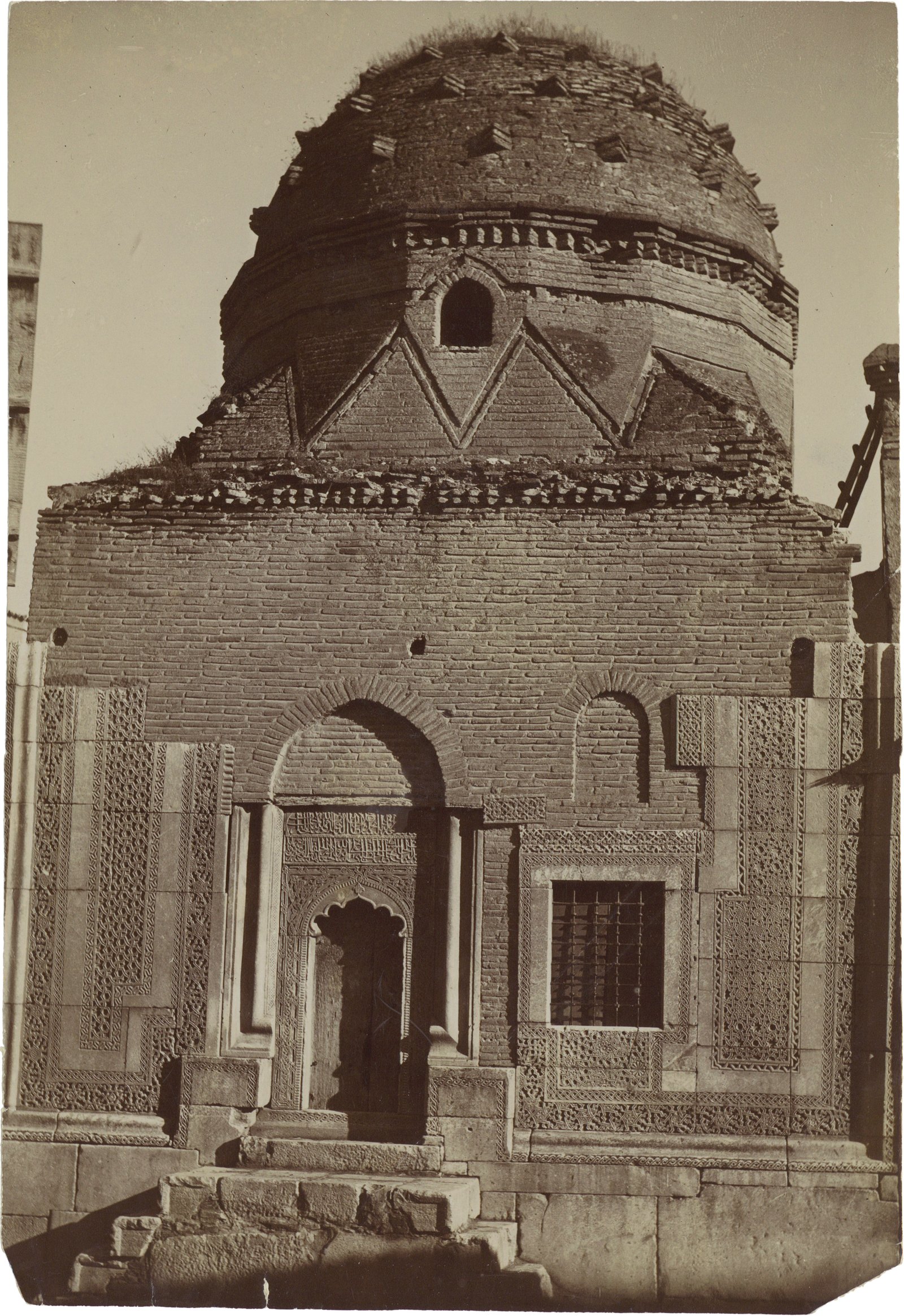
The Hasbey Darülhuffaz
A small domed building erected in 1421 by Hacı Hasbey for the training of Qur'an memorisers — a rare example of its kind in Anatolia.
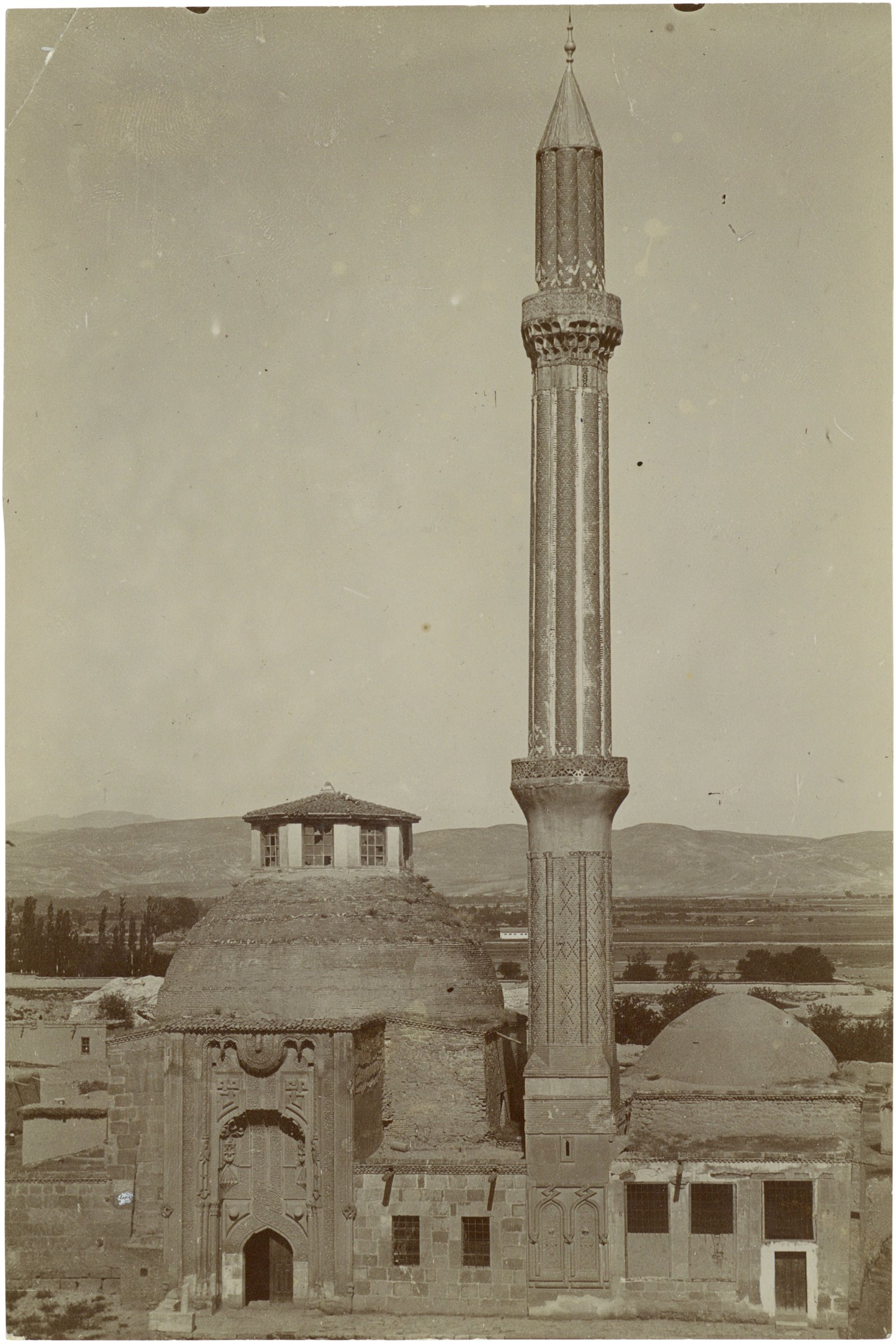
The İnce Minareli Medrese and its minaret
The minaret of the İnce Minareli Medrese before lightning destroyed it in 1901, from Solakian's documentation of Konya.
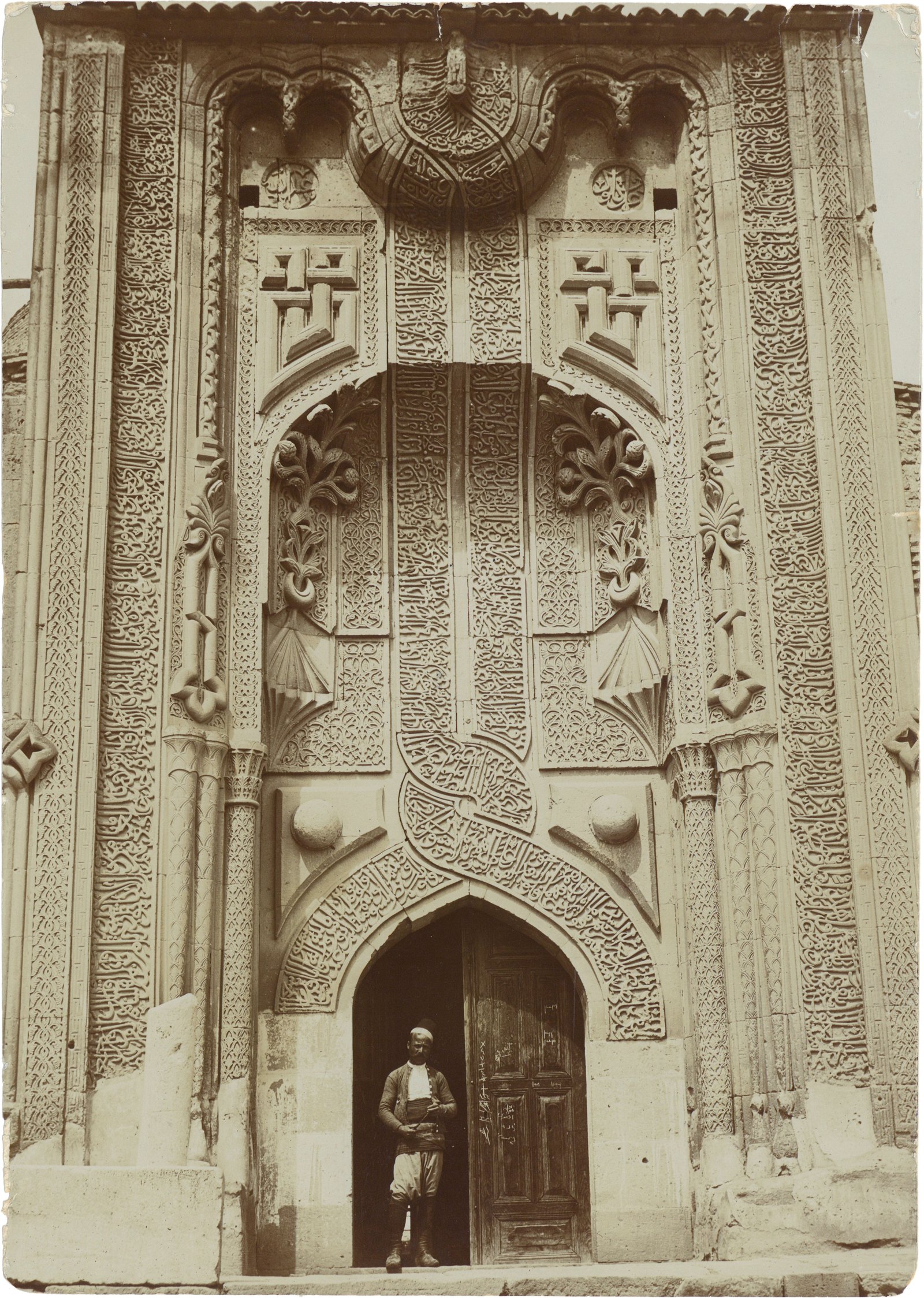
Portal of the İnce Minareli Medrese
The portal, considered a masterpiece of Seljuk stonework; the figure standing before it gives the scale of the building.
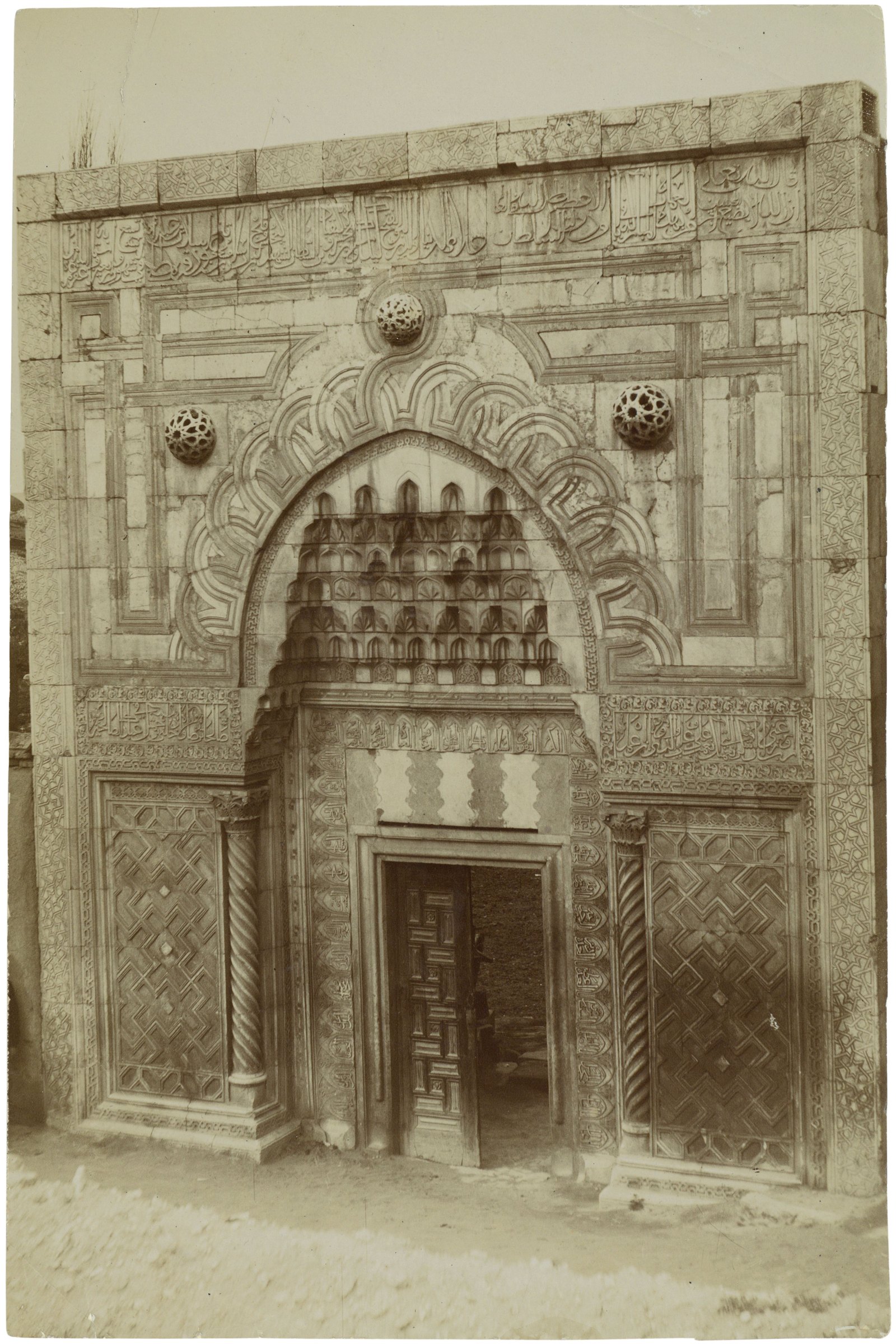
Portal of the Karatay Medrese
The marble portal of the medrese built by Celâleddin Karatay in 1251; the building houses the Tile Museum today.
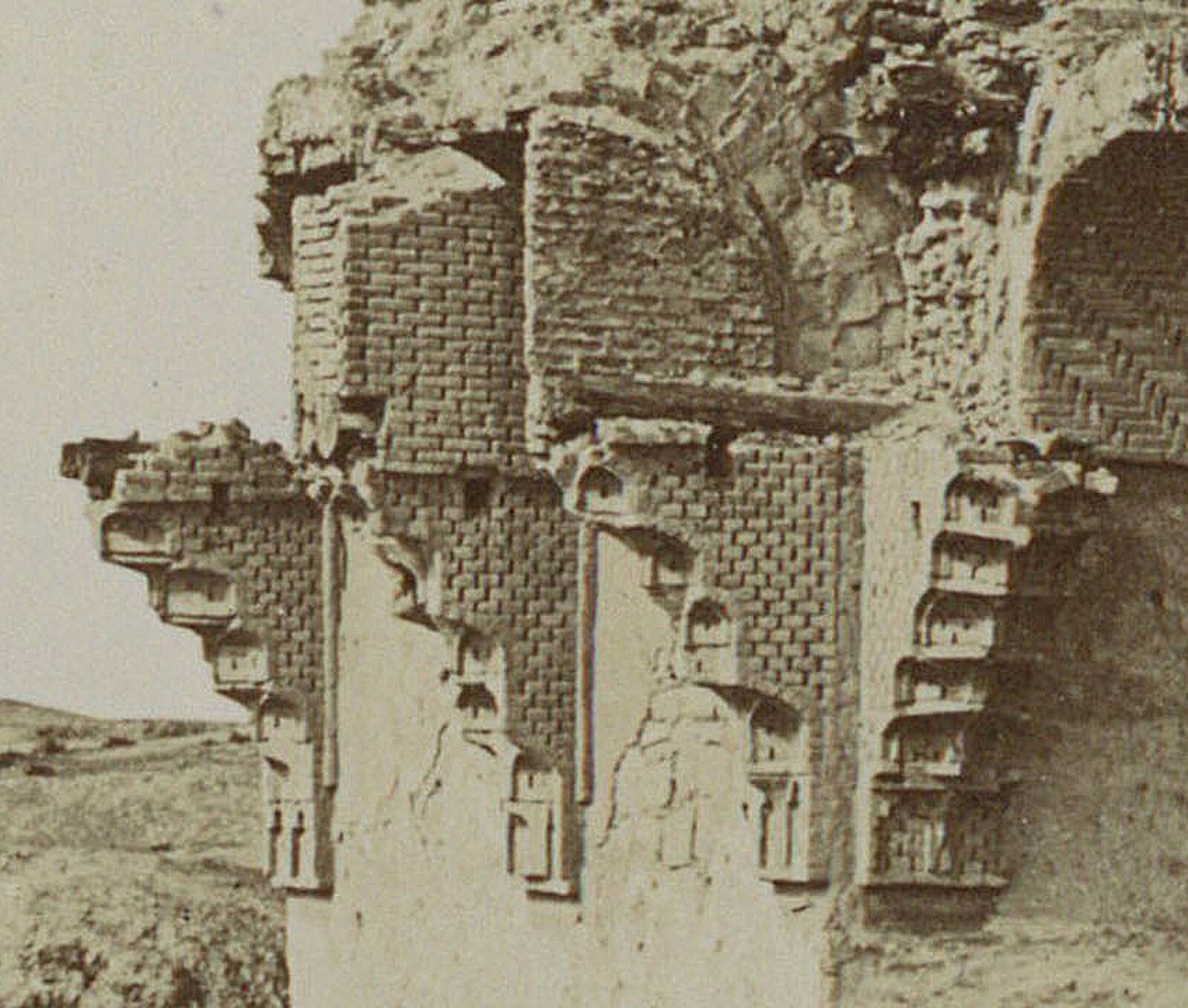
Crenellation detail of the kiosk
Detail of the brick crenellation and tilework at the top of the kiosk; most of this decoration was lost during the 20th century.

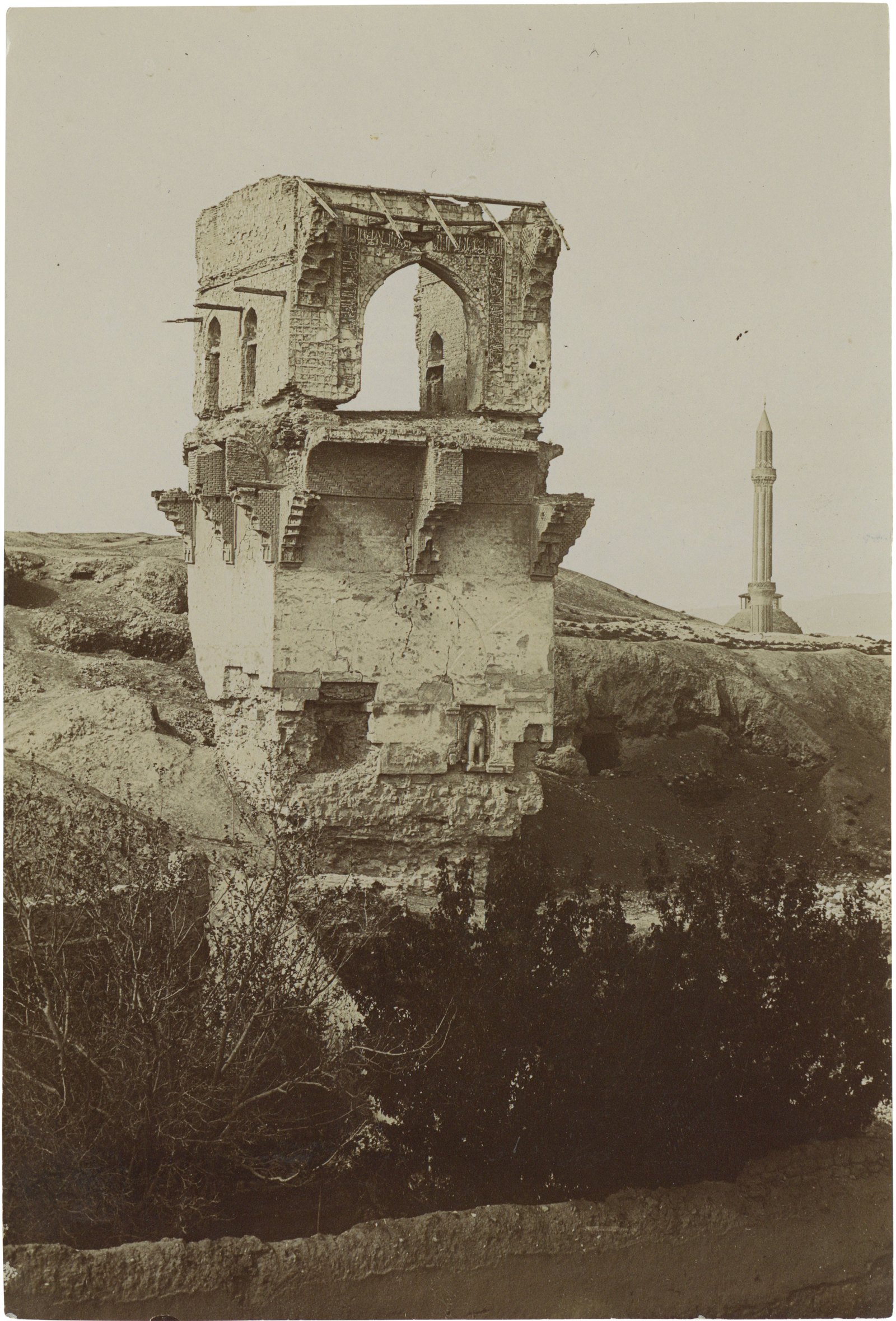
Kiosk of Kılıç Arslan II — Seljuk Palace
The surviving kiosk of the Seljuk palace on Alâeddin Hill, with the İnce Minaret behind. The structure now stands under a concrete shelter.
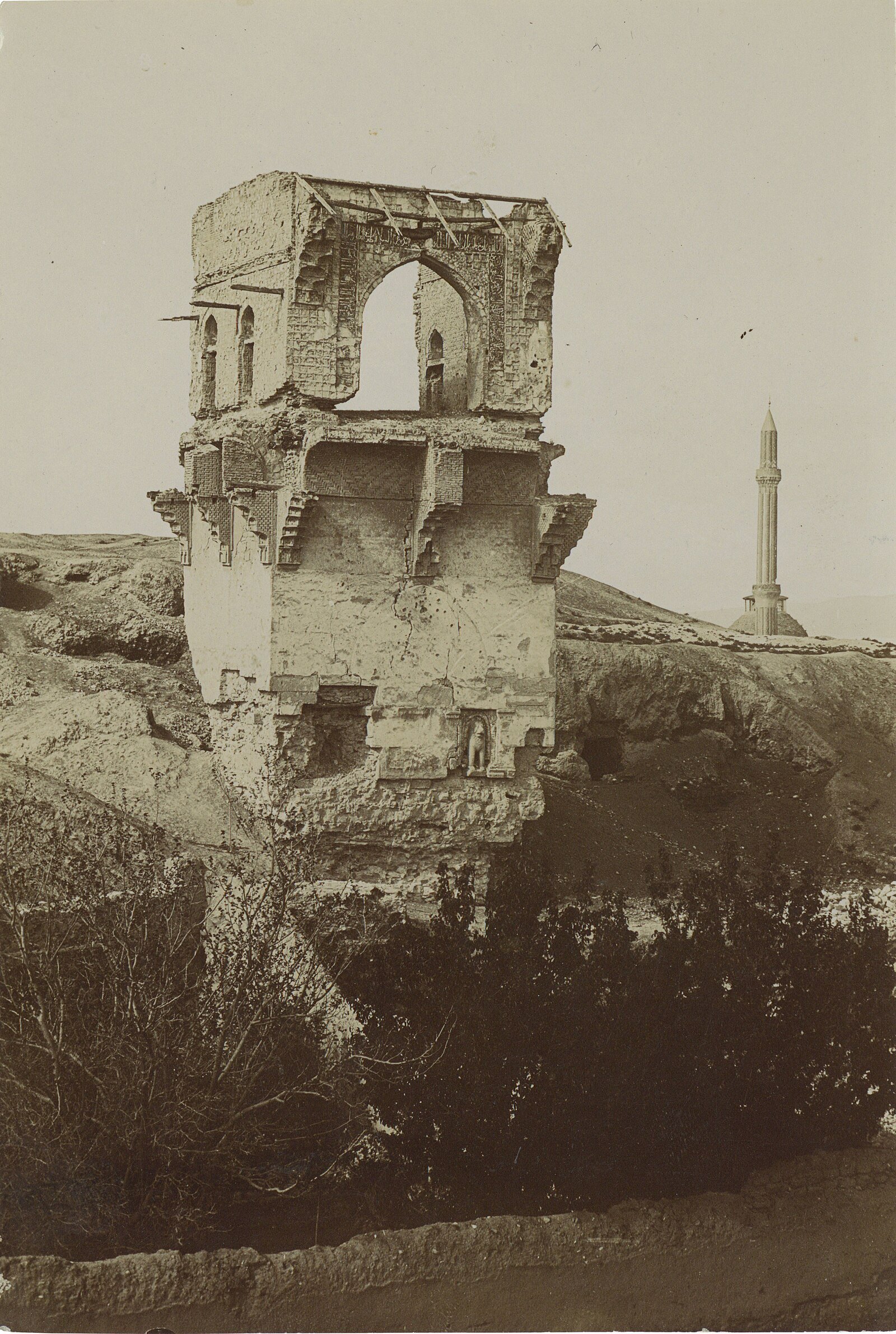
The Kiosk of Kılıç Arslan II
The surviving wall of the Seljuk palace kiosk, photographed by Garabed K. Solakyan, a photographer active in Konya in the 1890s and early 1900s.

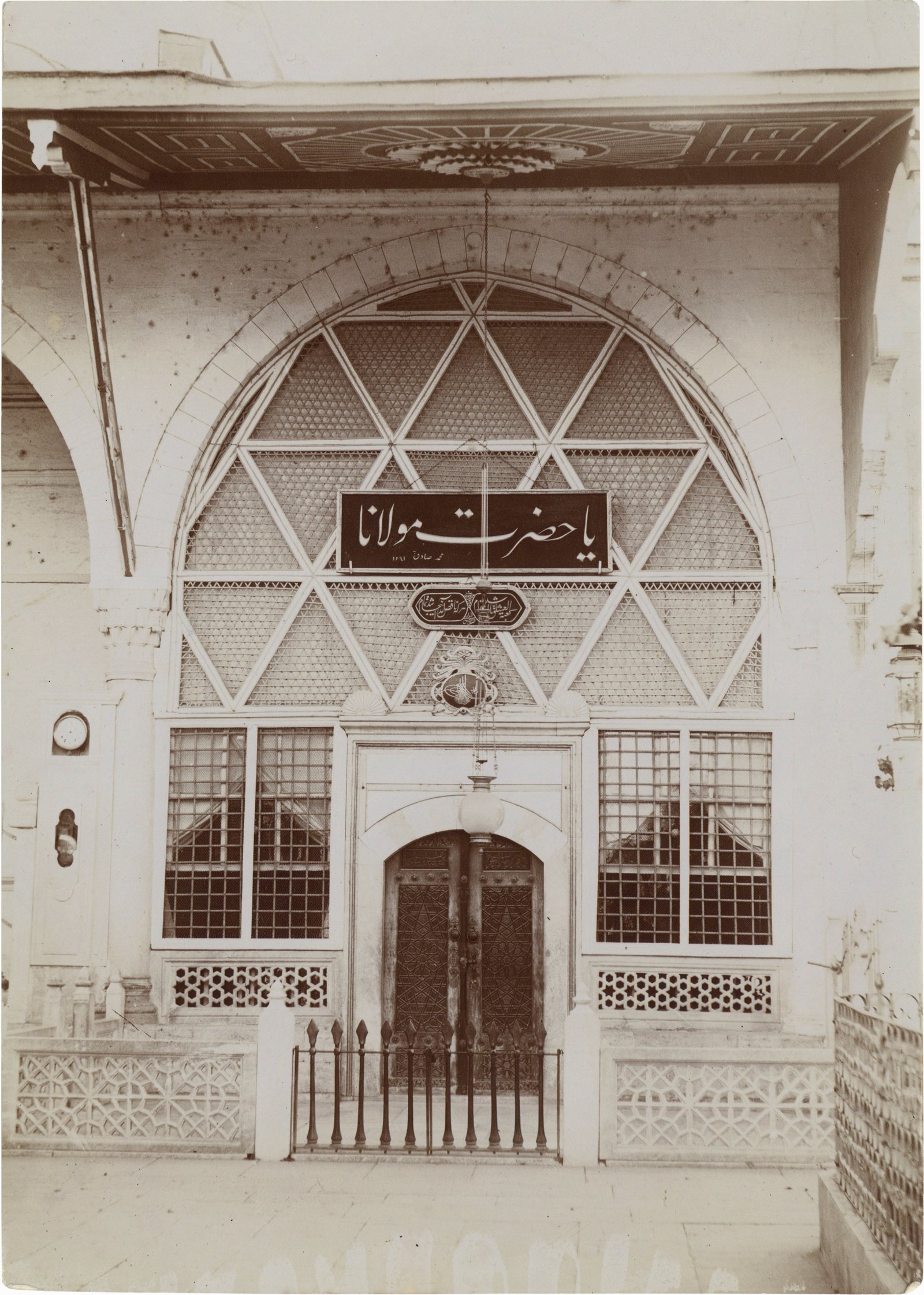
Entrance of the Mevlâna mausoleum
The entrance of the Mevlâna mausoleum before the lodge became a museum in 1926.
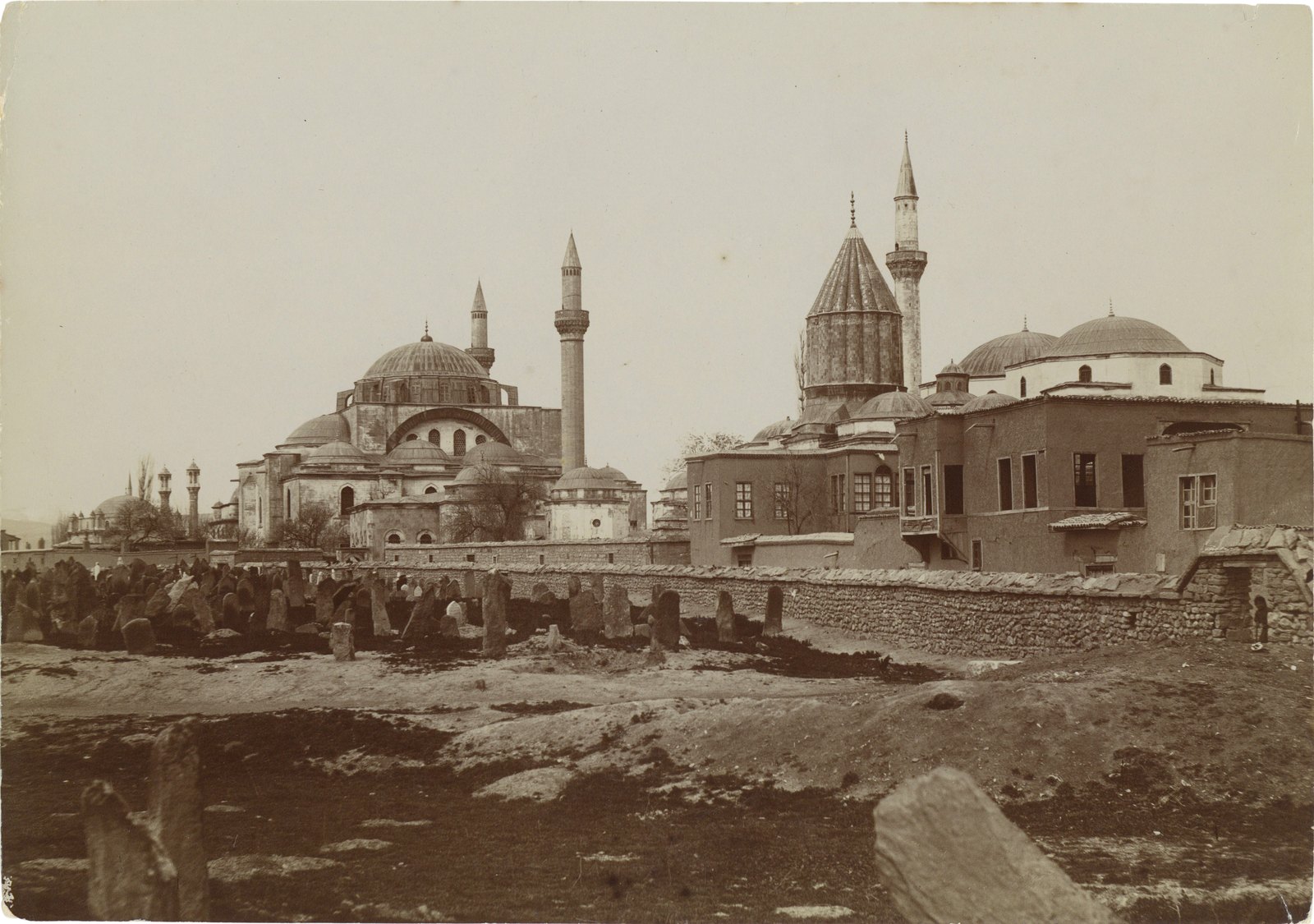
The Mevlâna mausoleum with the Selimiye and Aziziye mosques
Konya's emblematic skyline: the Green Dome of the Mevlâna mausoleum together with the Selimiye and Aziziye mosques, with still-empty ground in front.
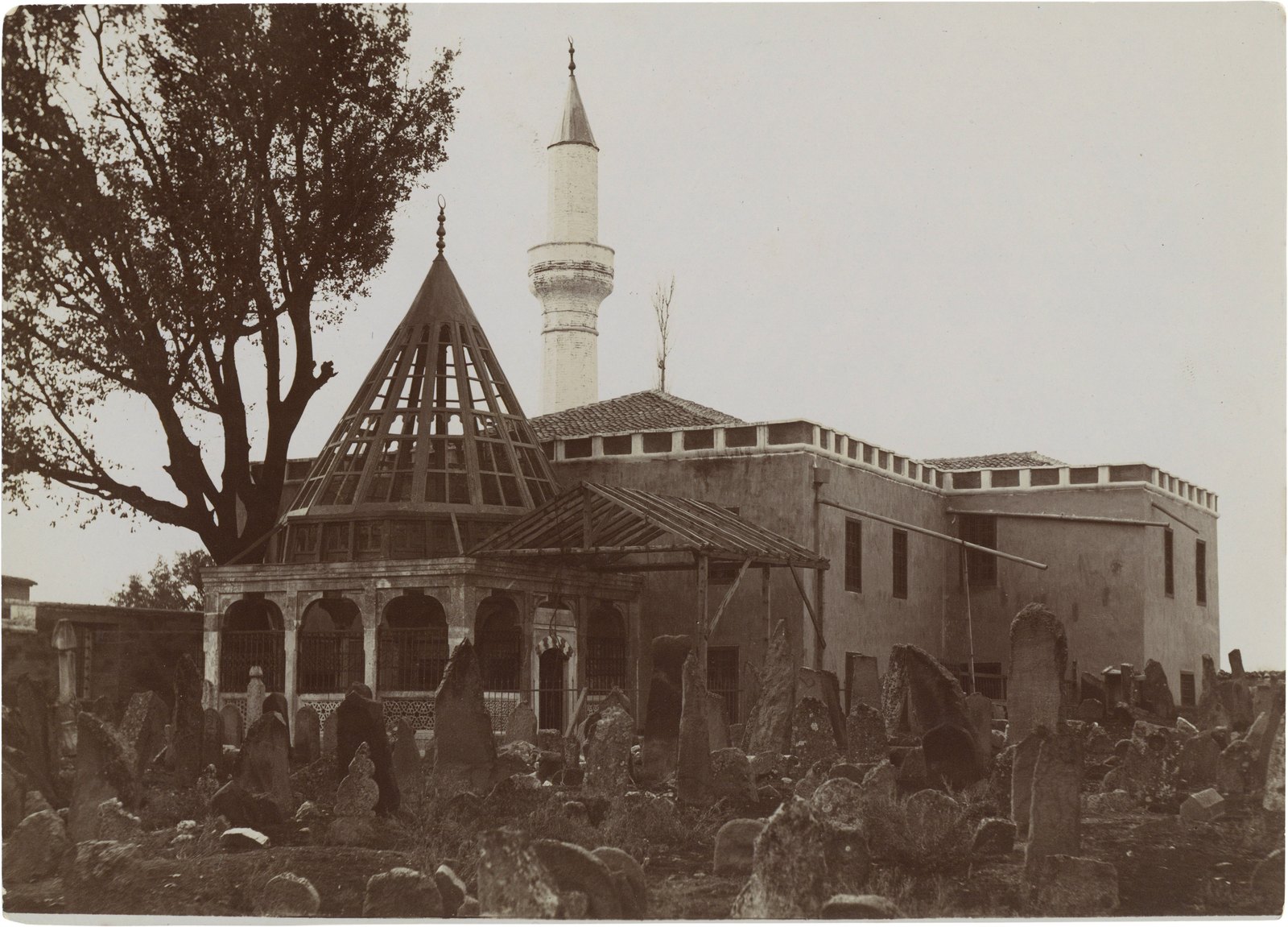
Mosque and tomb of Sheikh Sadreddin Konevî
The mosque and tomb of Sadreddin Konevî (d. 1274), contemporary of Rumi and a major interpreter of Ibn Arabi's tradition, with its open latticed tomb.
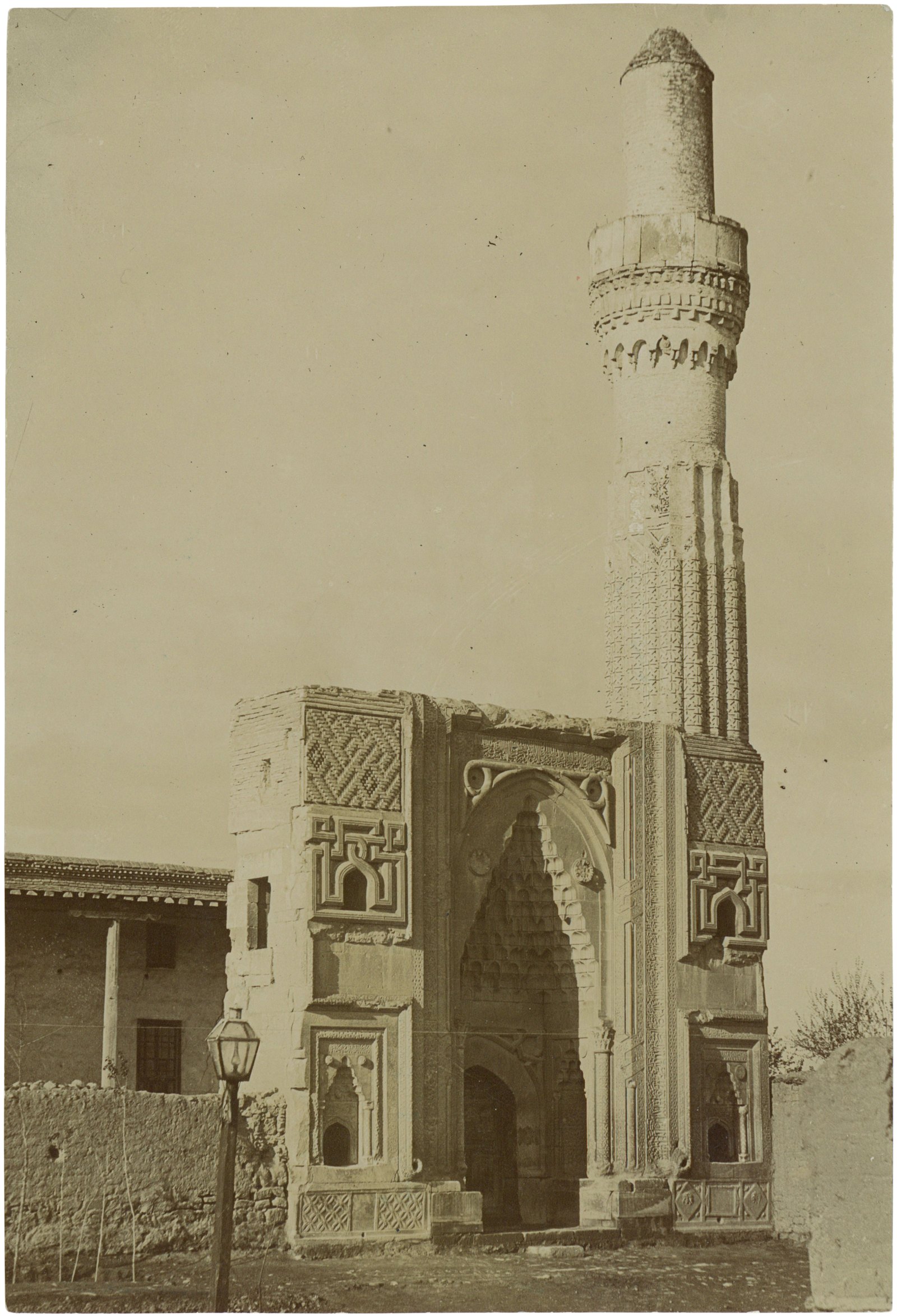
Portal of the Sahip Ata complex
The portal with its brick minaret of the complex founded in 1258 by the vizier Sahip Ata Fahreddin Ali.
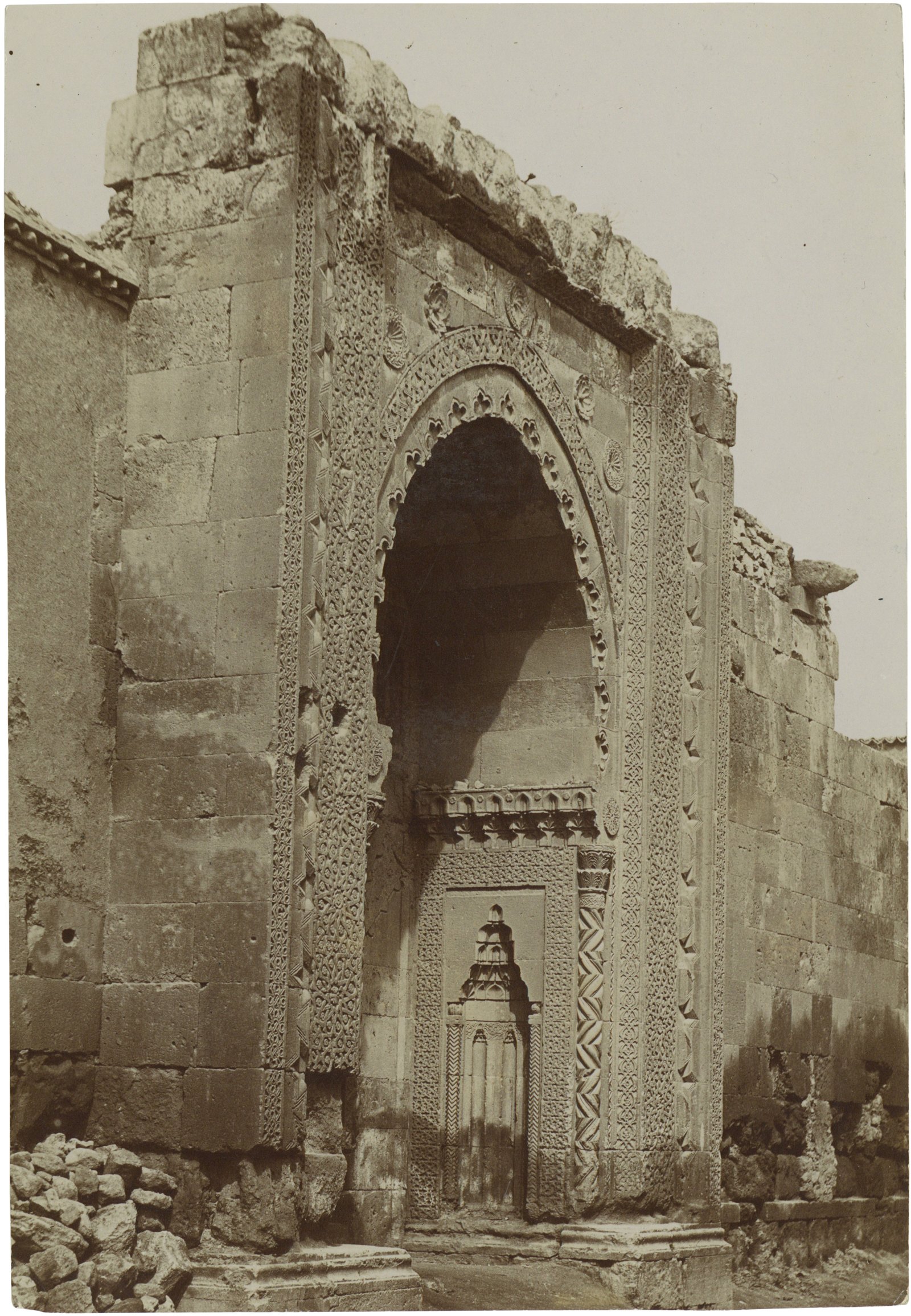
Portal of the Sırçalı Medrese
The portal of the Sırçalı Medrese of 1243 before any restoration; note the rubble around it.
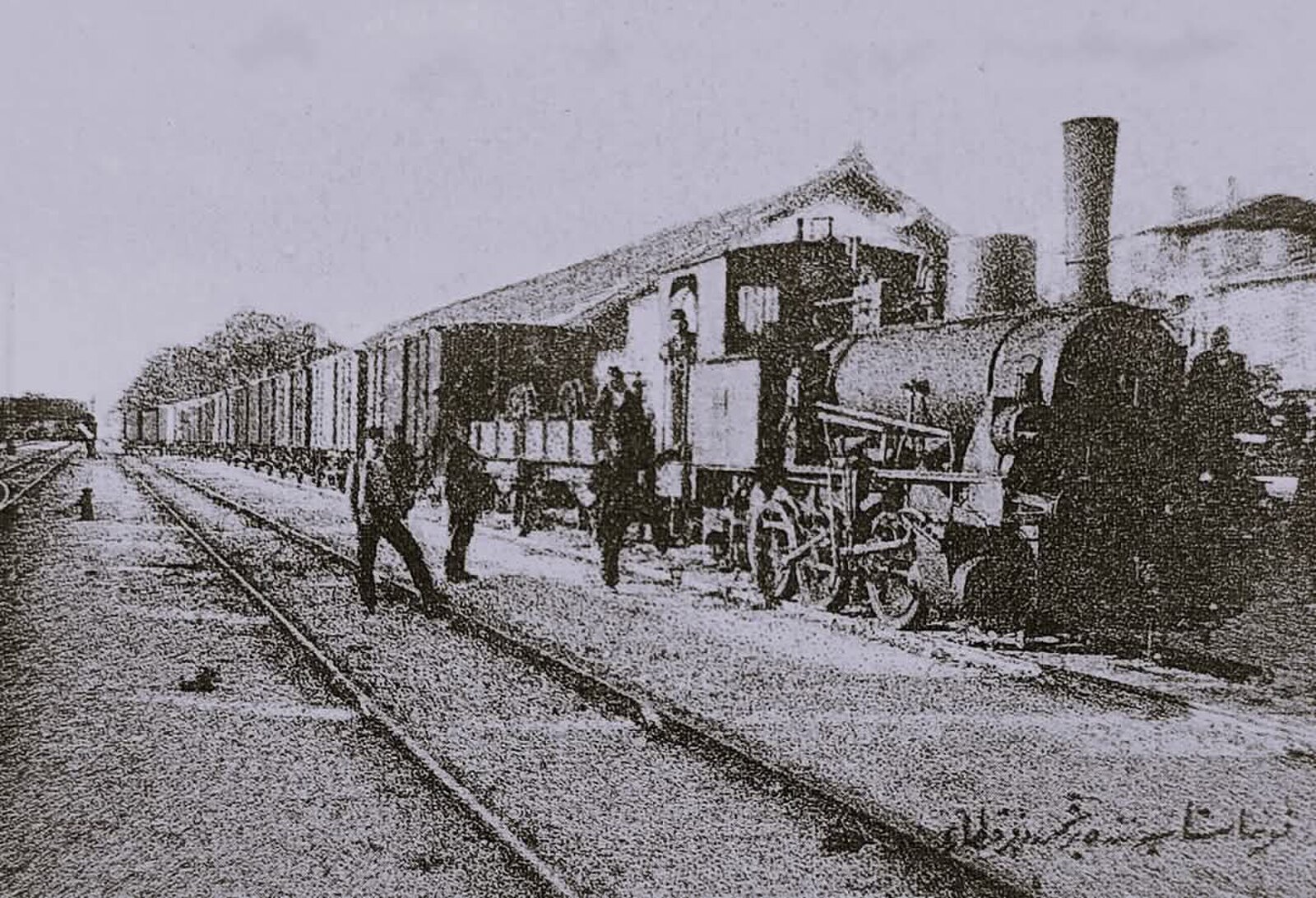
Konya Railway Station
A steam locomotive and freight wagons at Konya station around 1900, after the Anatolian–Baghdad Railway reached the city.

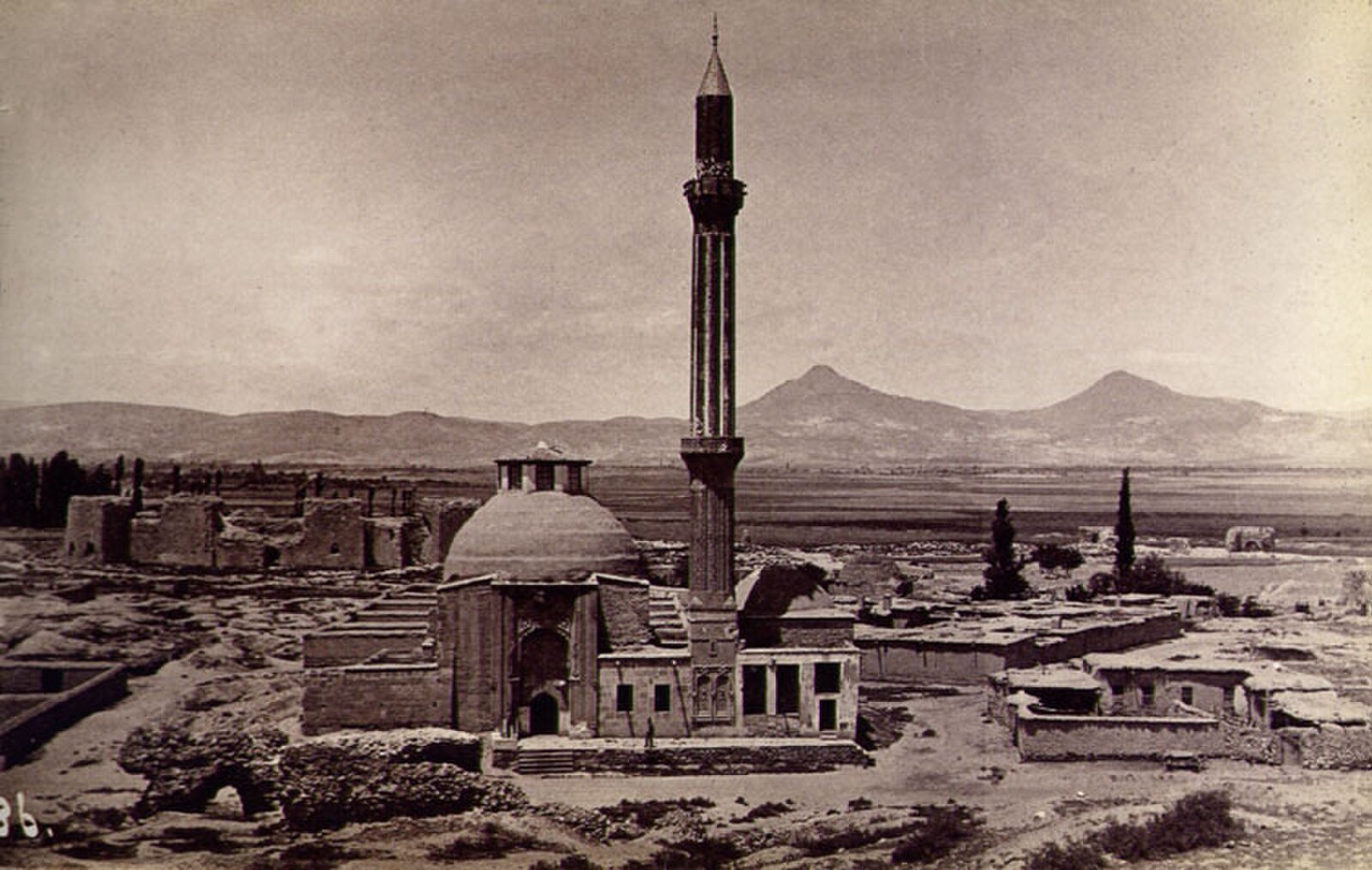
The İnce Minareli Medrese
Shot from a high vantage point by the American photographer John Henry Haynes: the İnce Minareli Medrese of 1258 with the remains of Zindankale behind it.

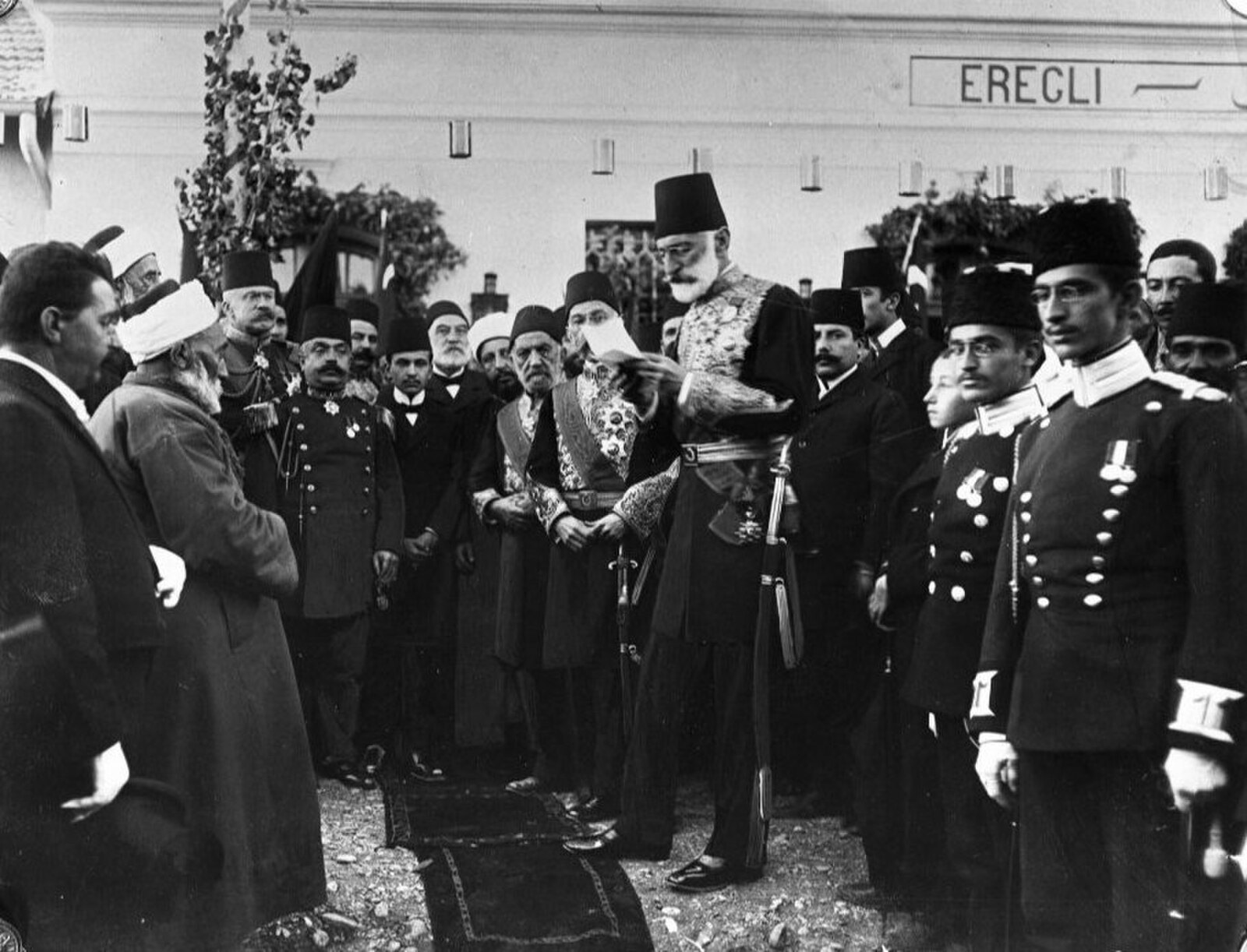
Opening of Ereğli station, 25 October 1904
The ceremony marking the arrival of the Baghdad Railway at Ereğli, 25 October 1904, with officials in fezzes and uniforms in front of the station.

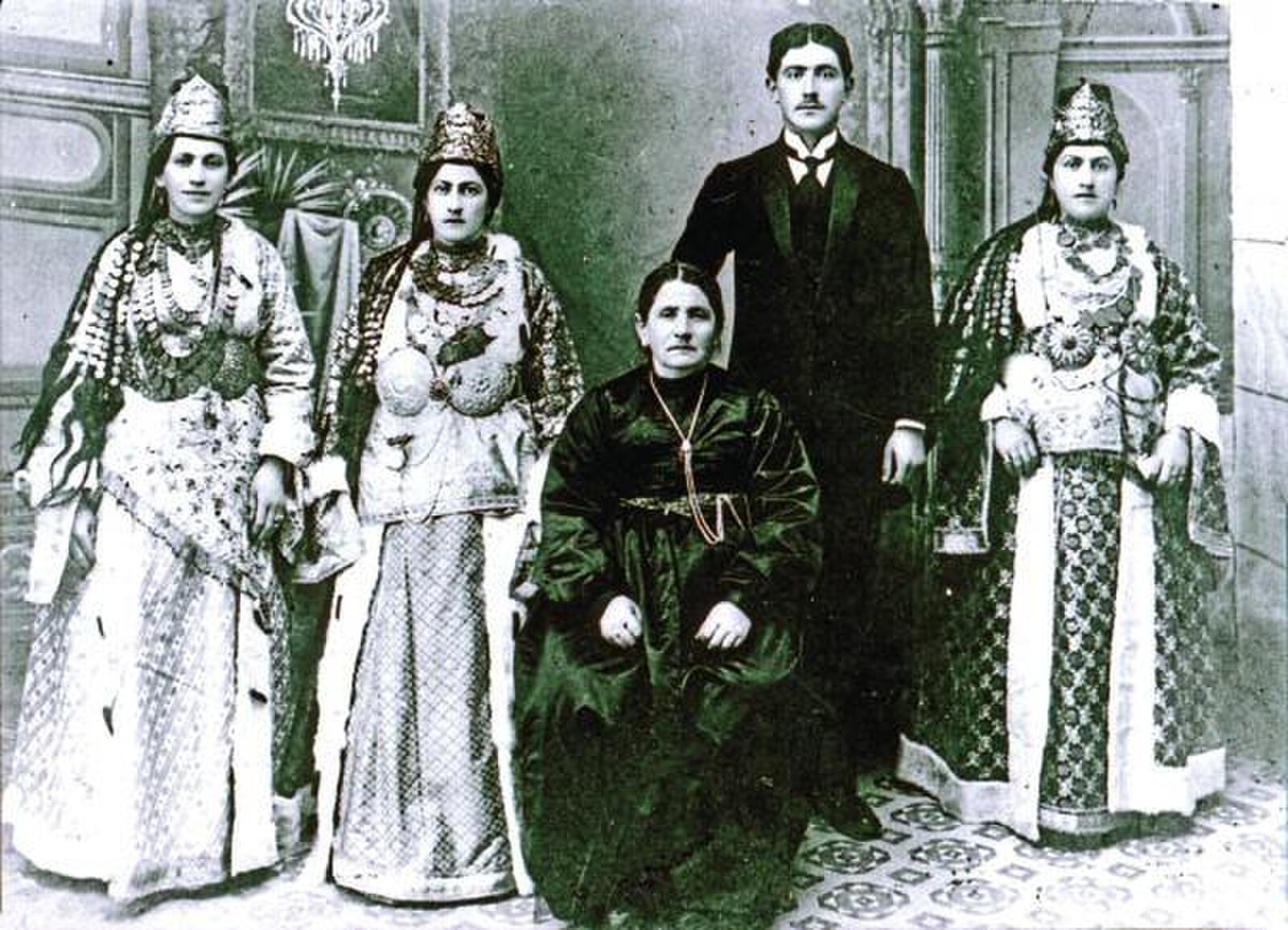
Greeks of Sille in traditional dress
Karamanli Greeks of Sille, north-west of Konya, in traditional dress (1906). The community left for Greece in the 1924 population exchange.

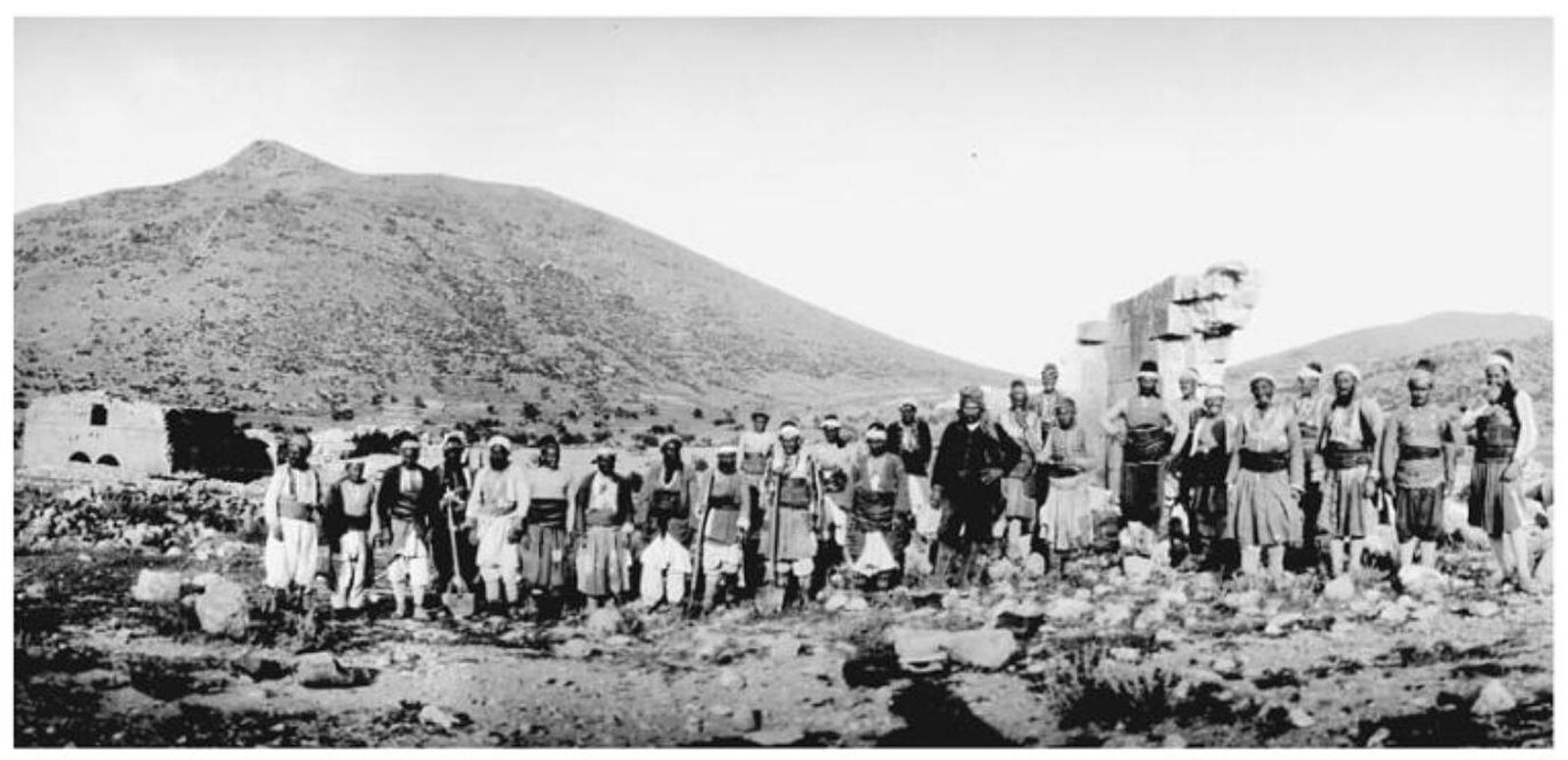
Gertrude Bell's excavation at Madenşehir
Workers at the Madenşehir settlement of Binbirkilise during Gertrude Bell's 1907 campaign.

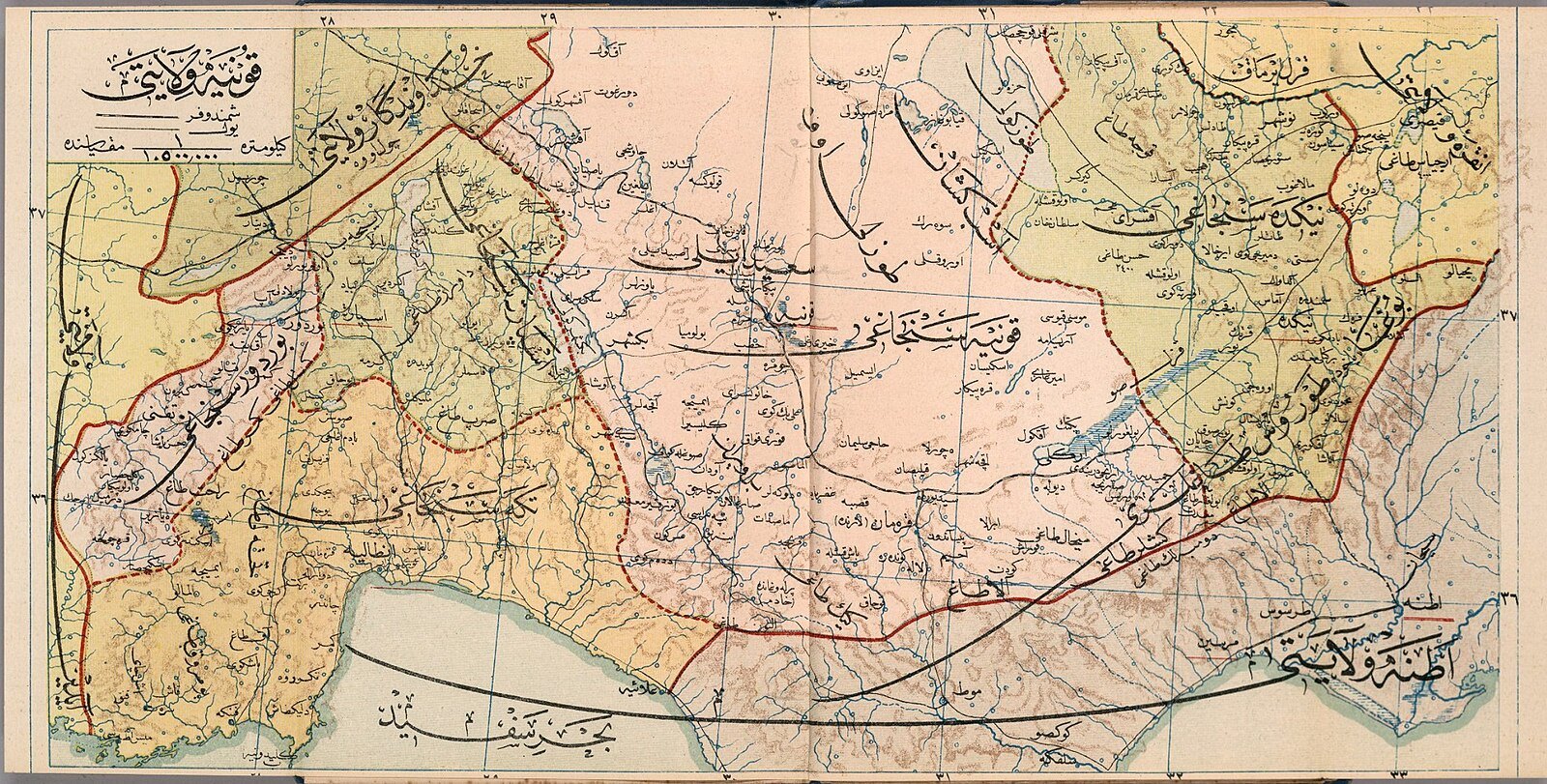
Map of the Konya Vilayet (Ottoman Turkish)
Map of the Konya Vilayet from the 1907 Ottoman atlas; at that time the province stretched from Antalya to Niğde.

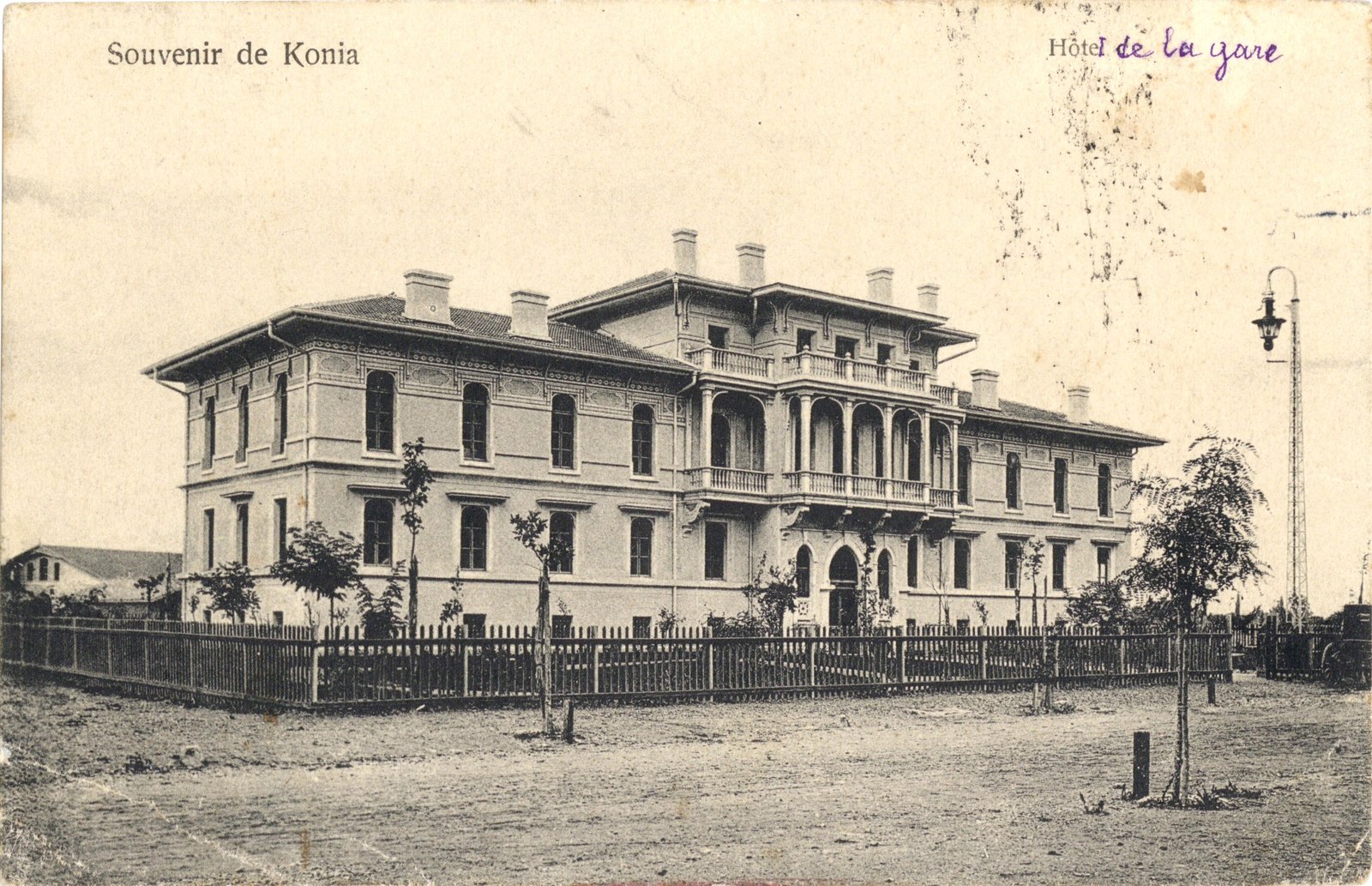
The Baghdad Hotel (Hôtel de la gare)
The Baghdad Hotel, opened near the station after the Baghdad Railway reached Konya; the postcard's front reads 'Souvenir de Konia. Hôtel de la gare'.
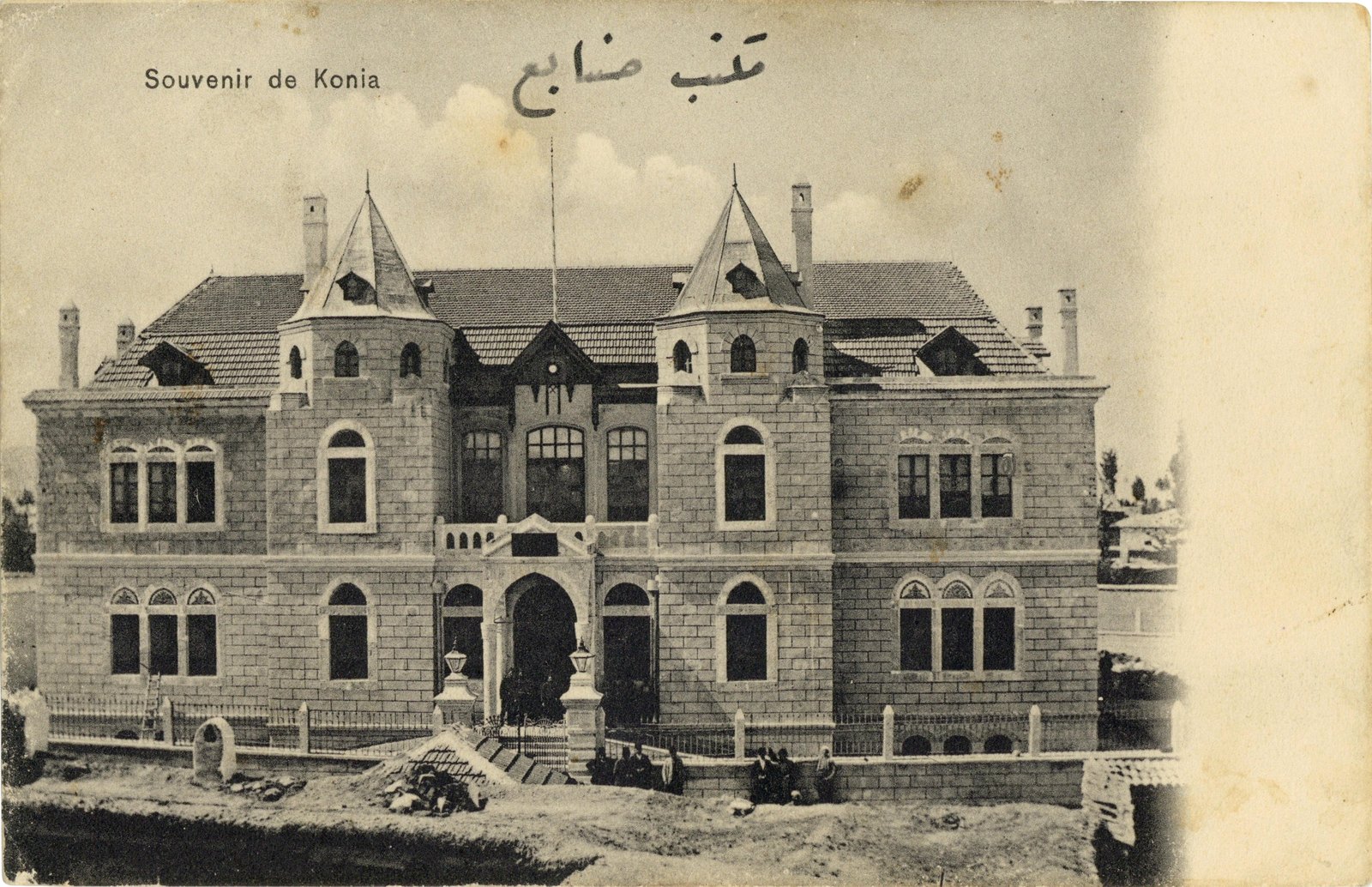
The Konya Industry School
A 'Souvenir de Konia' postcard showing the Konya Industry School, opened in 1901. The building today houses the provincial council.
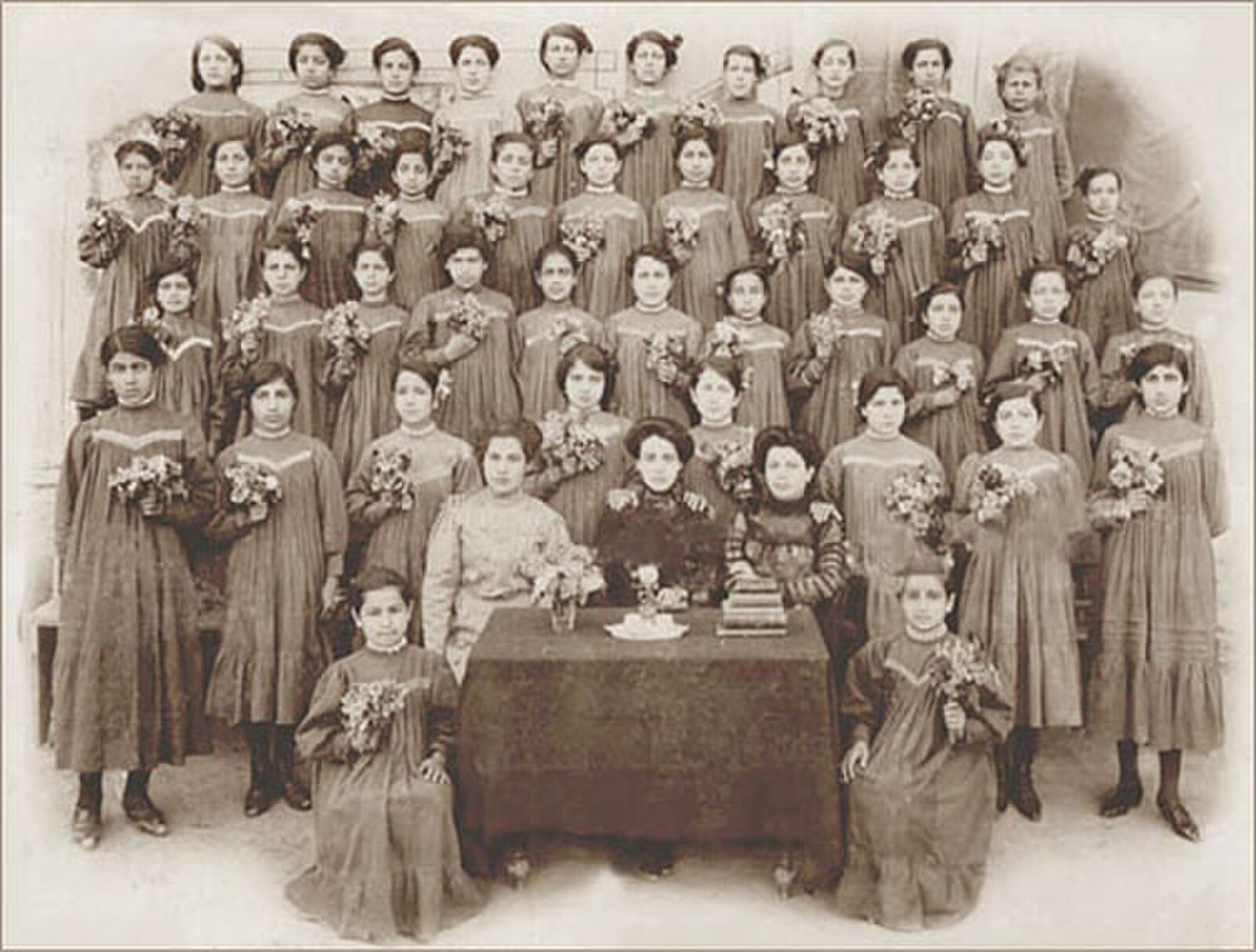
Girl students of the Sahakyan school
Girl students of the Armenian Sahakyan school in Konya, 1910 — a rare record of the city's multicultural educational life.

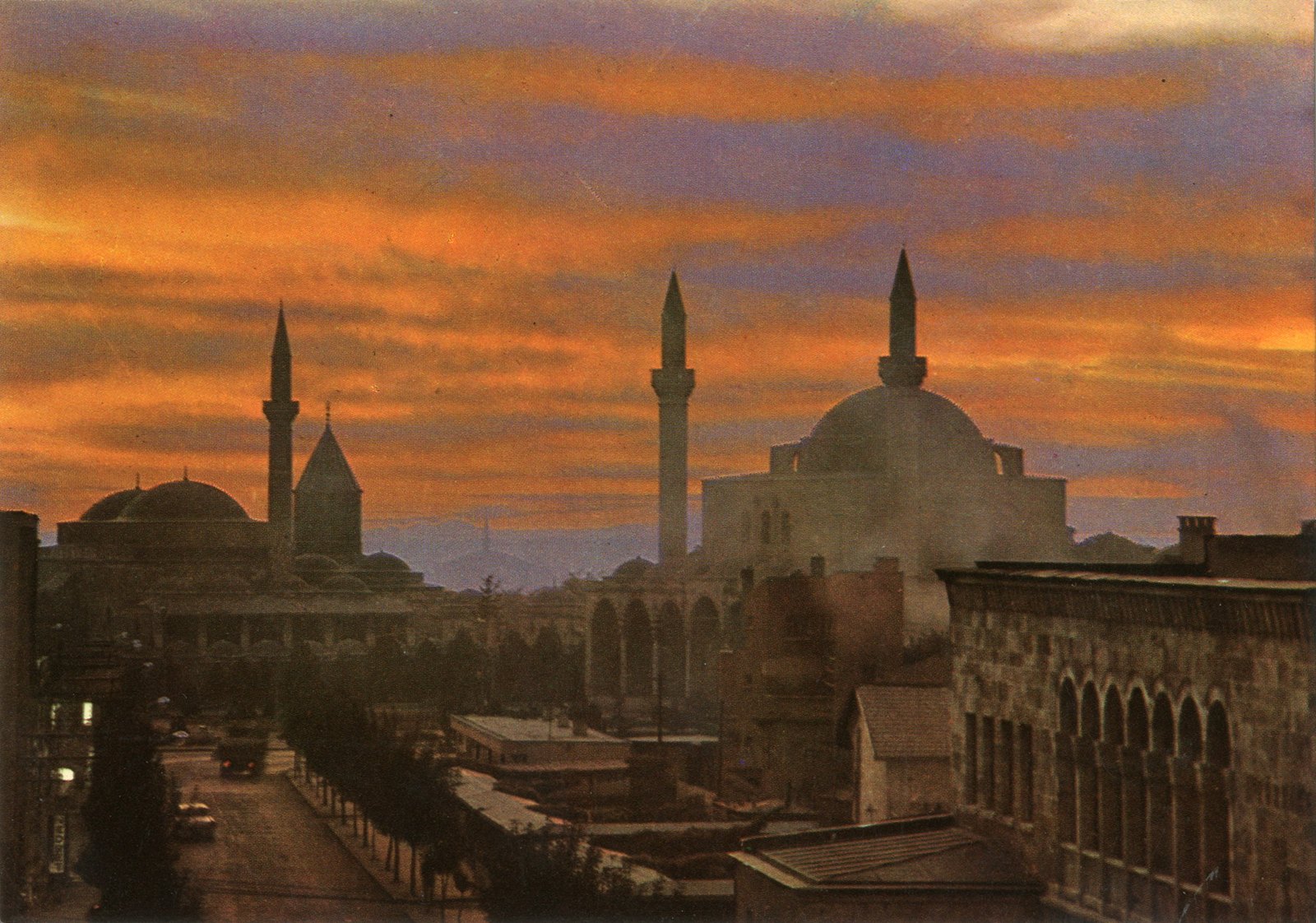
A view of Konya (hand-tinted postcard)
From the Kemali Söylemezoğlu postcard archive: the minarets of Konya in evening light, printed with the hand-tinting technique common at the time.
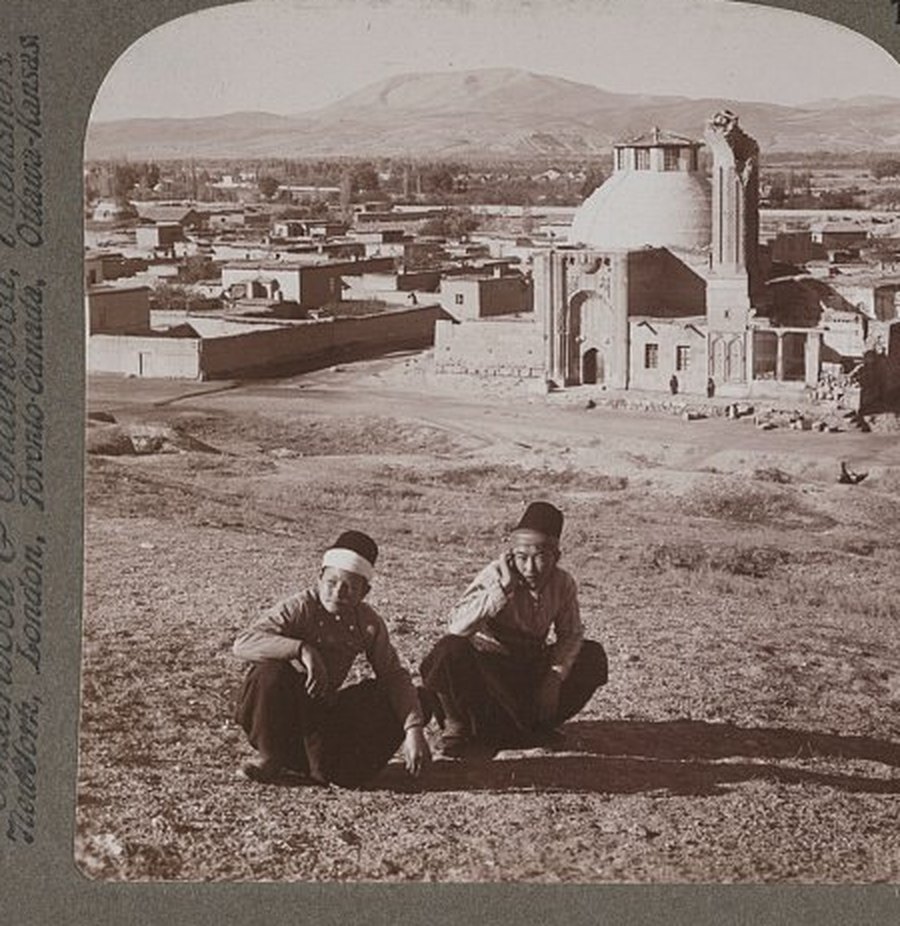
Konya with the mountains to the west
A 1911 stereograph: two men squatting on a roof with Konya and the western mountain range behind them. The card's caption presents the city as 'Paul's Iconium'.
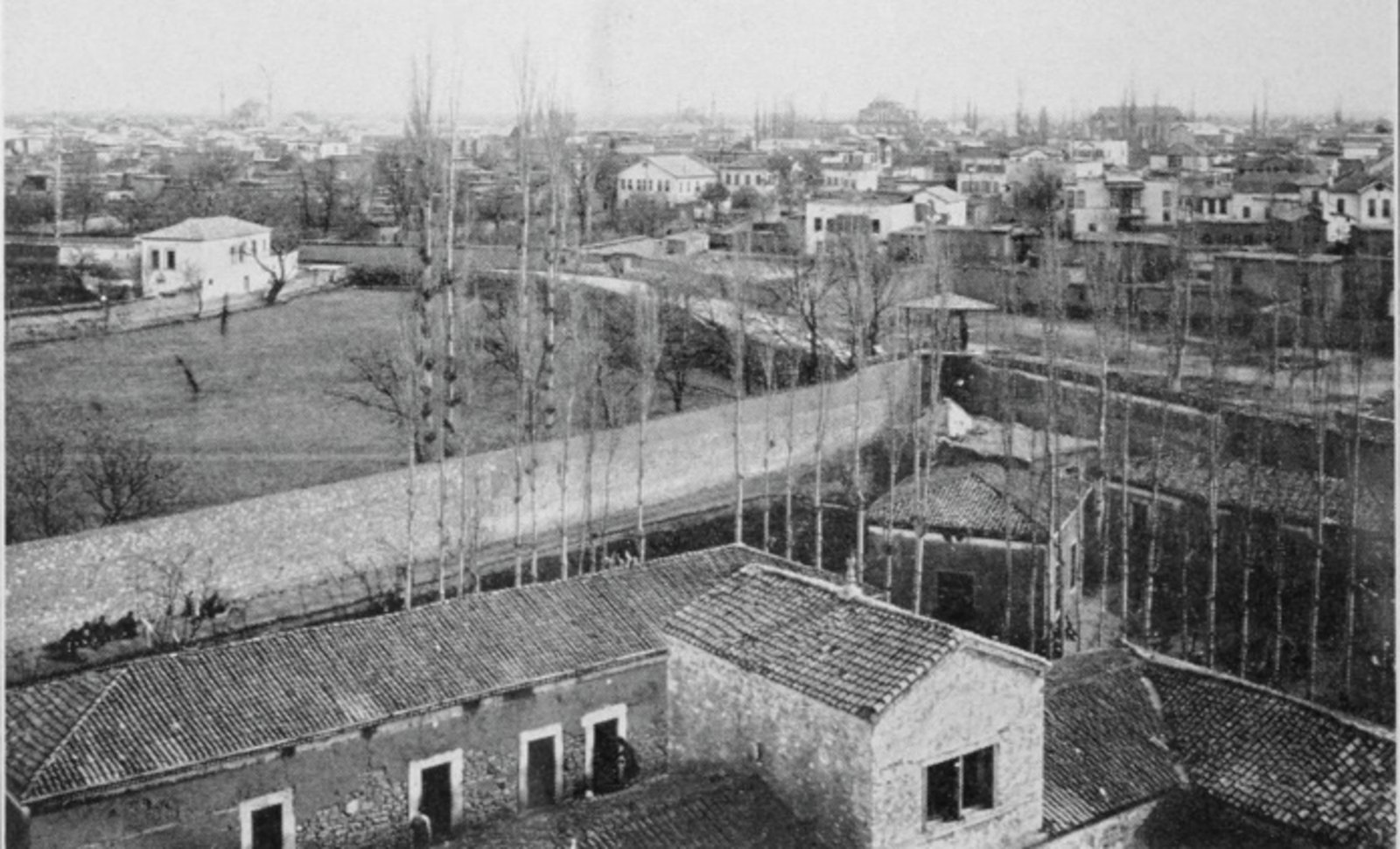
Konya in 1913
A view of Konya in 1913: low flat-roofed houses and the city's skyline.

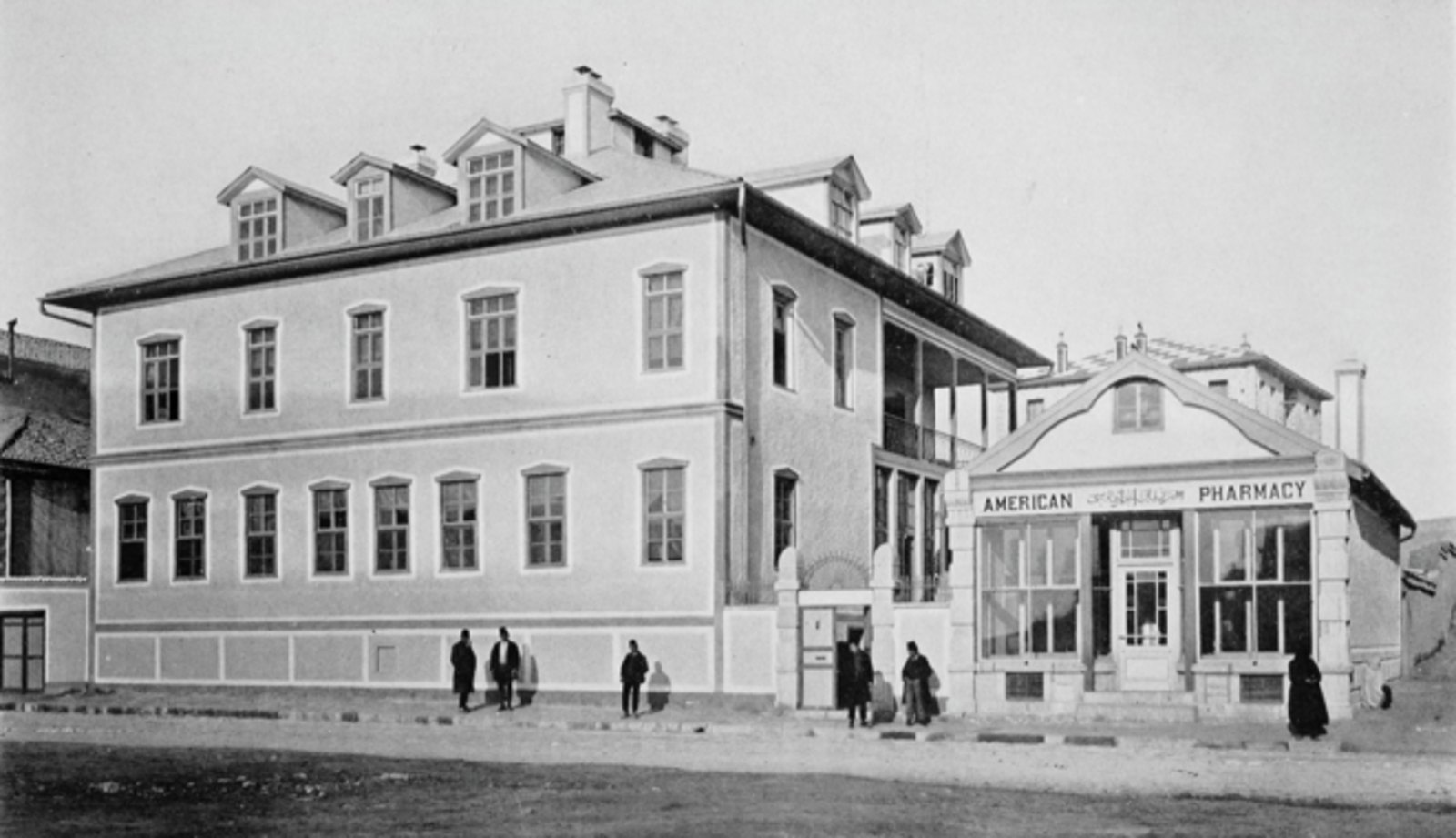
The American Pharmacy
A two-storey building in Konya bearing the sign 'American Pharmacy' in 1913 — a good example of the city's pre-Republican commercial architecture.

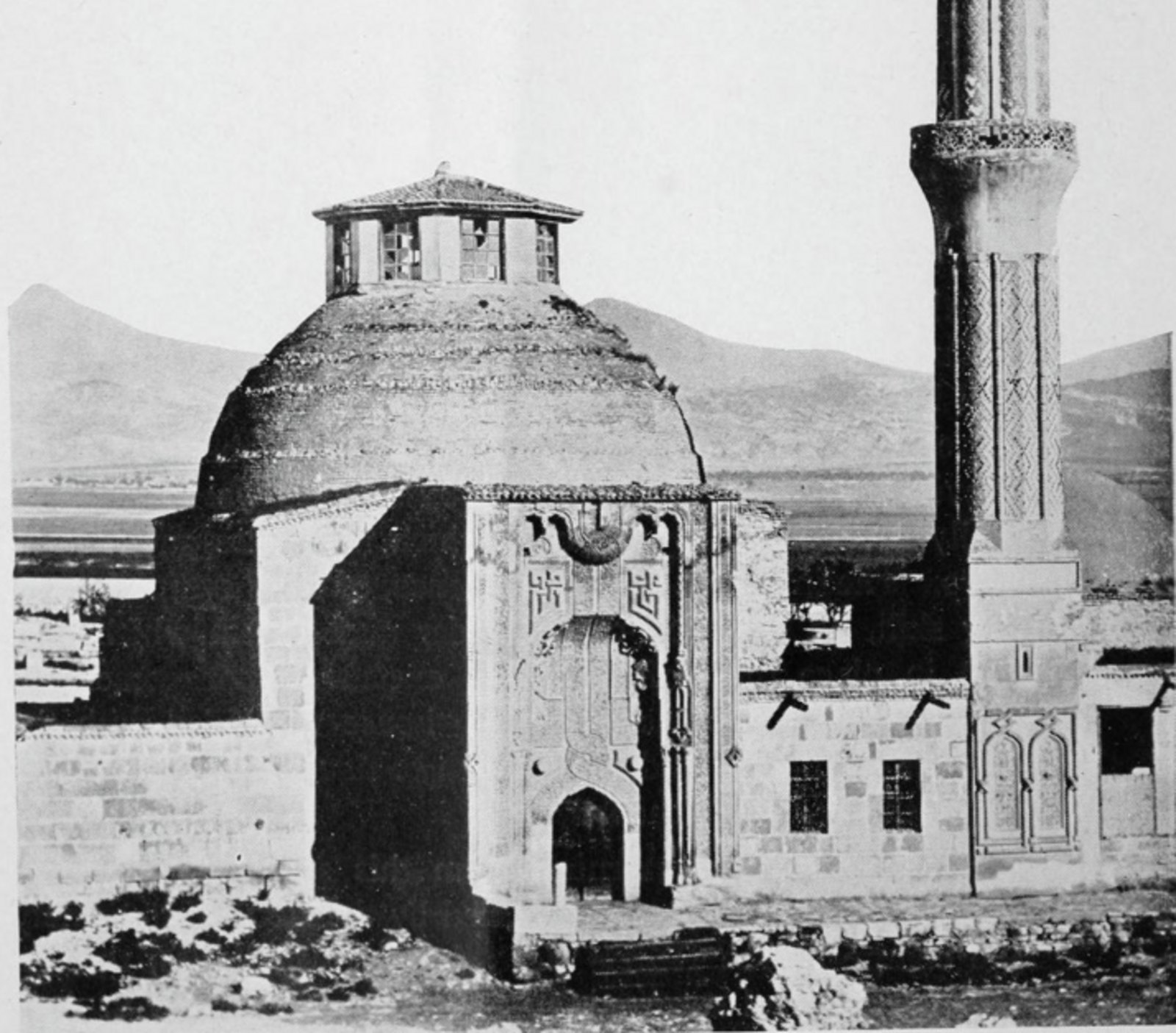
The İnce Minaret in 1913
The dome and minaret of the İnce Minareli Medrese in 1913. The upper part of the minaret had been destroyed by lightning in 1901; the photograph records that…

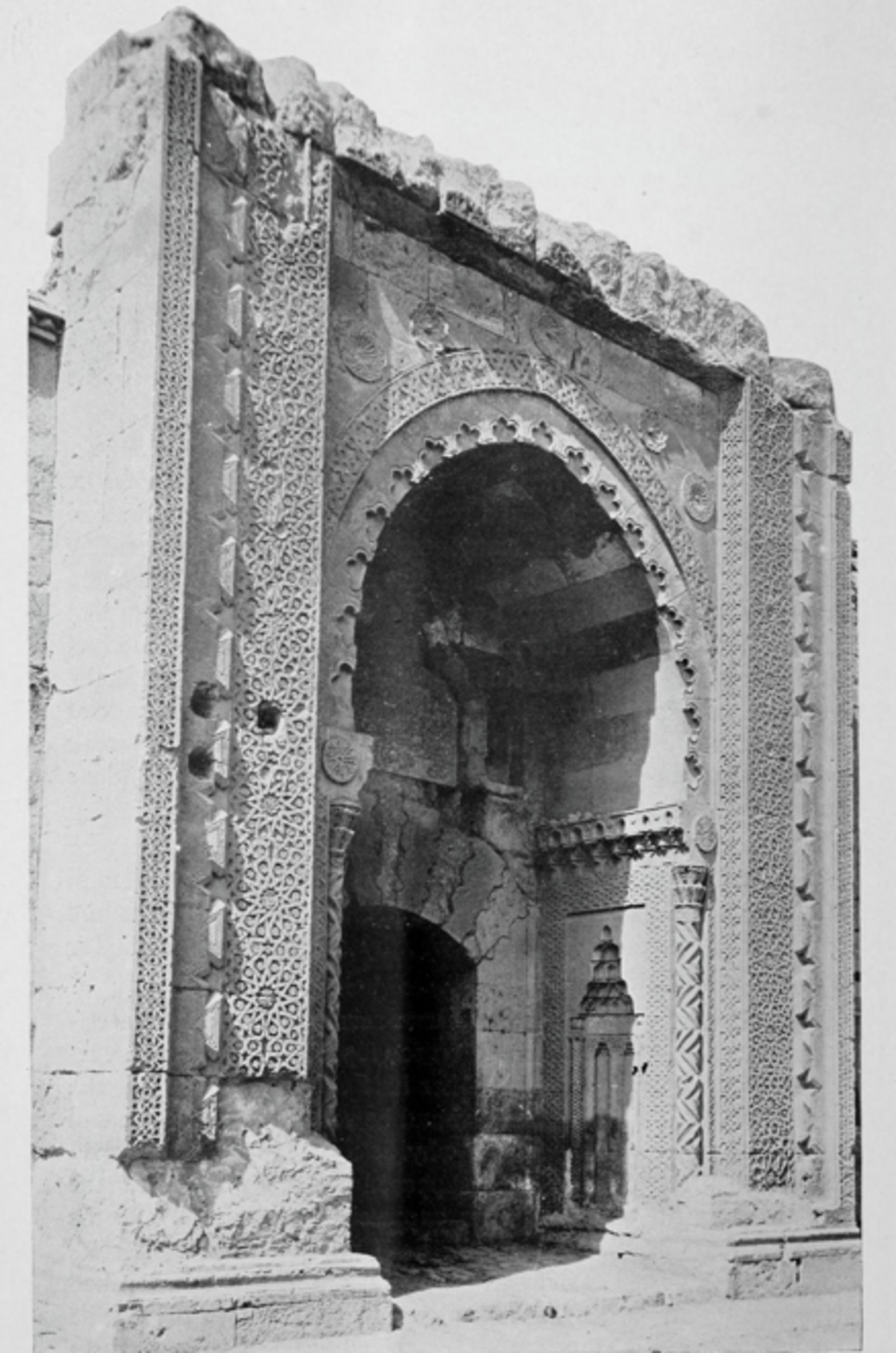
Portal of the Sırçalı Medrese
The crown portal of the Sırçalı Medrese, built in 1243, photographed in 1913. It owes its name to the turquoise tiles that line its interior.

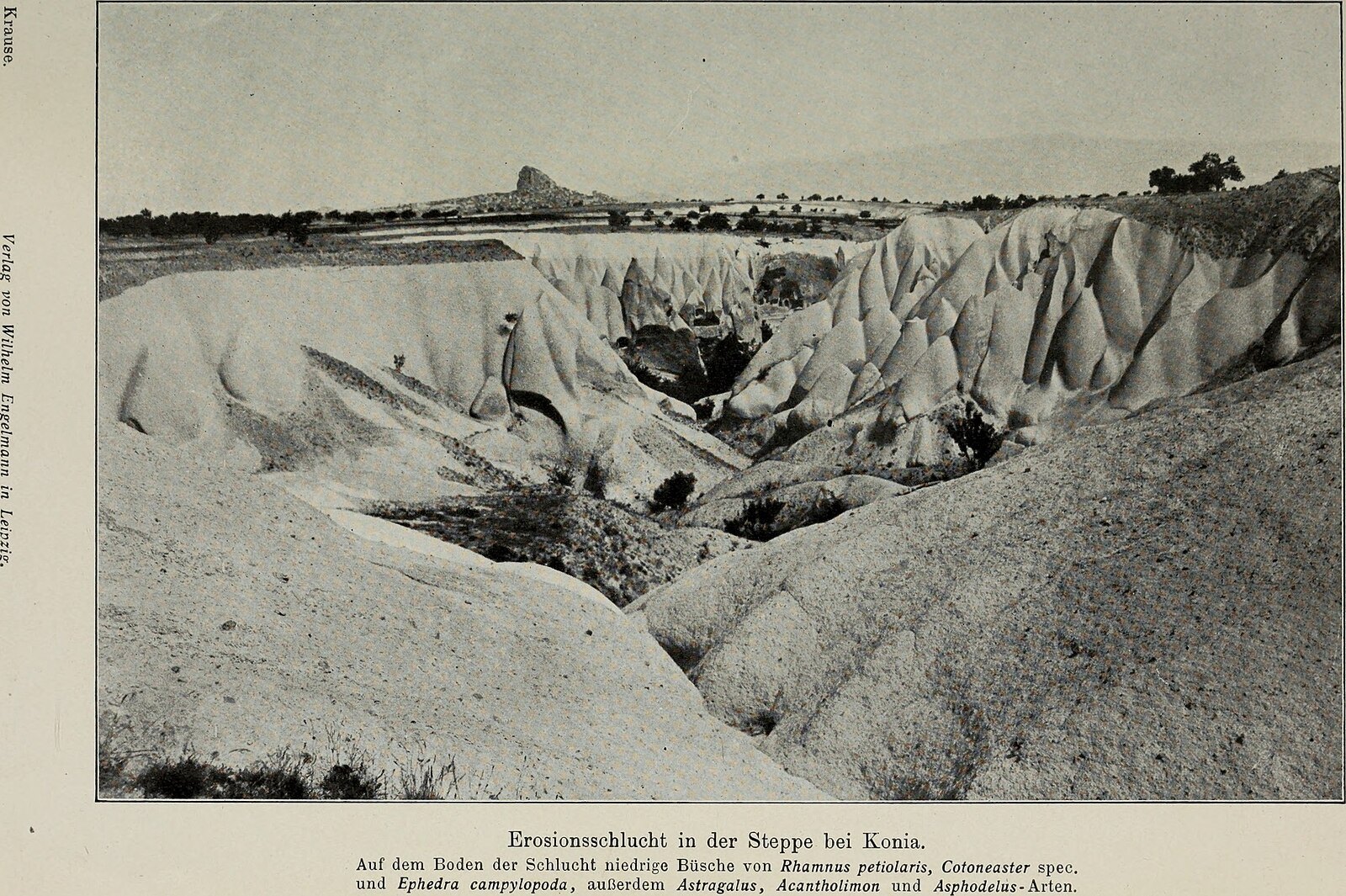
Erosion gully in the Konya steppe
Erosion gullies in the Konya steppe, 1915 — part of botanical research into the vegetation of the region.

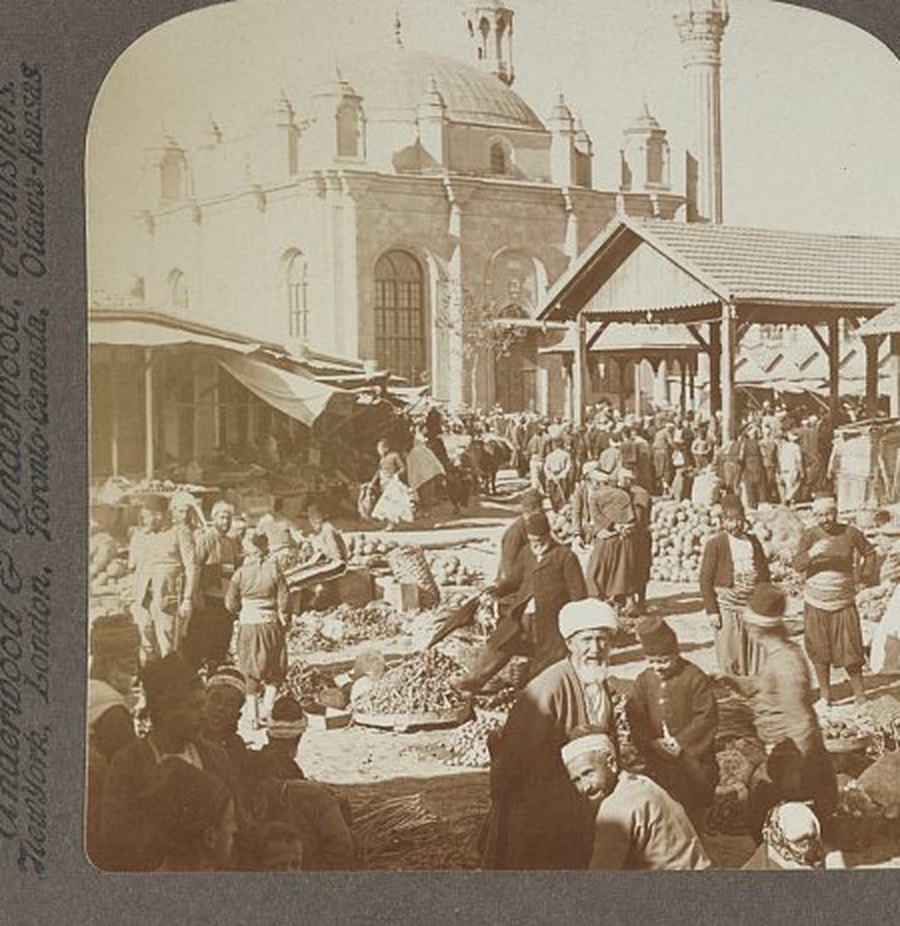
Vegetable market before a mosque
A vegetable market in front of a mosque in Konya, 1915, published as an American stereograph card.
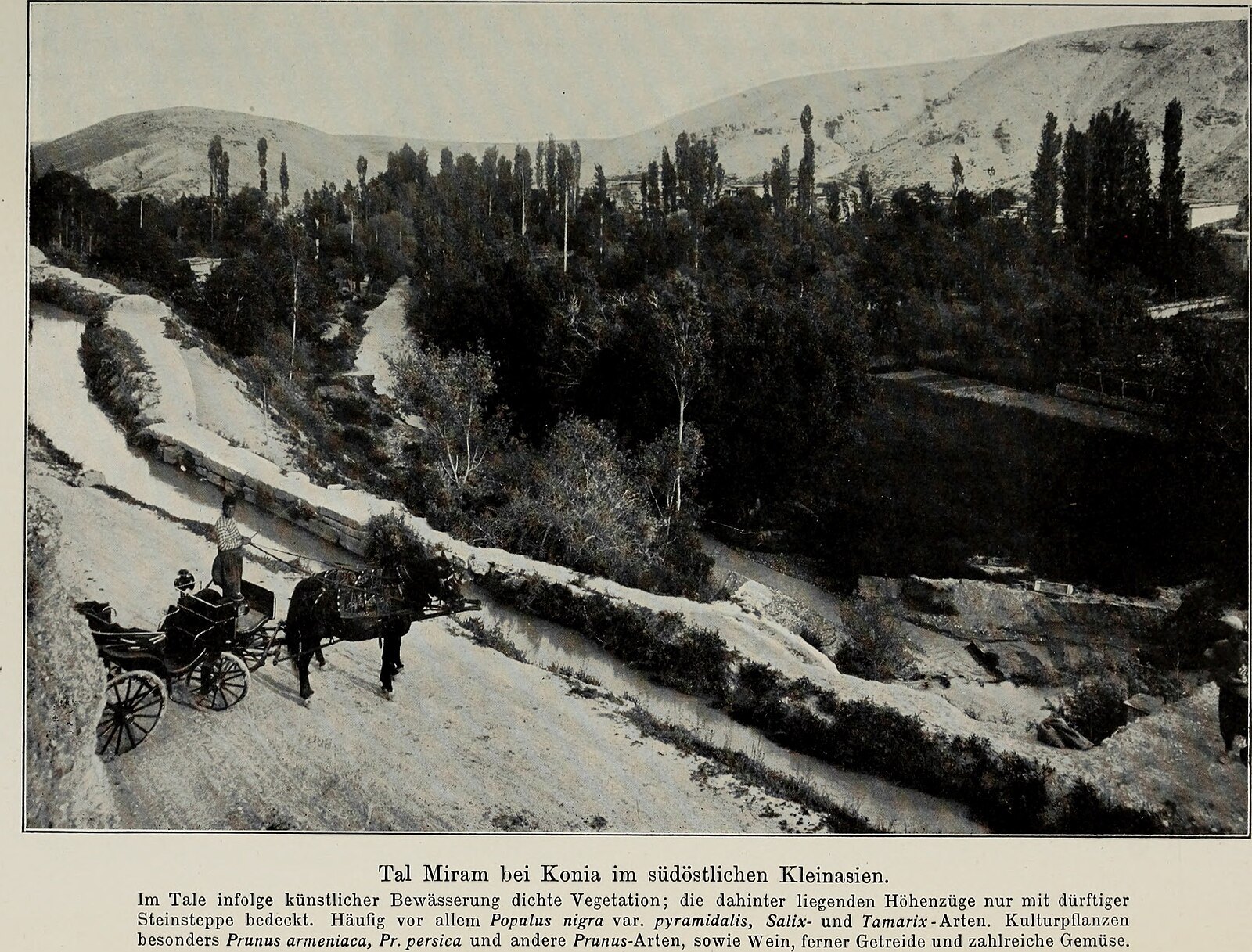
The Meram valley
'Tal Meram bei Konia', published in 1915 by the German botanist Kurt Krause: the Meram road with its vineyards, poplars and a horse cart.

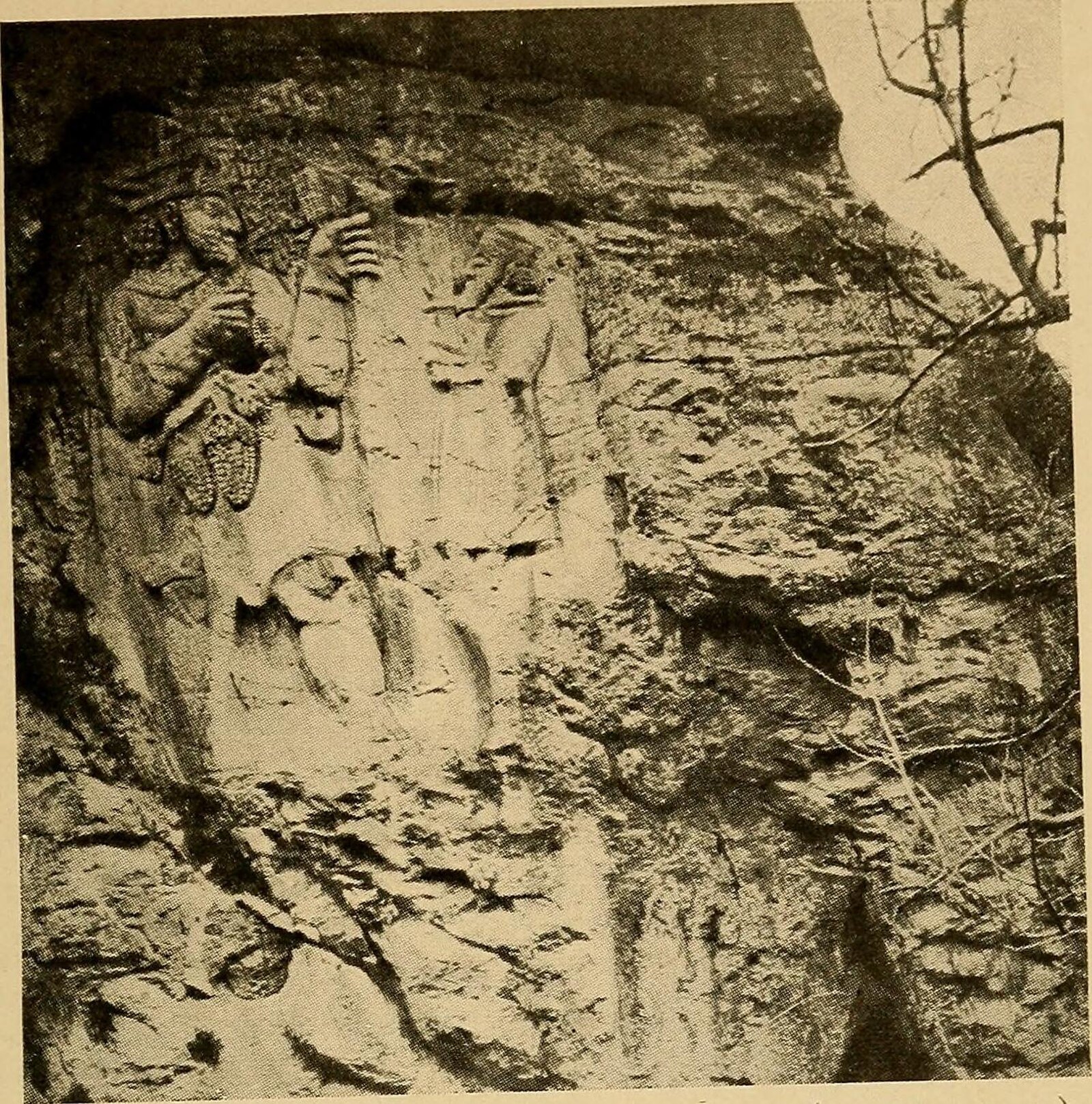
The İvriz rock relief
The Late Hittite rock relief at İvriz near Ereğli (8th century BC): King Warpalawas before the storm god Tarhunzas. From a book published in 1917.

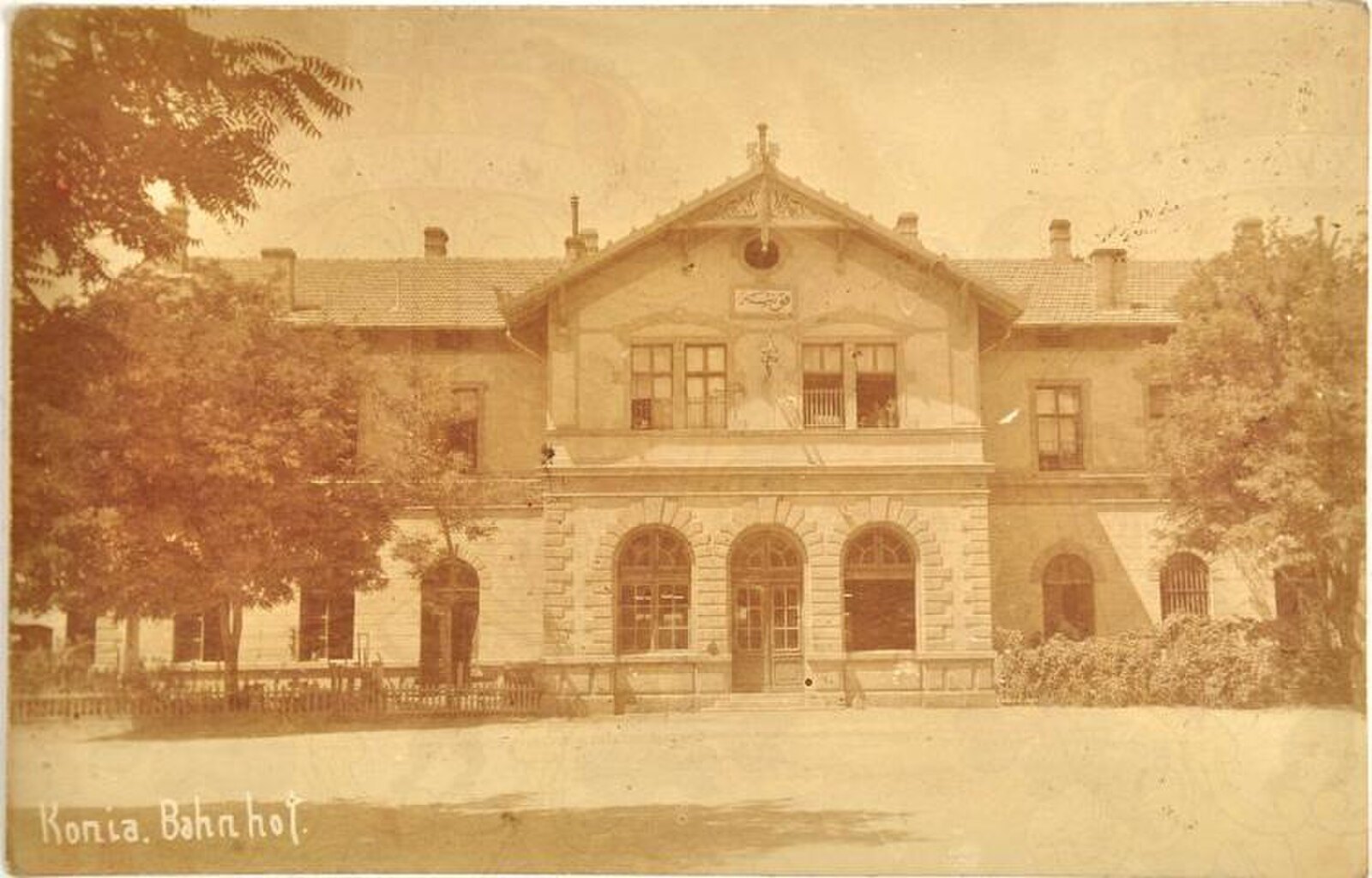
Konya station, 4 March 1917
Konya station during the First World War; it was one of the key nodes of military transport along the Baghdad Railway.

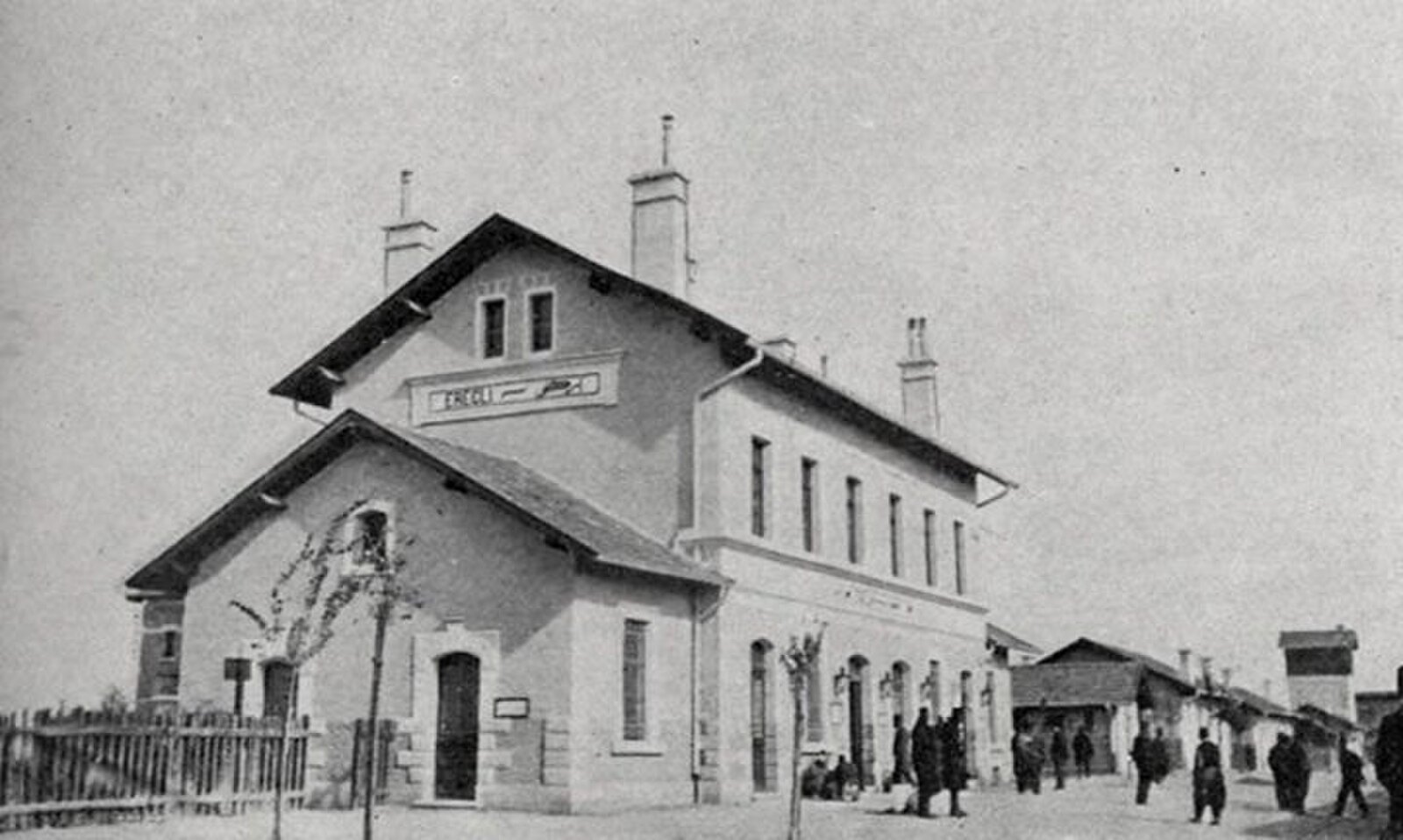
Ereğli railway station
The station building at Ereğli in 1918, with people waiting on the platform.

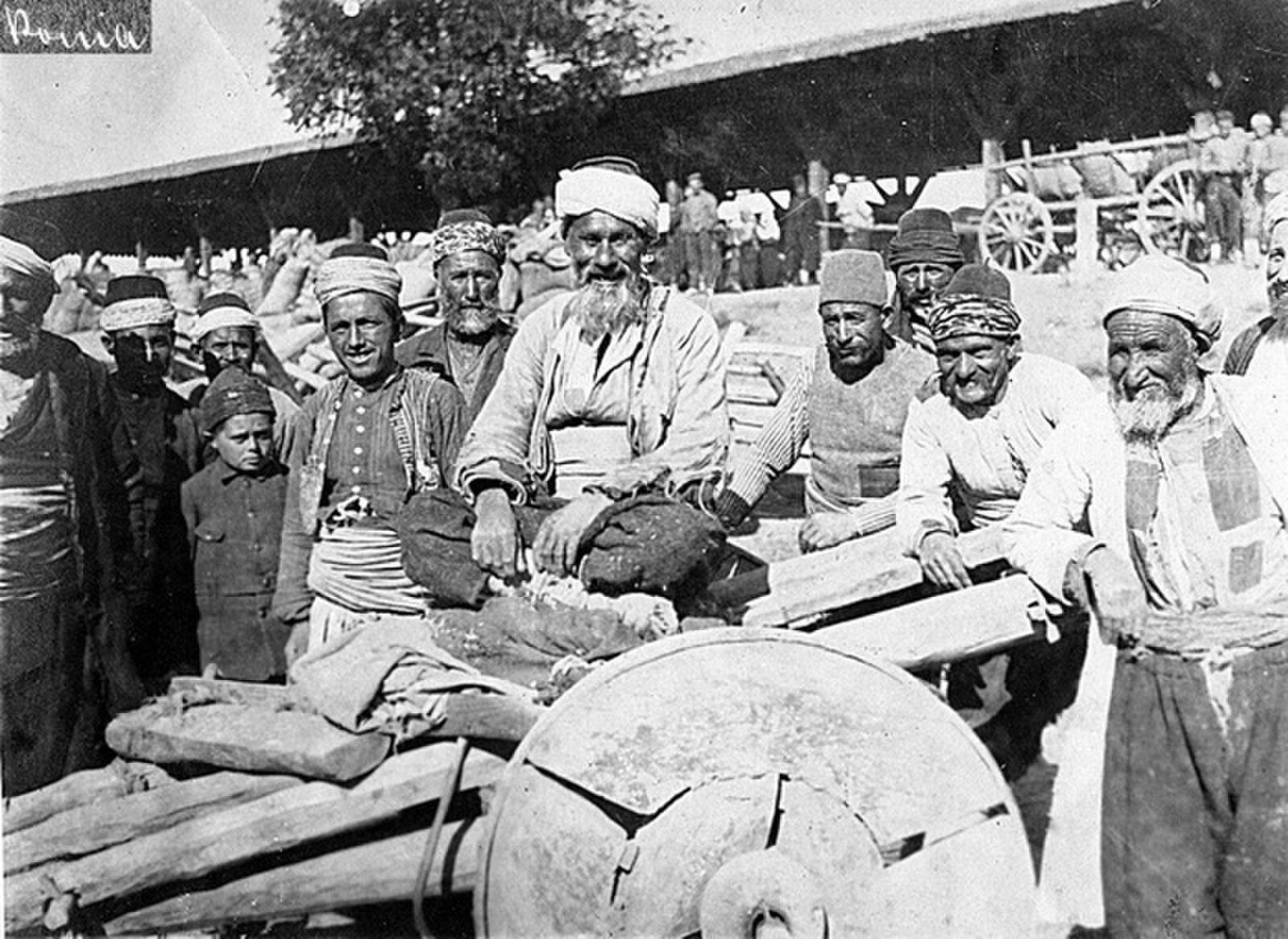
The market place of Konya, 1918
The market place of Konya in 1918: ox-carts, sacks of flour and the crowd around the stalls. From the album of Uri Wolf, who was in the region during the…

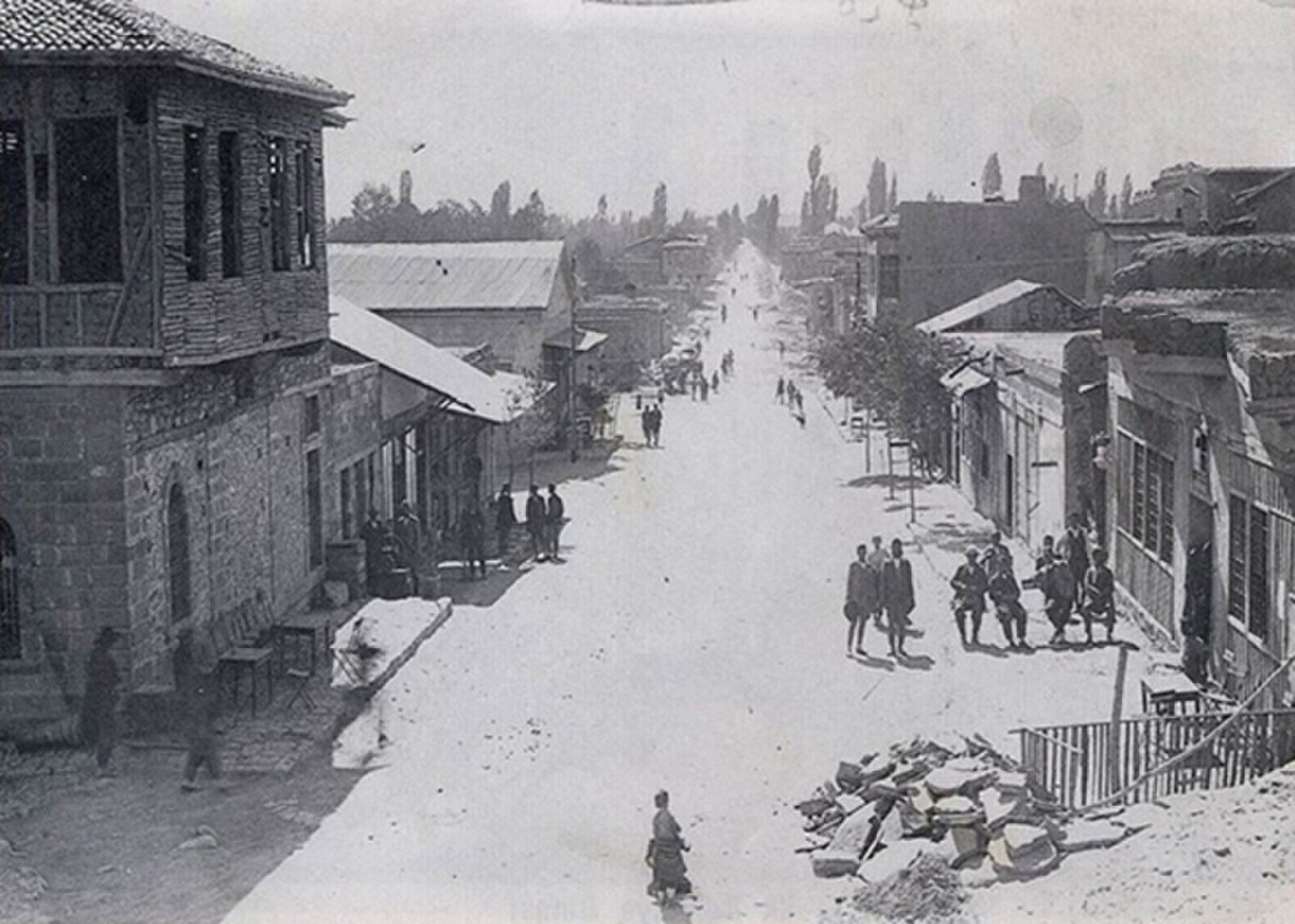
Station Street, Ereğli
Station Street in Ereğli around 1920: two-storey houses with wooden bay windows and an unpaved road.

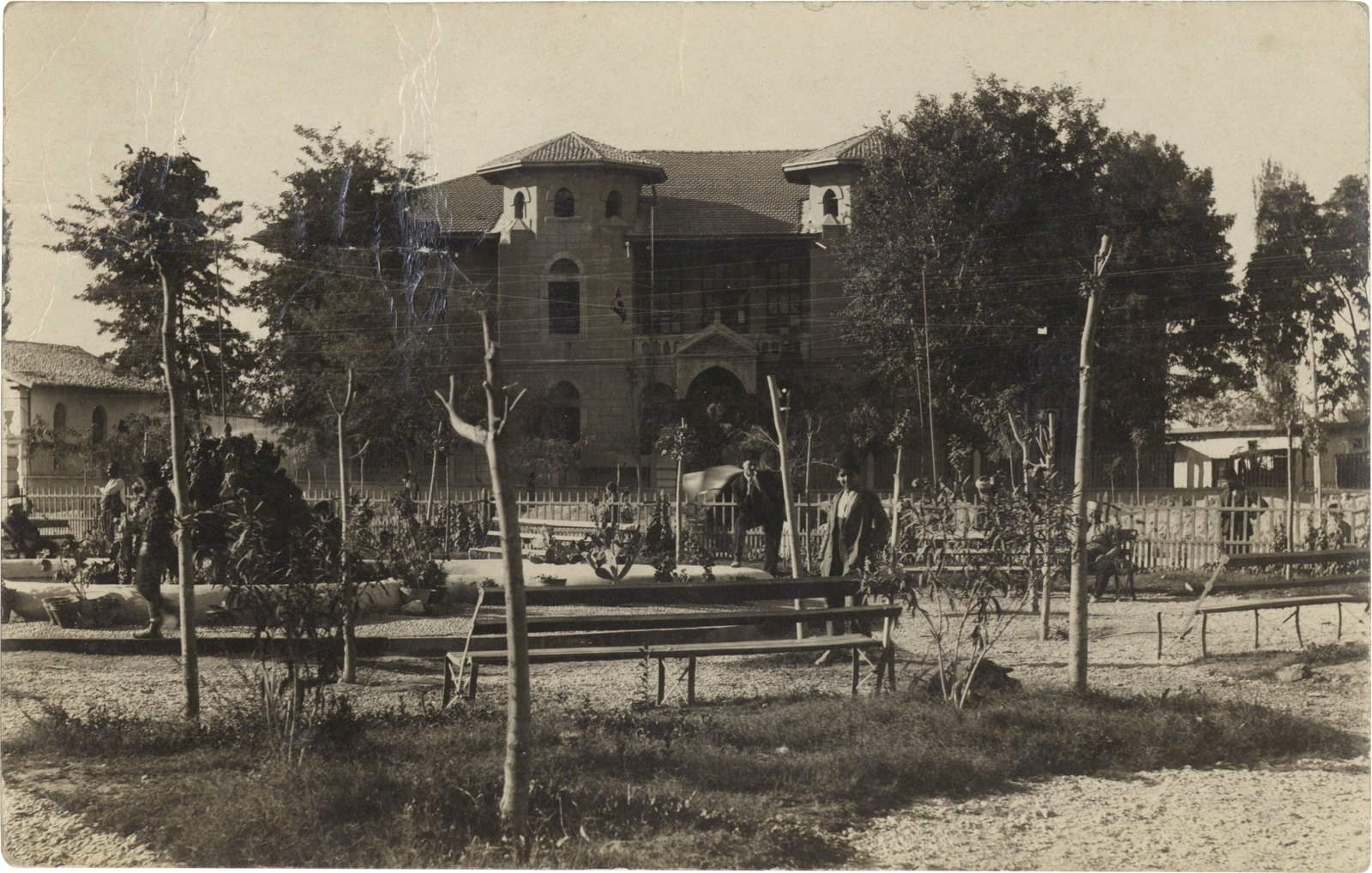
The Industry School building and its garden
A photocard taken from the garden of the Konya Industry School, with newly planted trees and an unpaved road.
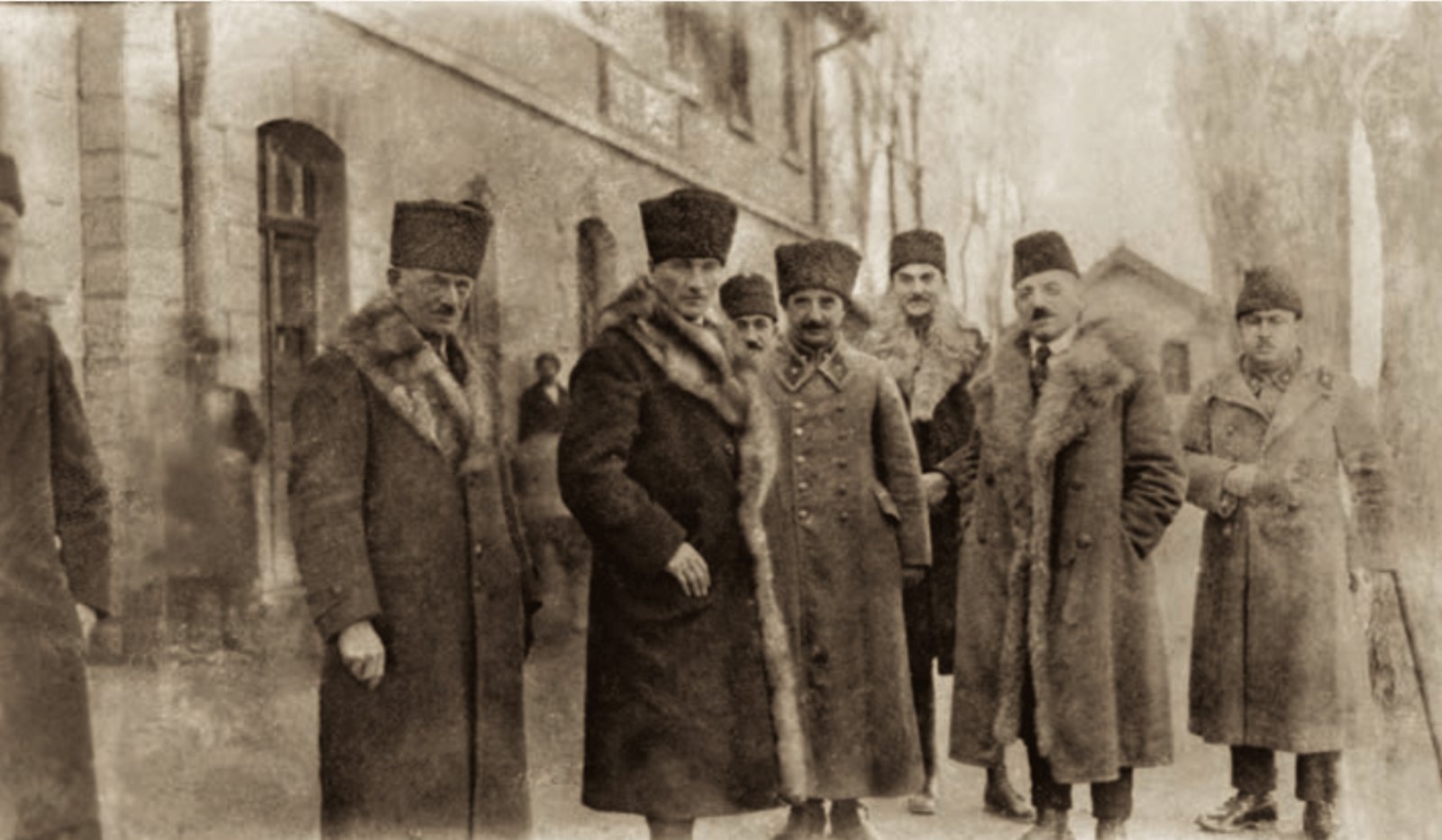
Akşehir, 13 December 1921
Officers in the streets of Akşehir on 13 December 1921. Akşehir was the town where the headquarters of the Western Front were located.

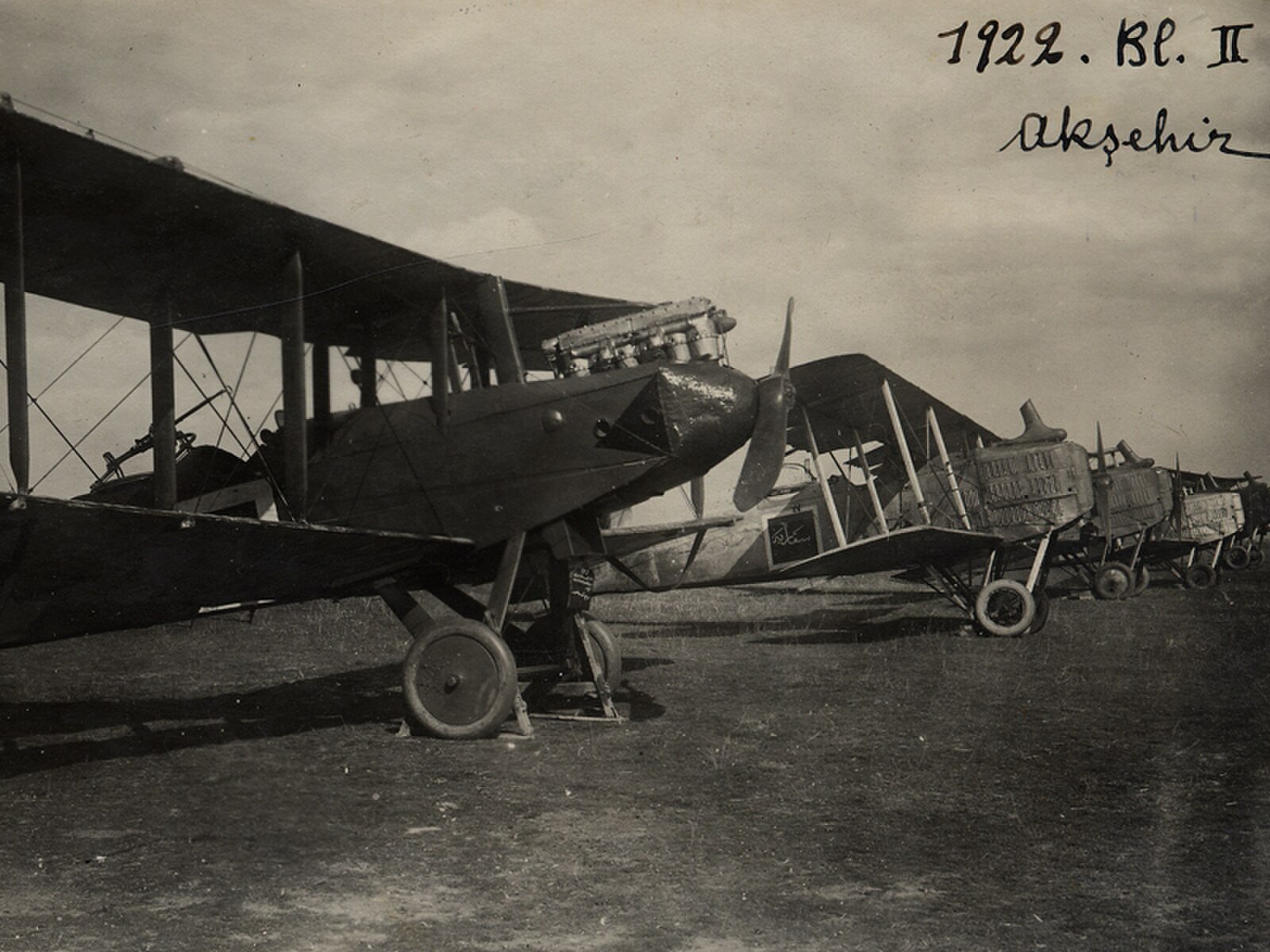
2nd Flight Squadron at Akşehir, 1922
Aircraft of the 2nd Flight Squadron stationed at Akşehir in 1922; the aerial reconnaissance for the Great Offensive was flown from here.

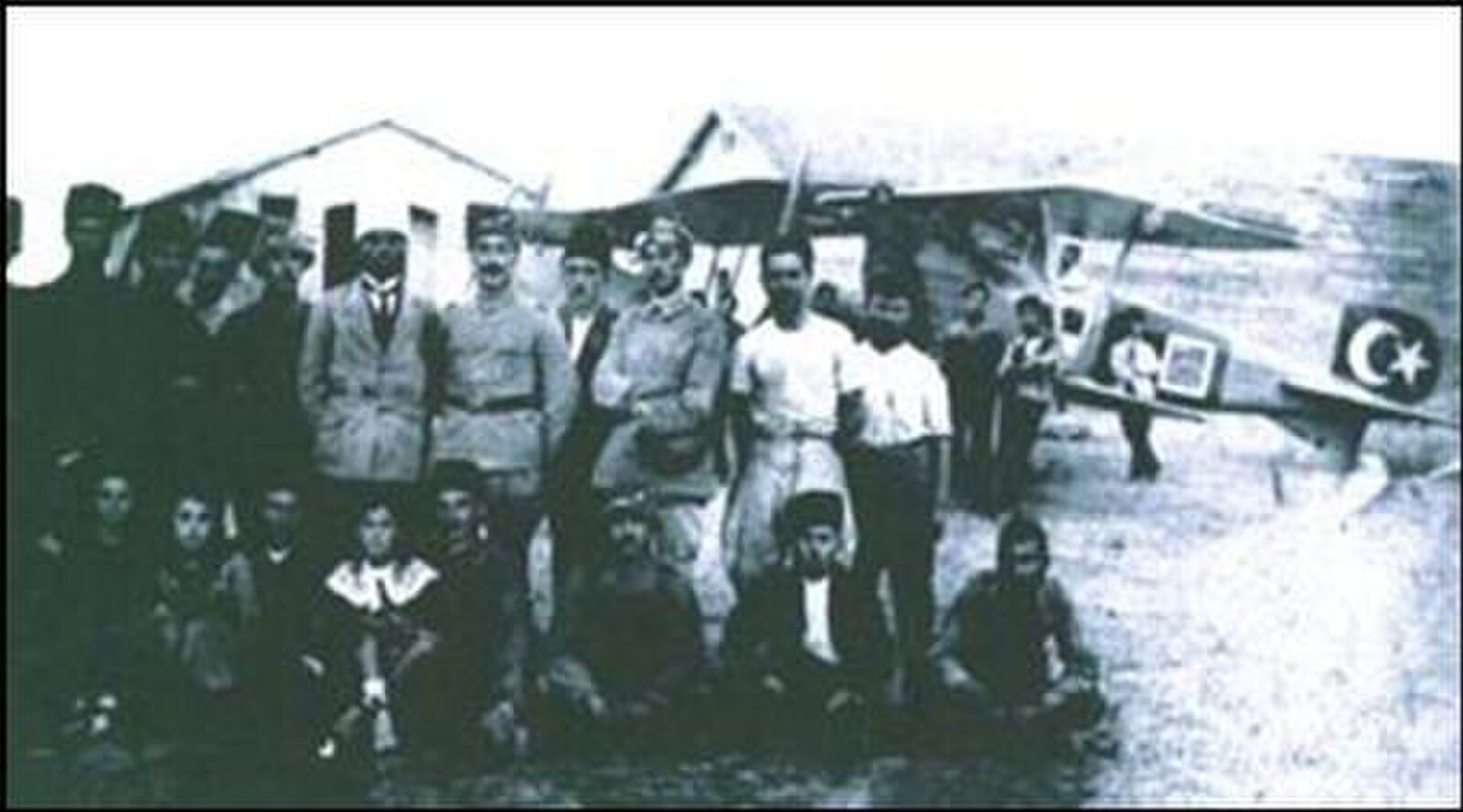
Repair work at the flight station
A crew servicing an aircraft at Konya Flight Station during the War of Independence.

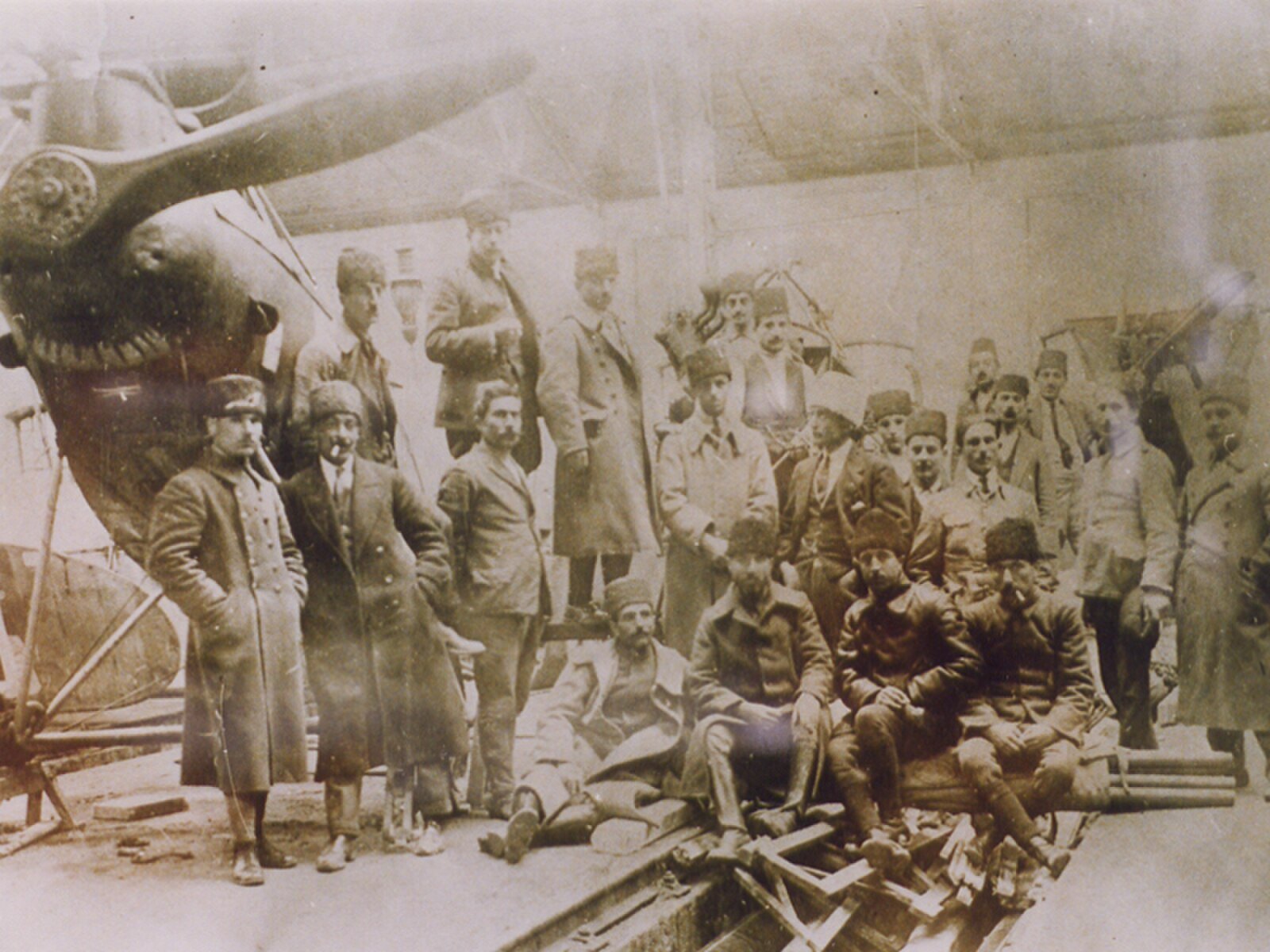
Konya Flight Station
Konya Flight Station during the Turkish War of Independence, with an aircraft bearing the star and crescent surrounded by personnel and townspeople.

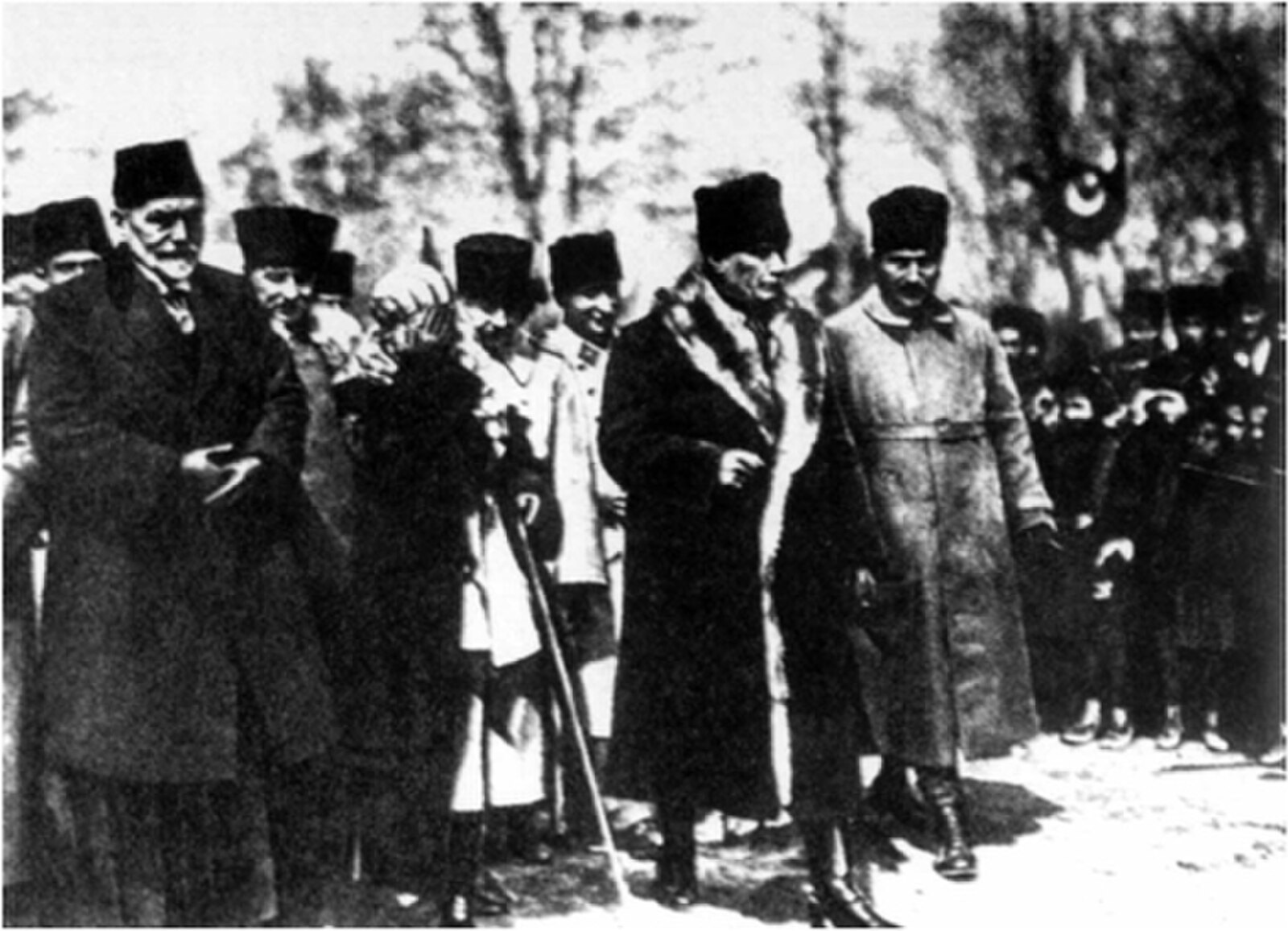
Atatürk in Konya, 22 March 1923
Mustafa Kemal among the crowd during his visit to Konya, 22 March 1923.

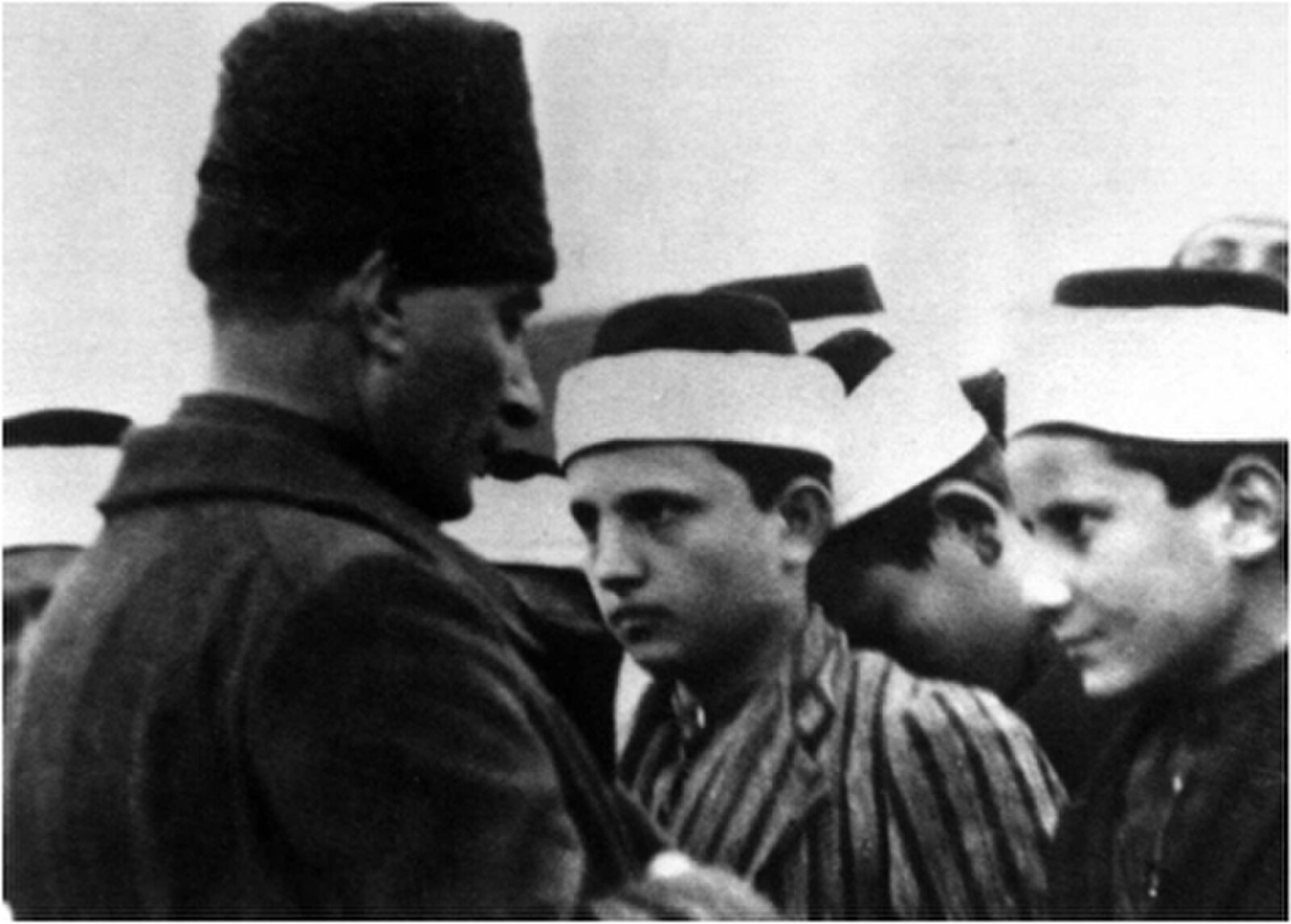
Atatürk with madrasa students, 22 March 1923
Mustafa Kemal photographed with madrasa students in Konya on 22 March 1923.

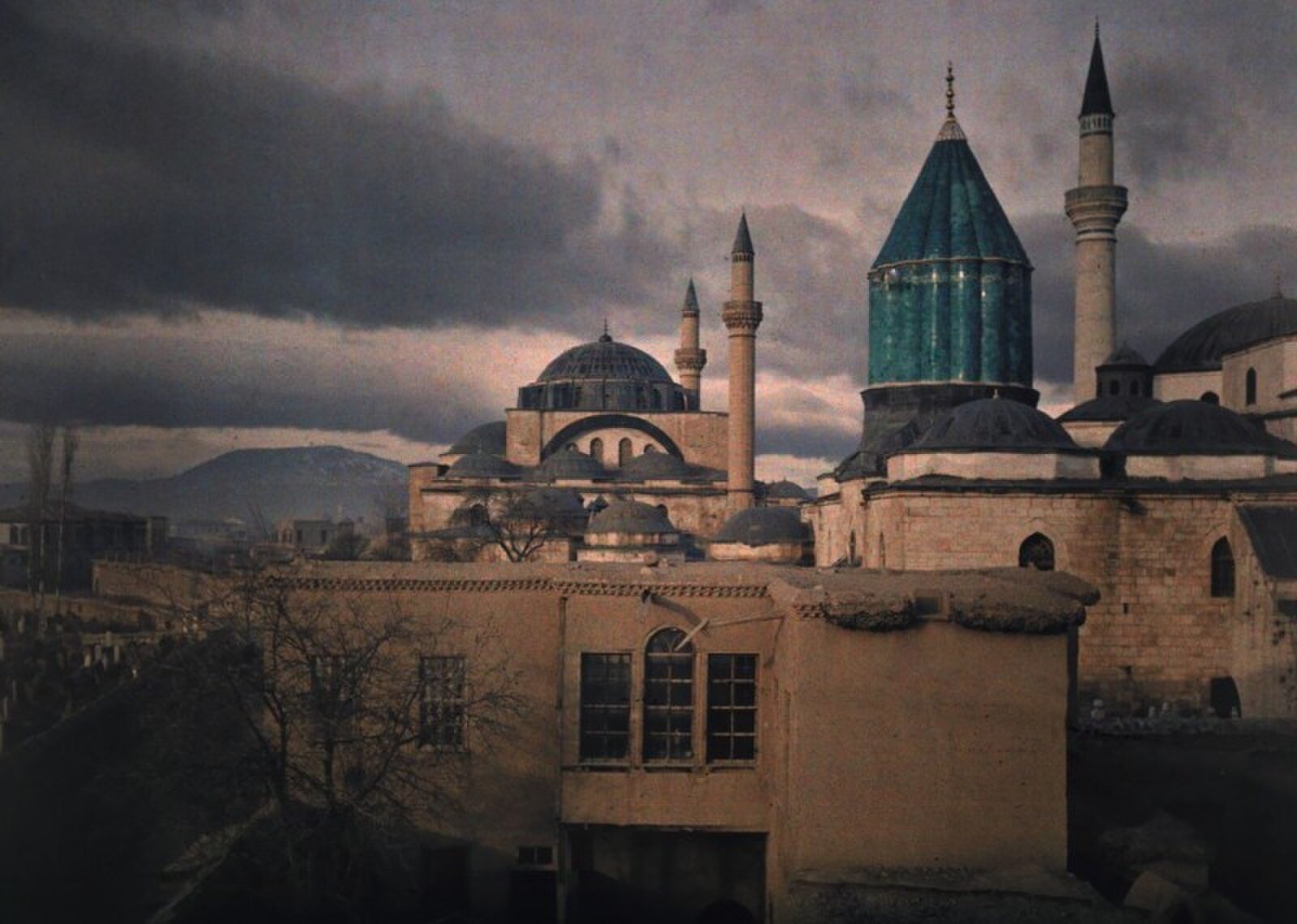
The Mevlâna Lodge
The Mevlâna Lodge and its Green Dome in 1923. The lodge was turned into a museum in 1926.

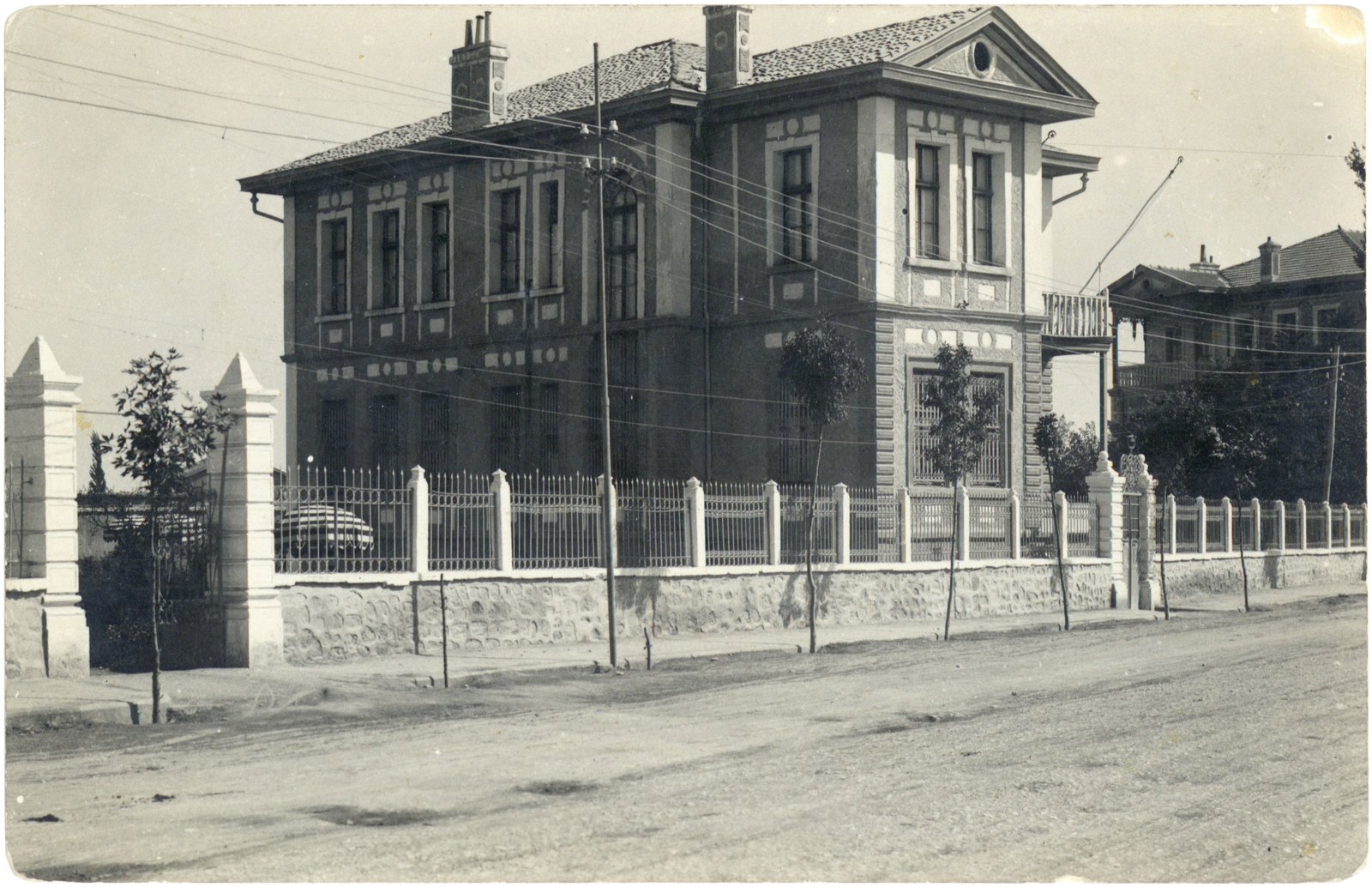
The Gazi Kiosk
The caption on the postcard reads: 'the kiosk Konya presented to the Gazi'. The building is the Atatürk House Museum today.
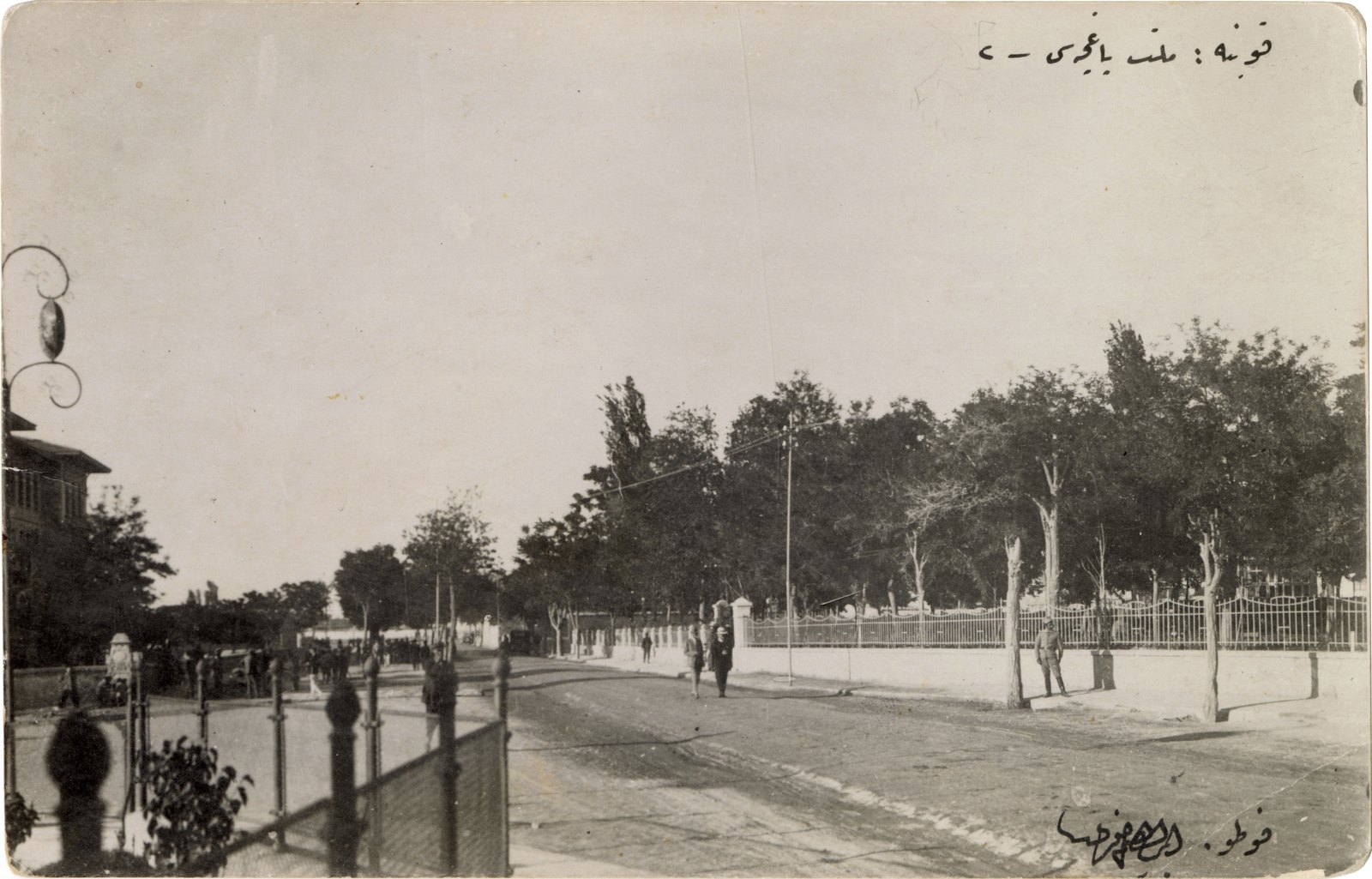
The Millet Garden of Konya
A view along Millet Garden Street; the caption on the card is in Ottoman Turkish. The photograph is by İbrahim Nuri Tongur, one of Konya's first photographers.
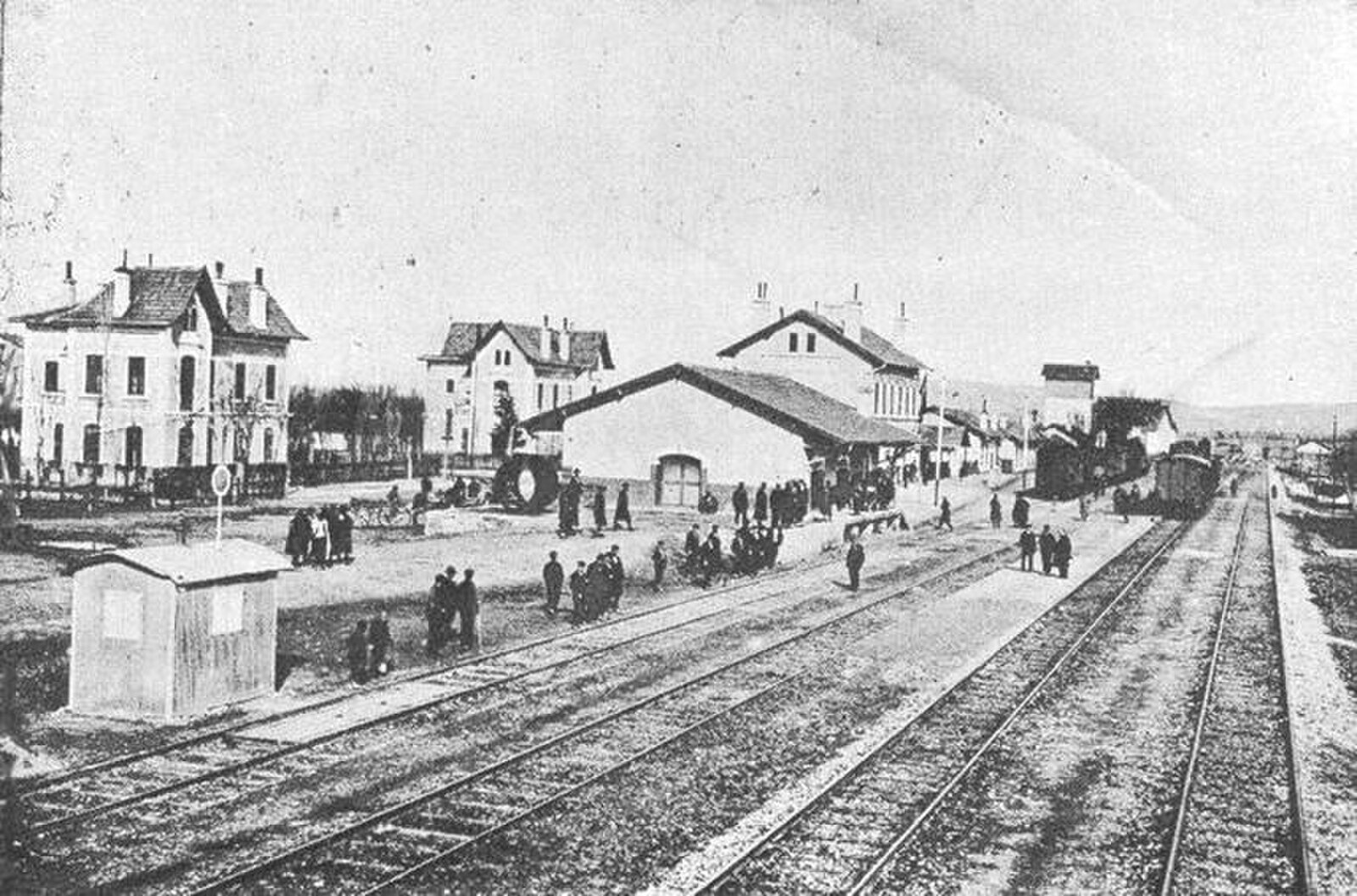
Ereğli railway station, 1926
Ereğli station in the early years of the Republic, with townspeople gathered around the building.

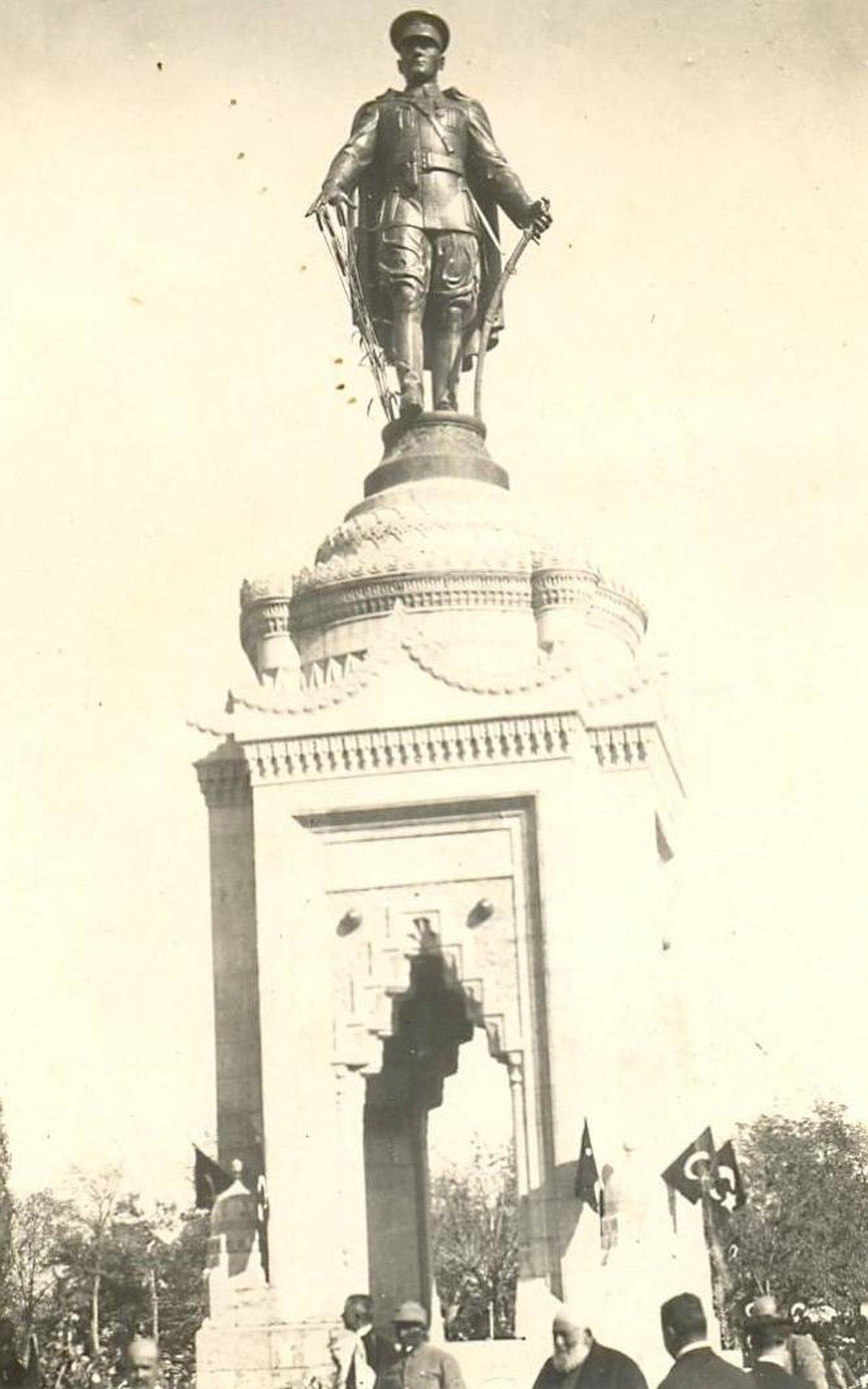
The Atatürk Monument in Konya
The Atatürk Monument in Konya, unveiled in 1926, and the crowd at its inauguration — one of the first Atatürk statues in Turkey.

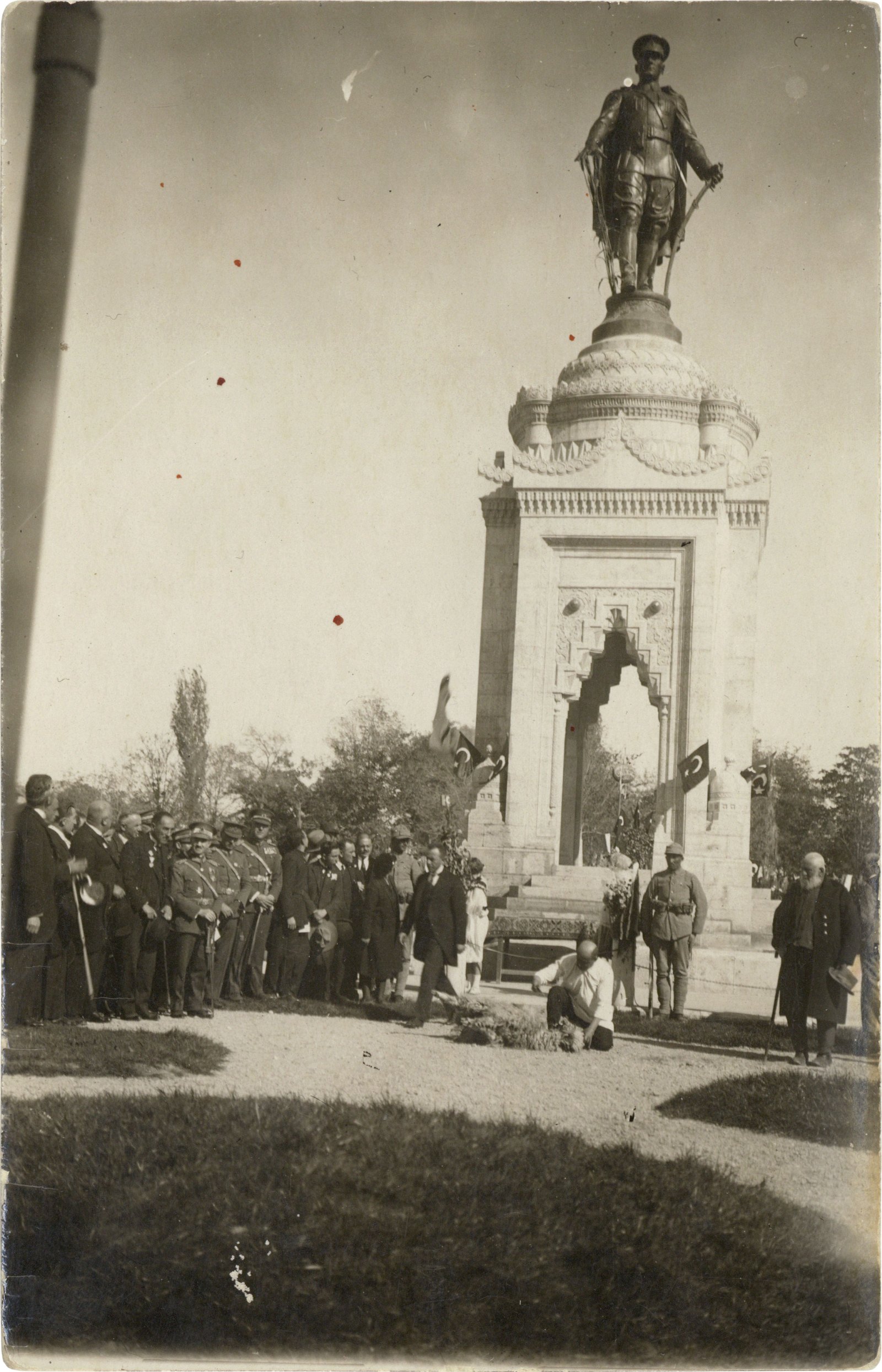
Opening ceremony of the Atatürk Monument
The crowd gathered at the foot of the pedestal during the monument's inauguration; the records note that a sacrifice was made at the ceremony.
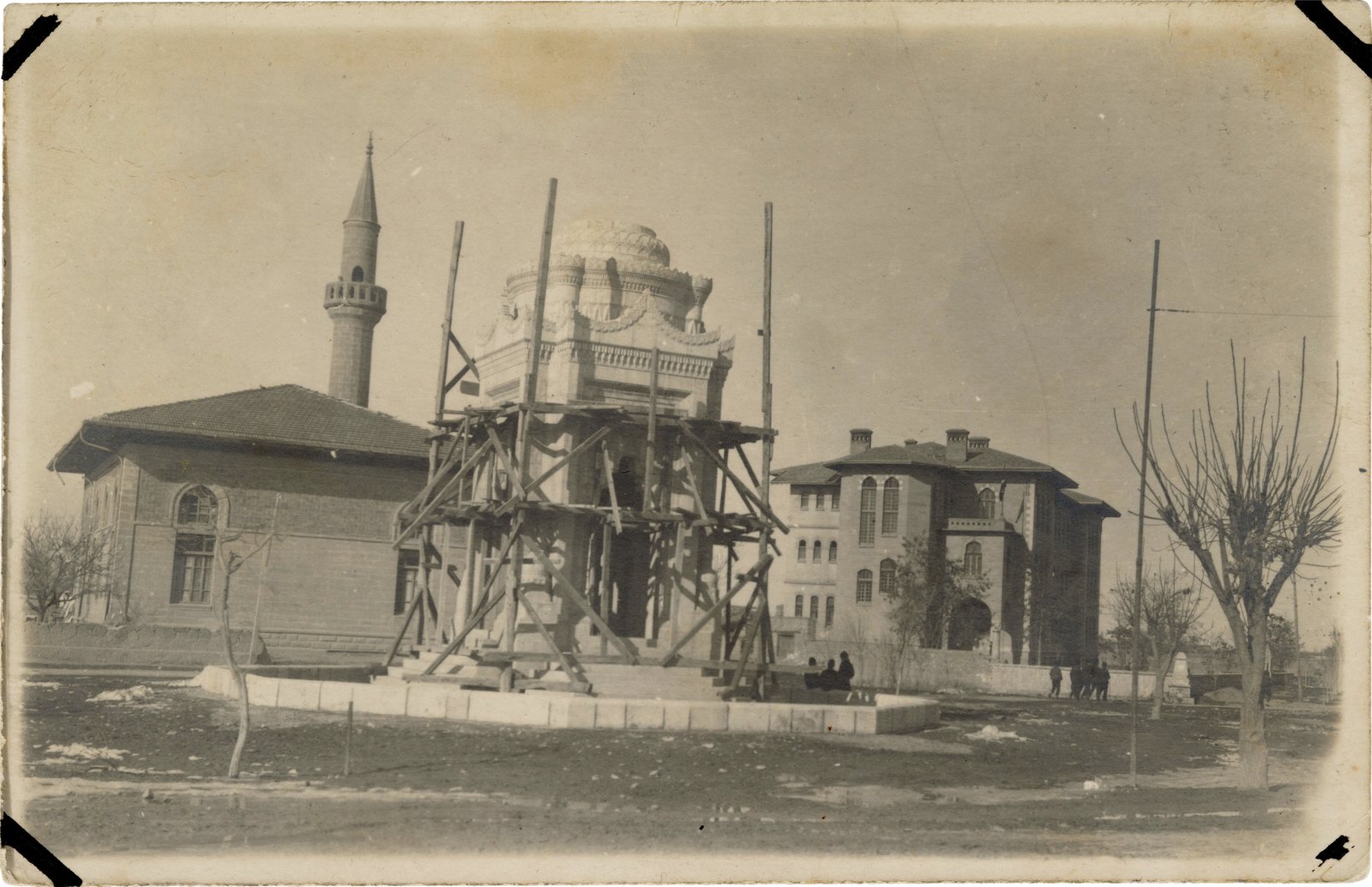
Construction of the Atatürk Monument
The Konya Atatürk Monument under construction inside its timber scaffolding, 1926 — one of the first Atatürk monuments in Turkey.
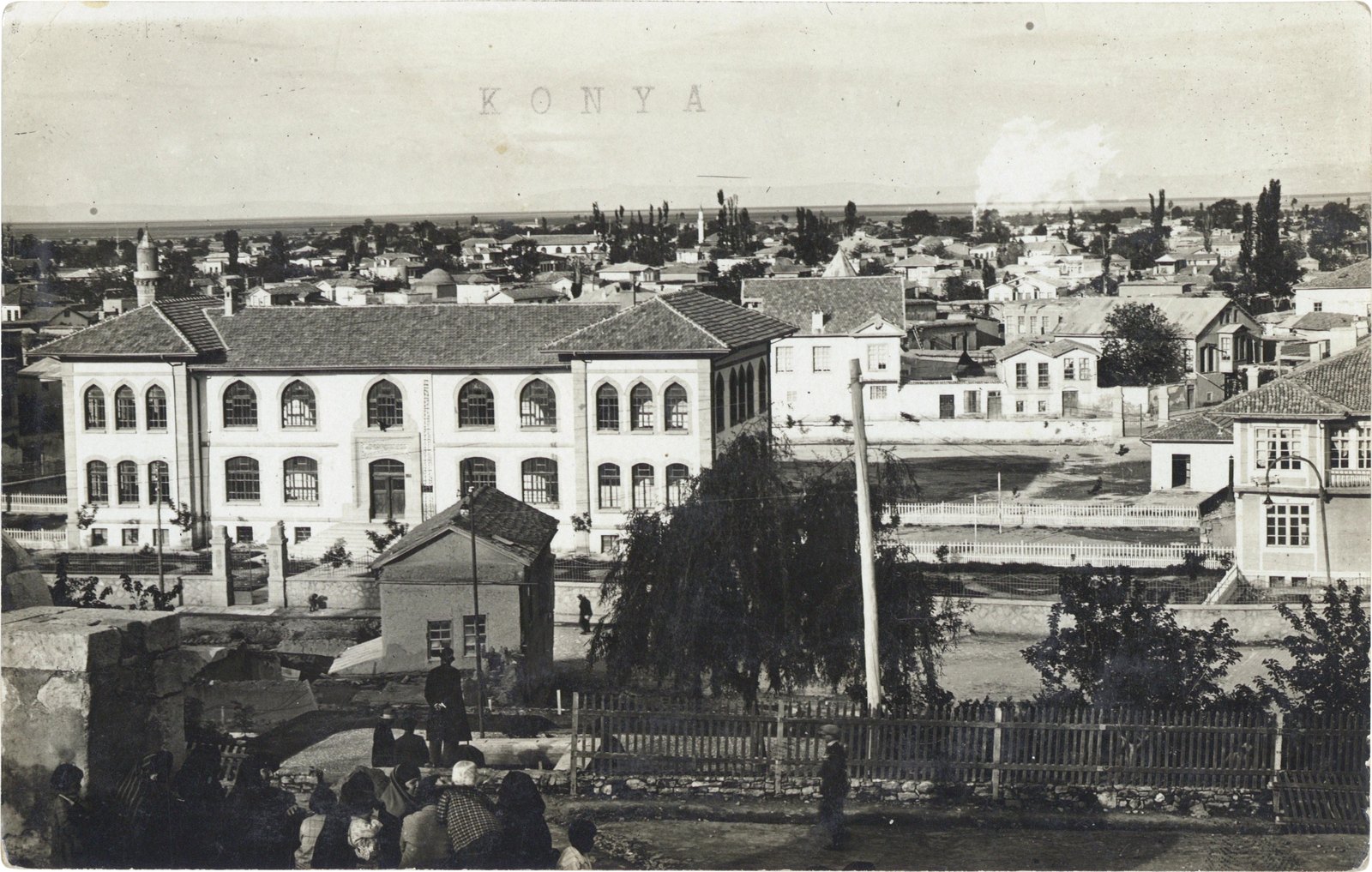
Konya from Alâeddin Hill with the Gazi Mustafa Kemal Paşa School
Looking over Konya from Alâeddin Hill: the Gazi Mustafa Kemal Paşa primary school on the left and the dense fabric of adobe and stone houses behind.
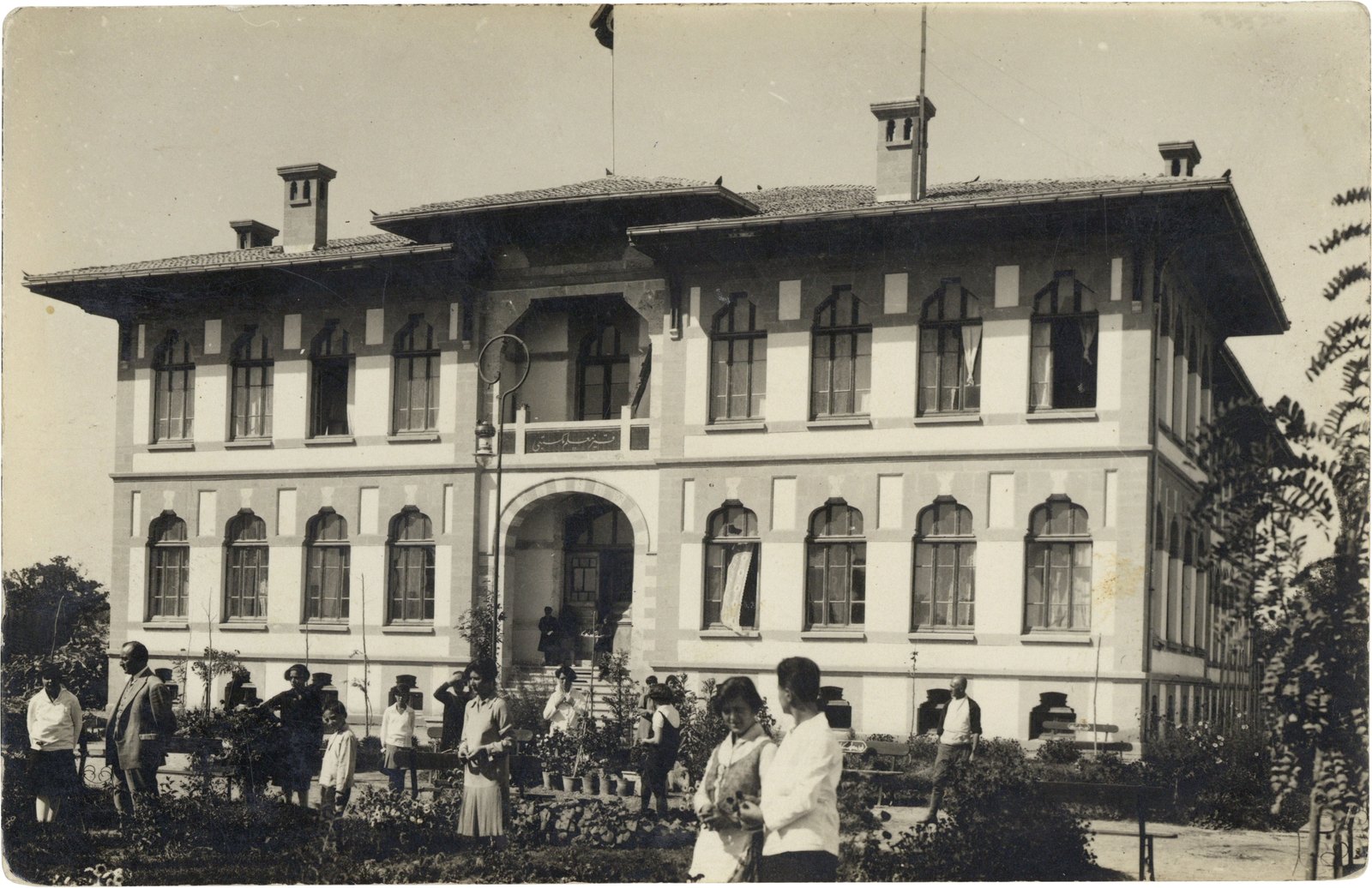
In the garden of the Teachers' Training School for Girls
Students and teachers gathered in the school garden — the centre of girls' education in Konya in the early years of the Republic.
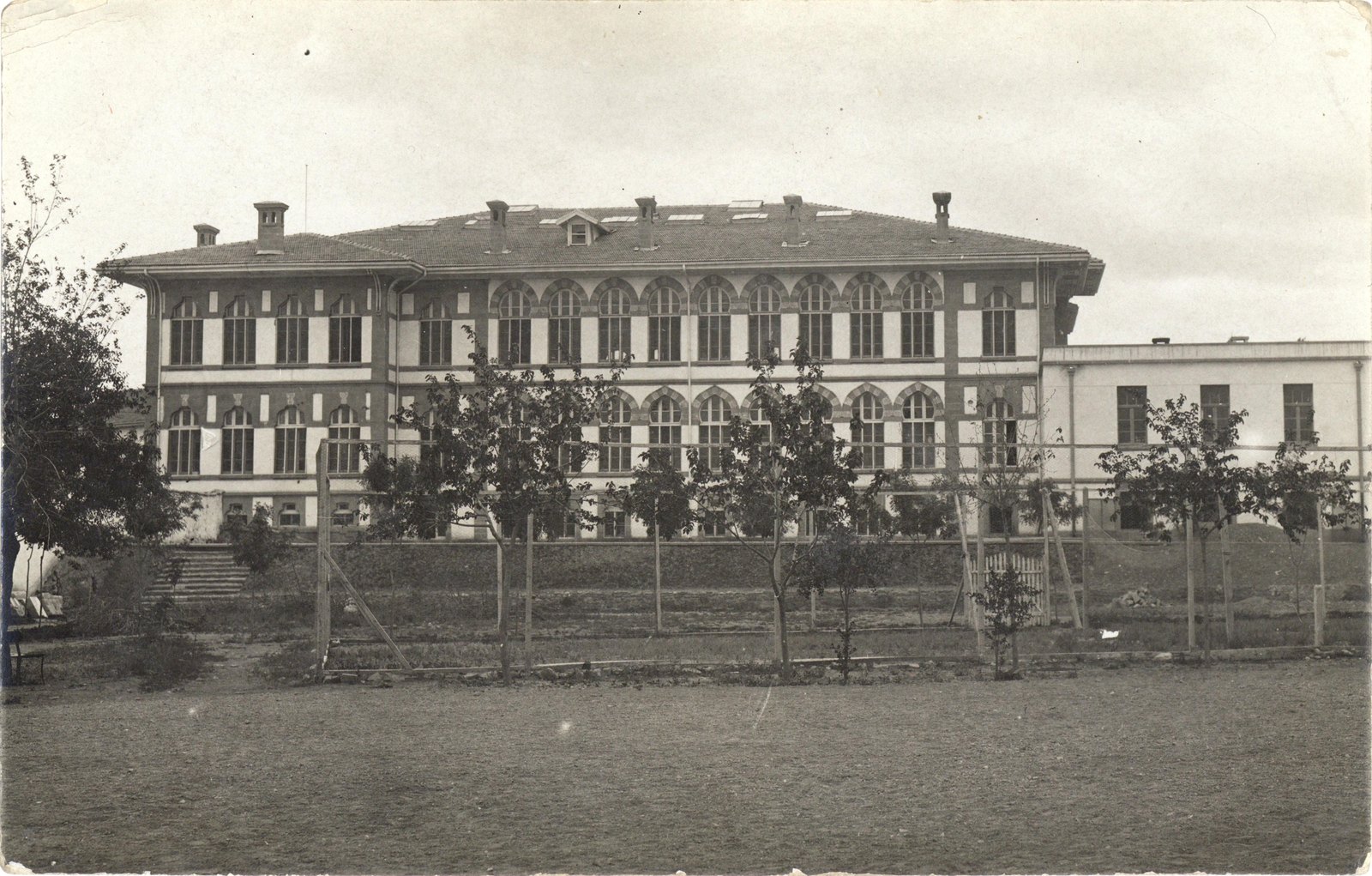
The Teachers' Training School for Girls
The main building of the Konya Teachers' Training School for Girls; it now serves as the rectorate of Selçuk University.
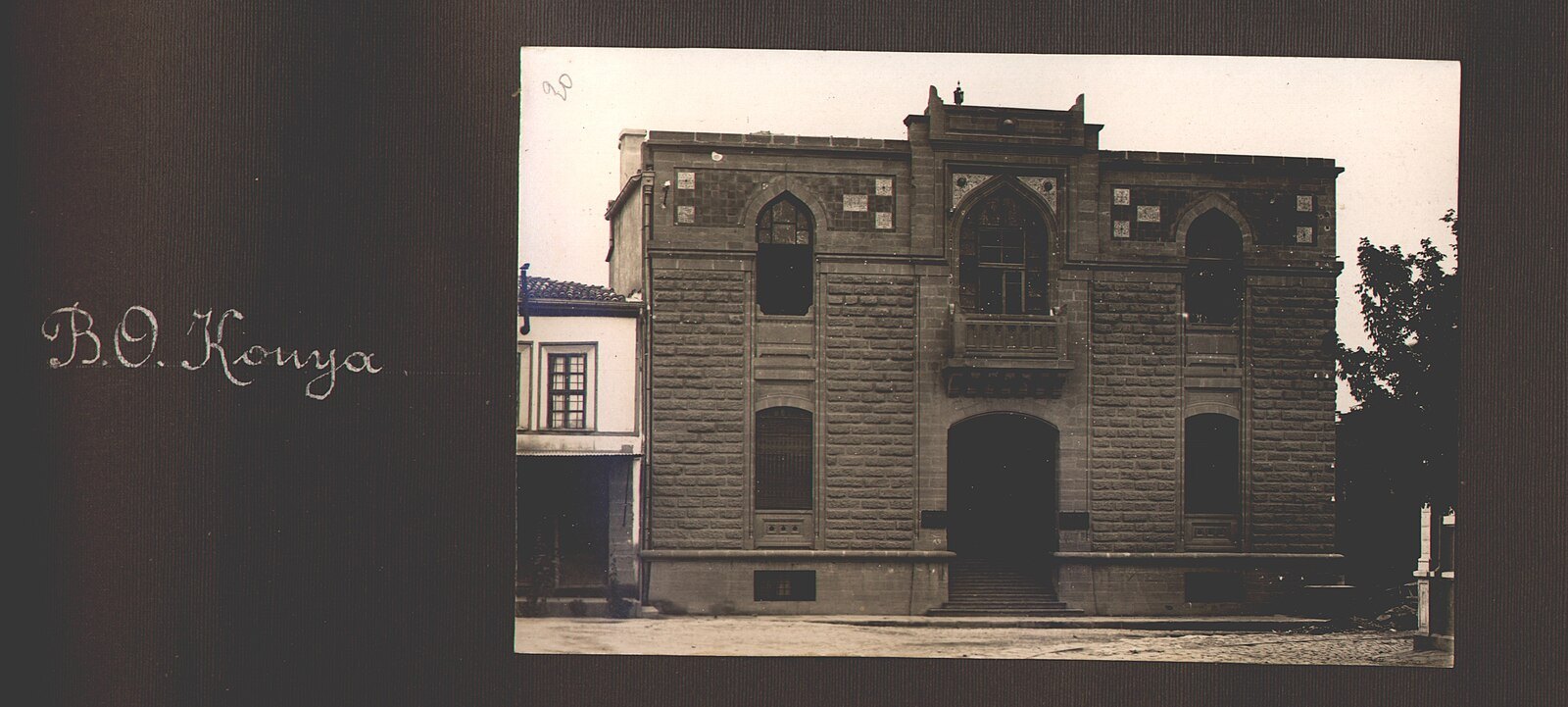
Ottoman Bank, Konya branch
The Konya branch of the Ottoman Bank in 1930, standing in the commercial centre of the city in the early years of the Republic.

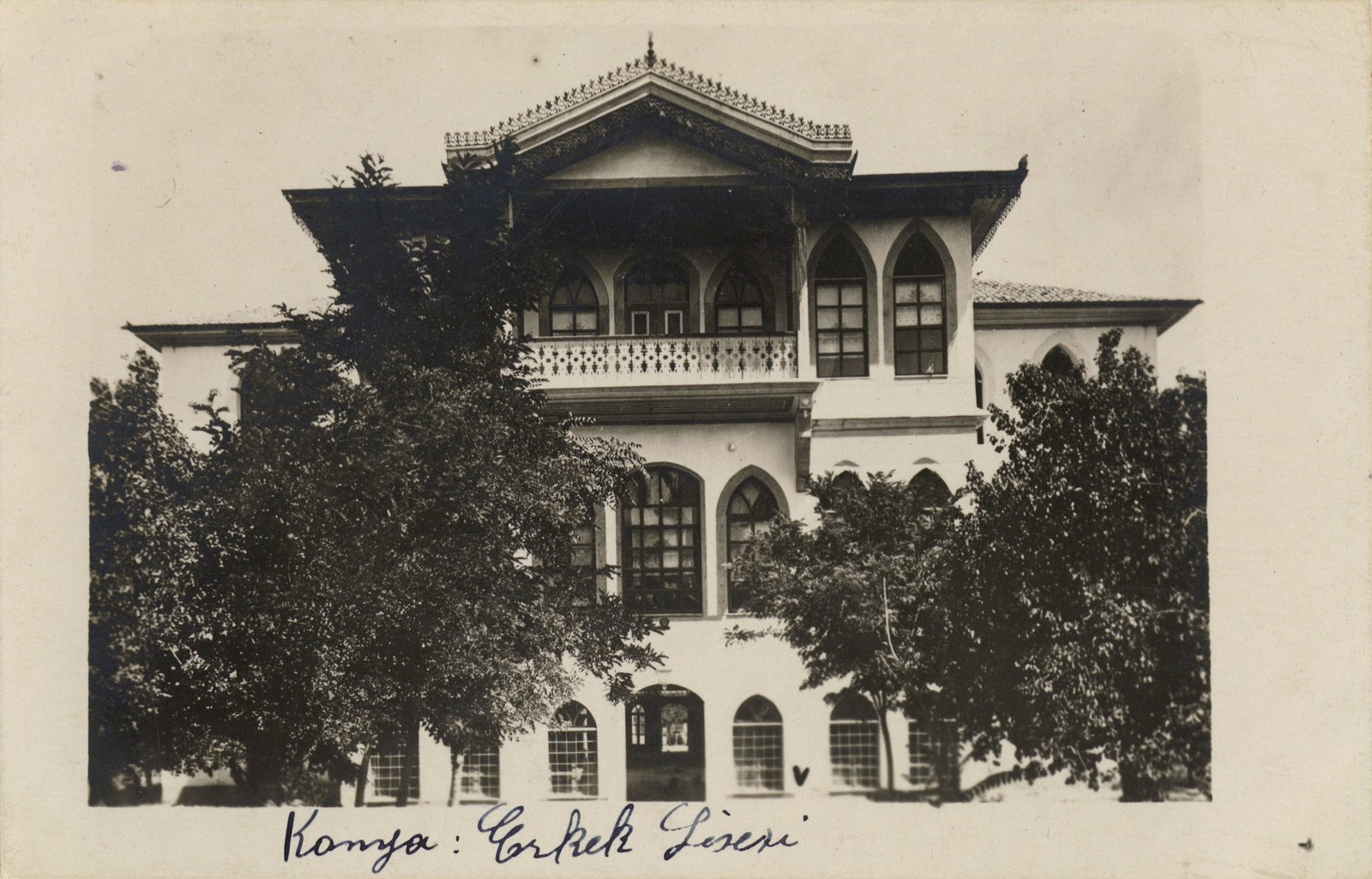
Konya Boys' High School
The main entrance of the Konya Boys' High School with its wooden bay; the card is hand-captioned 'Konya: Erkek Lisesi'.
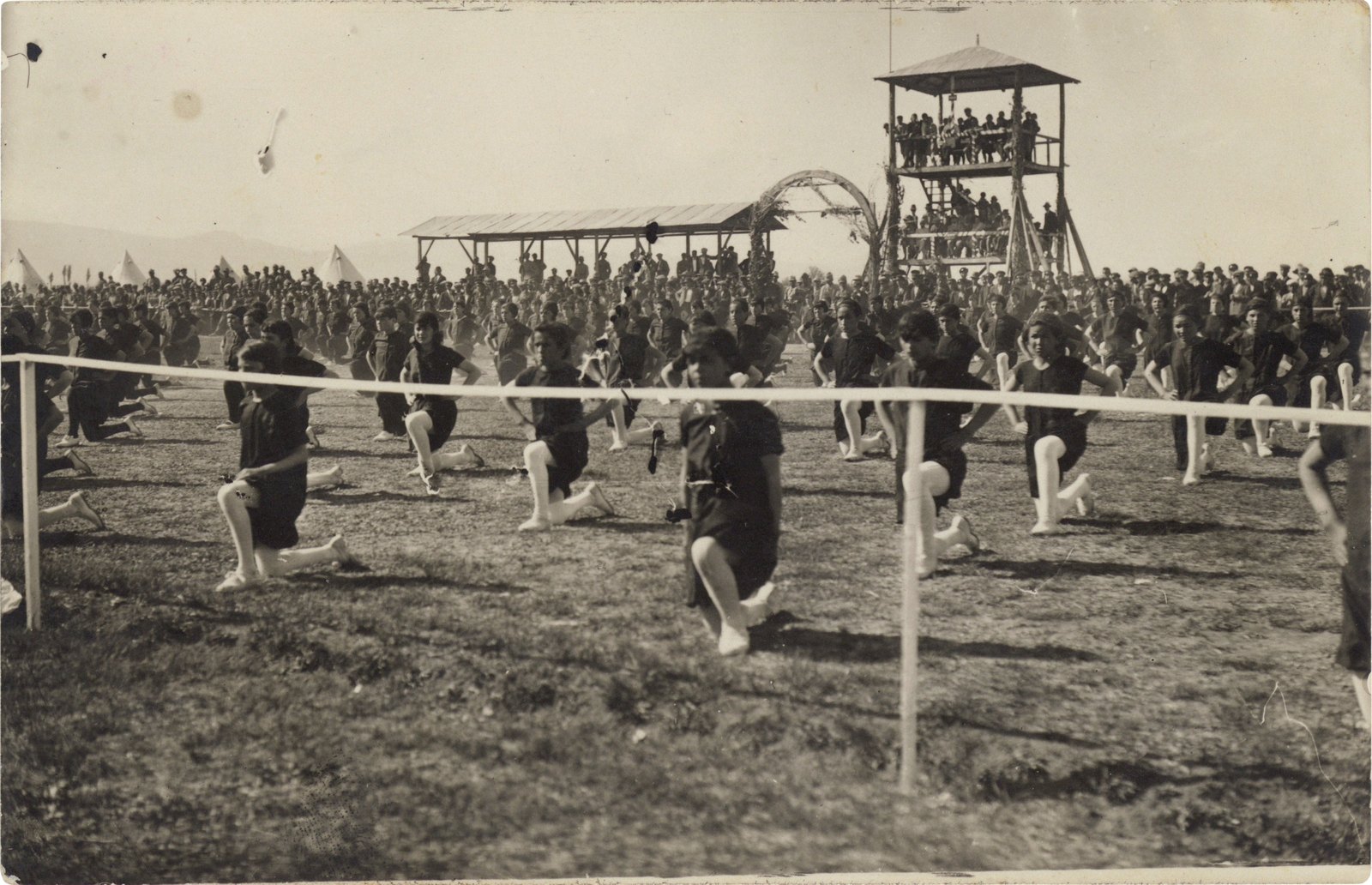
Students at the Gymnastics Festival
Students of the Konya Teachers' Training School for Girls at the Gymnastics Festival, with hundreds of pupils on the field and a tower formation in the middle.
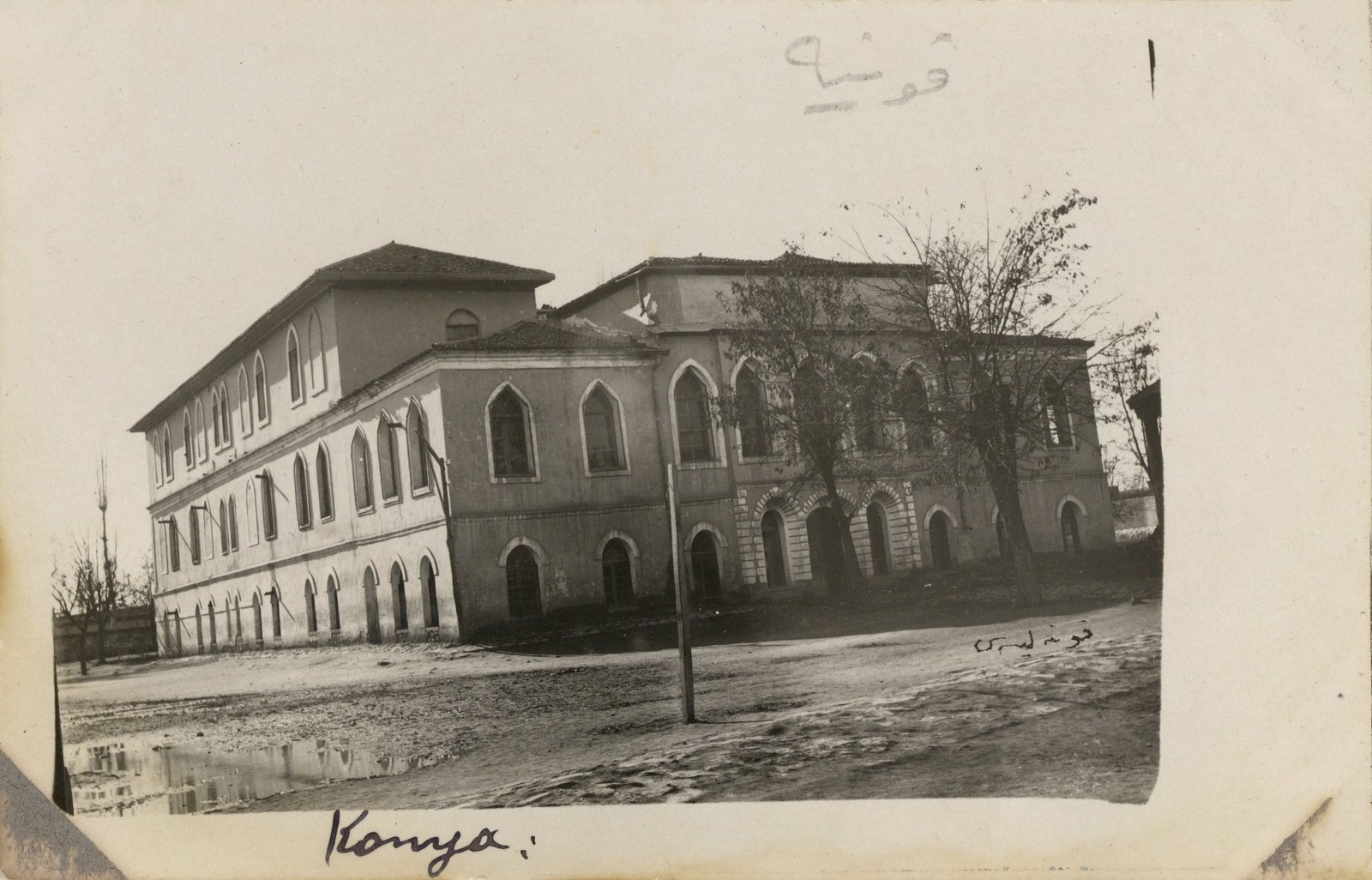
Konya High School
The corner façade of Konya High School; the card carries the word 'Konya' in both Ottoman and Latin script.
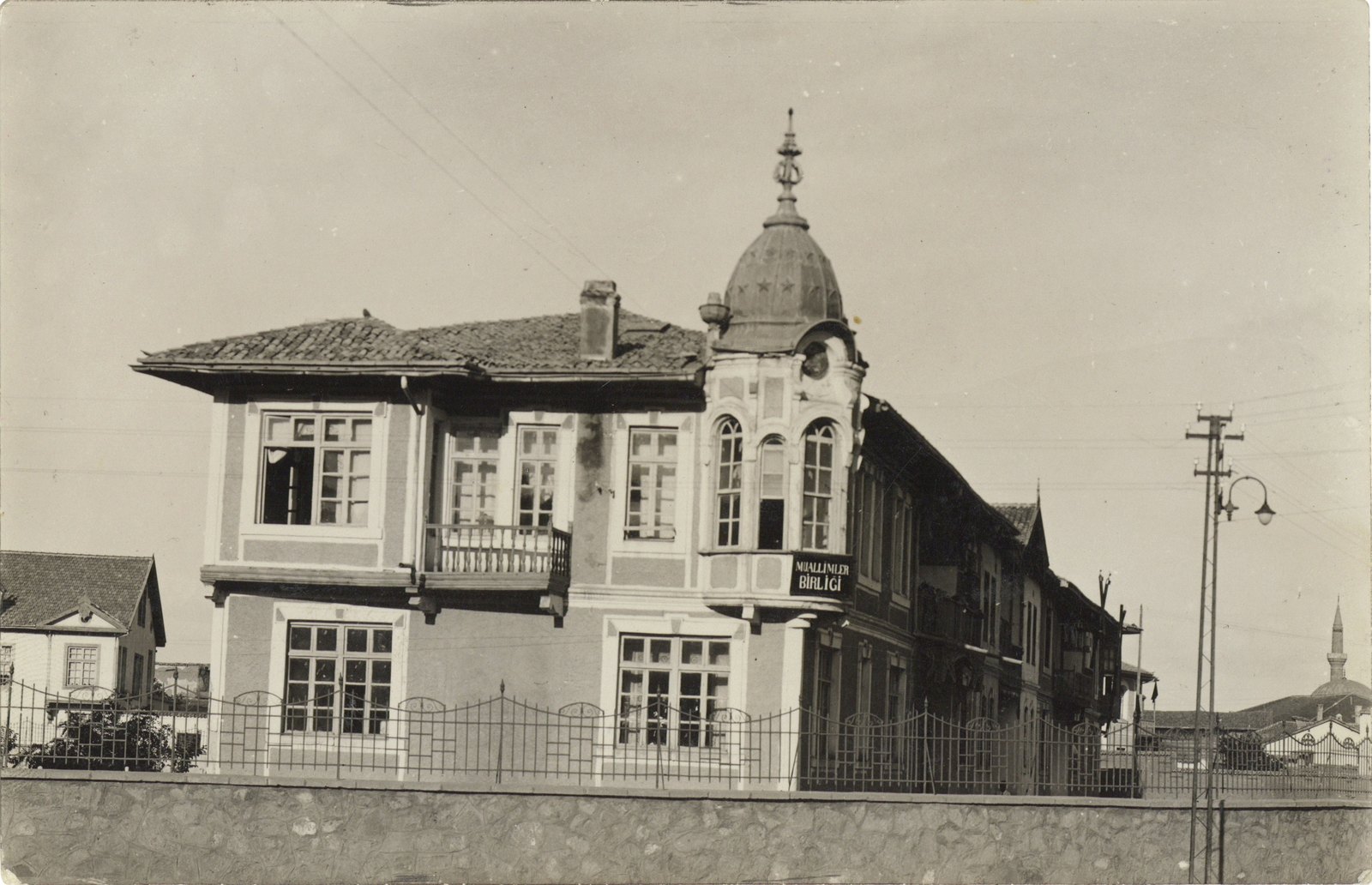
The Teachers' Union Building
The Teachers' Union building and the street in front of it; the poles and overhead lines mark the years when the city had just been electrified.
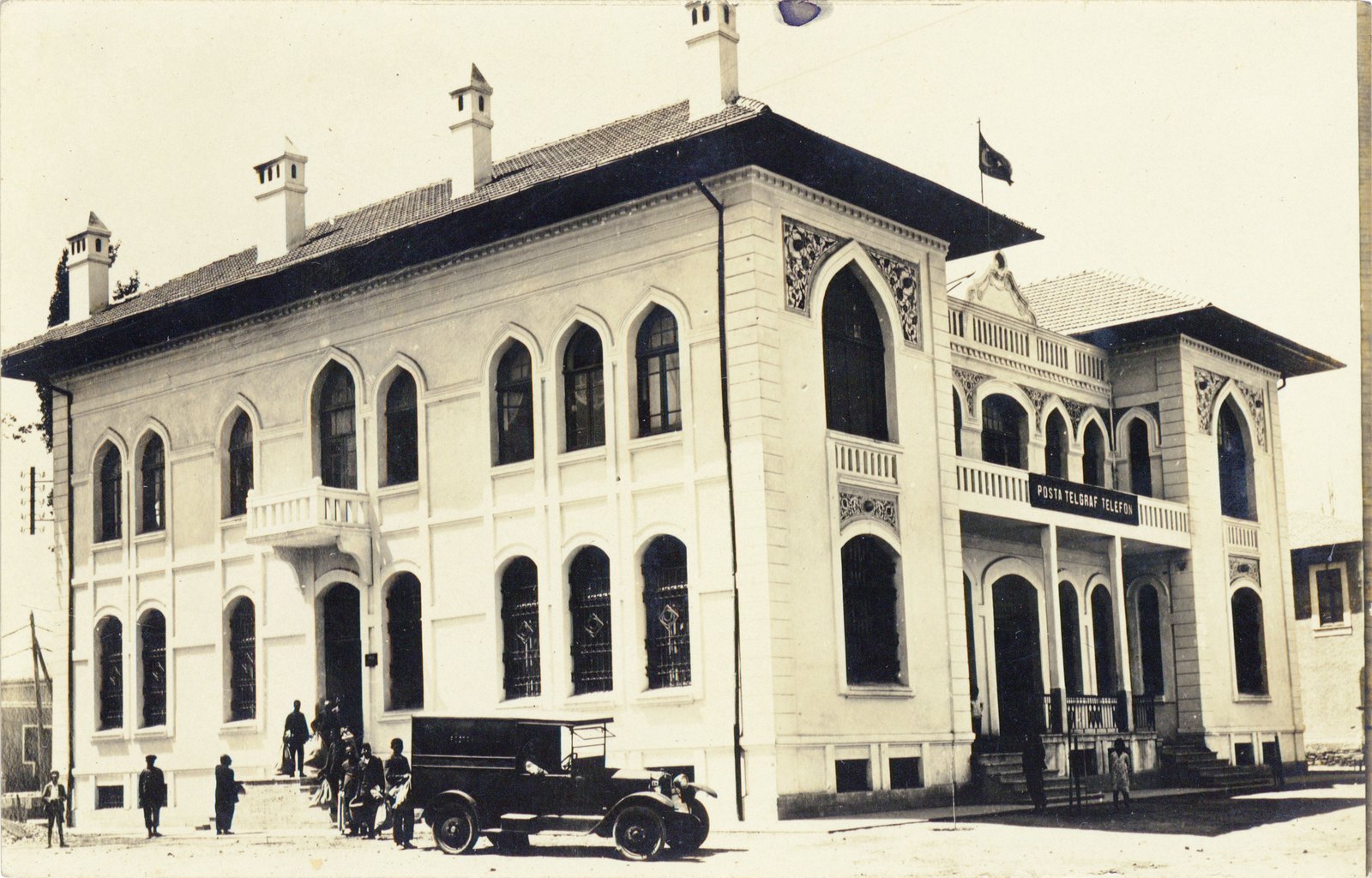
The Konya Post, Telephone and Telegraph building
The Konya PTT building with a period automobile in front. It reflects the 'First National Architecture' style of the Republic's first decades.
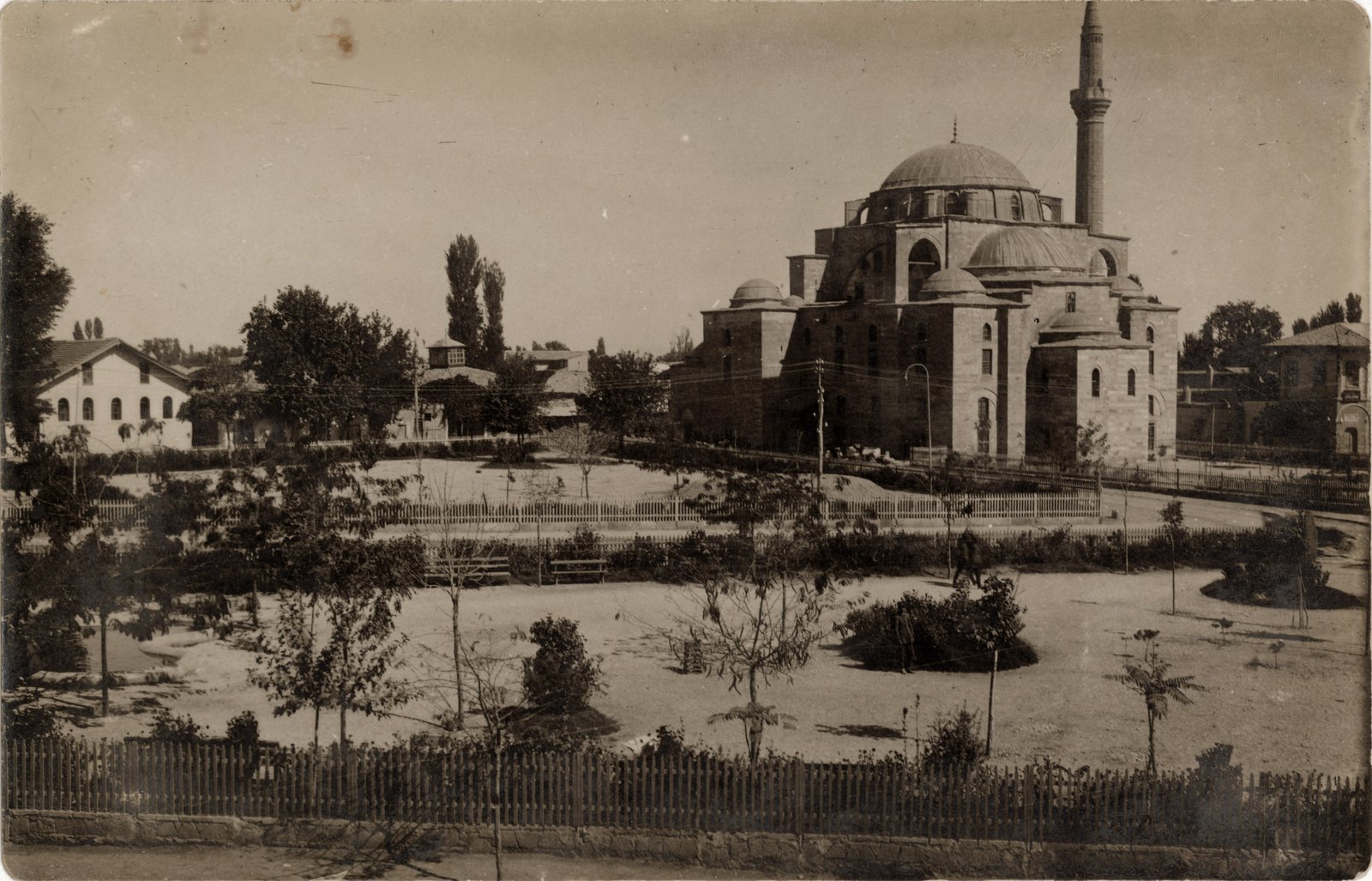
The Şerafettin Mosque
The Şerafettin Mosque, which took its present form in the 16th century, and the newly laid-out square in front of it, its trees still saplings.
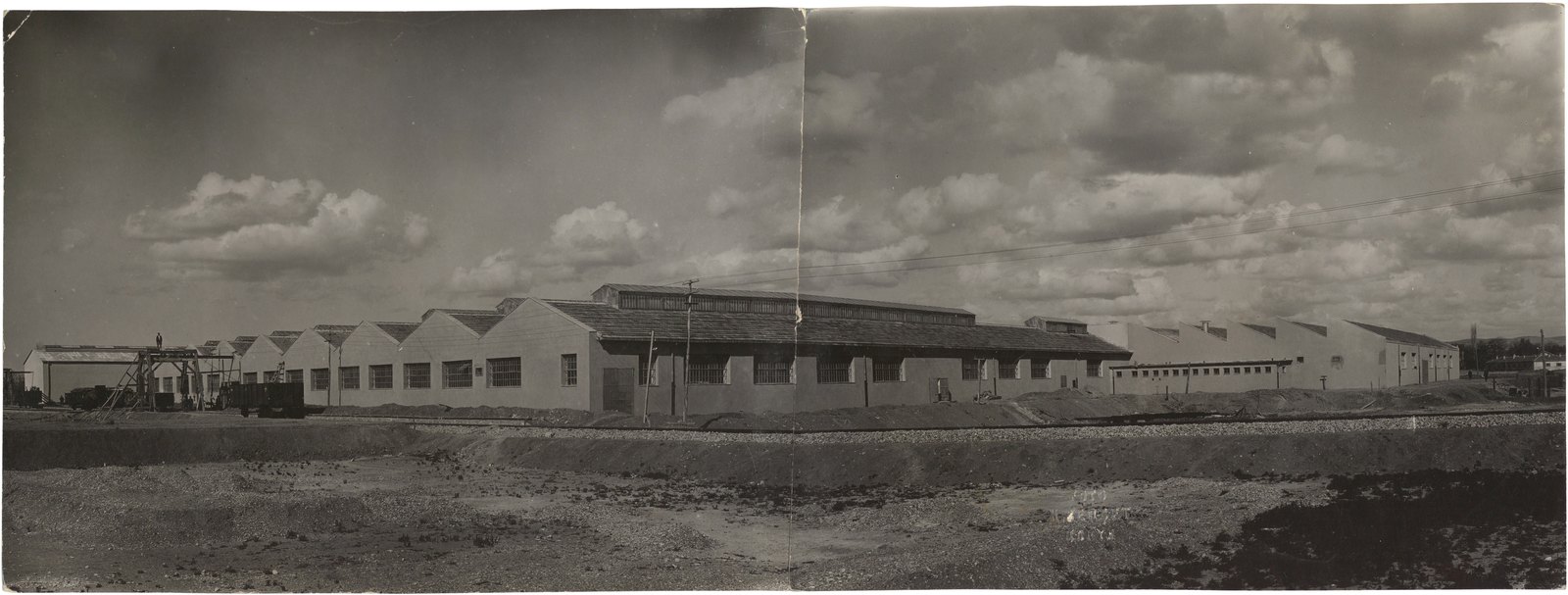
The Sümerbank Ereğli textile mill
A panorama of the Sümerbank Ereğli textile mill, which began production in 1937 — the largest monument in Konya to the Republic's state-led industrialisation.
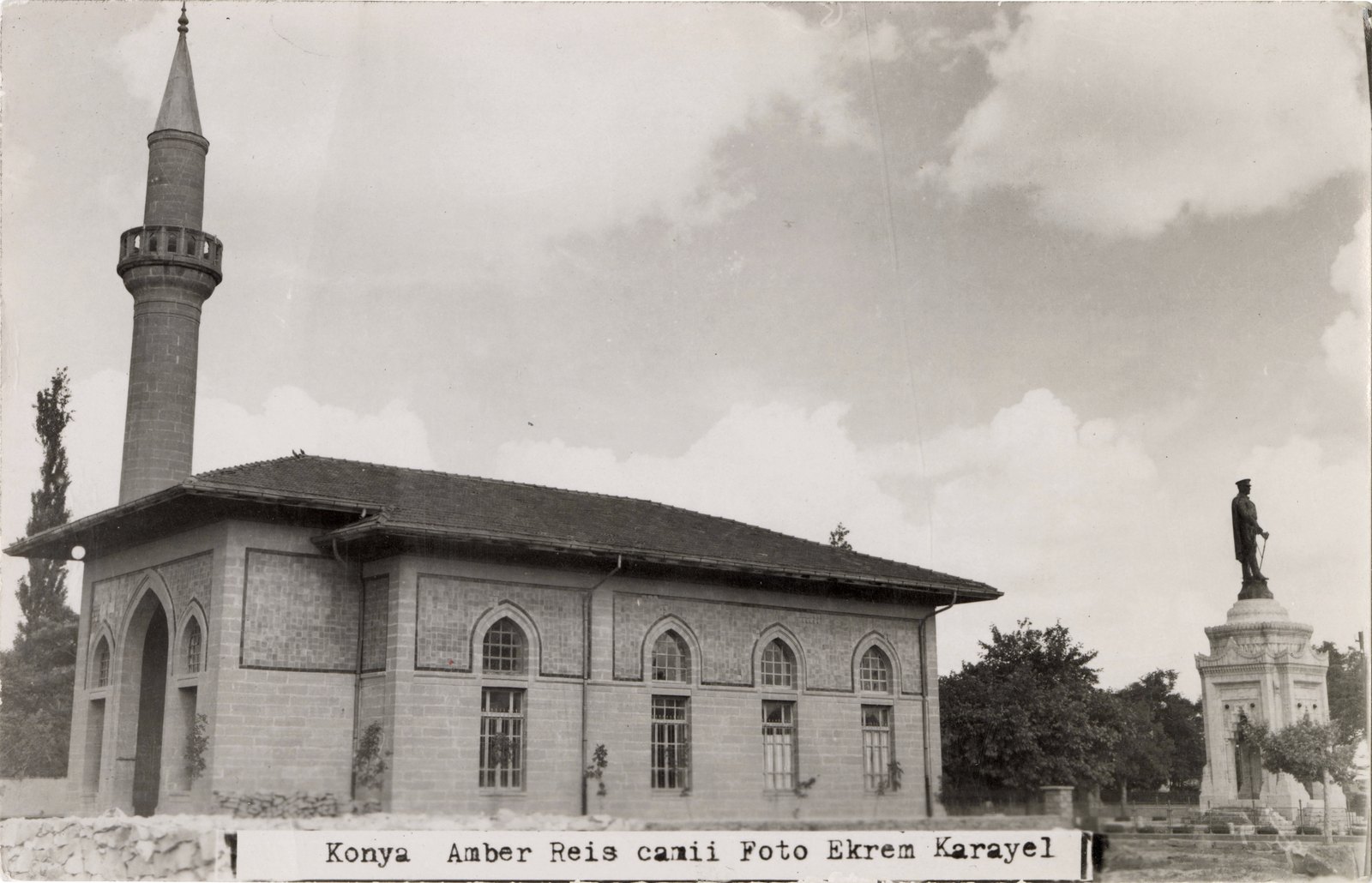
The Amber Reis Mosque
The Amber Reis Mosque with a bust of Atatürk beside it; the card is signed 'Foto Ekrem Karayel'.
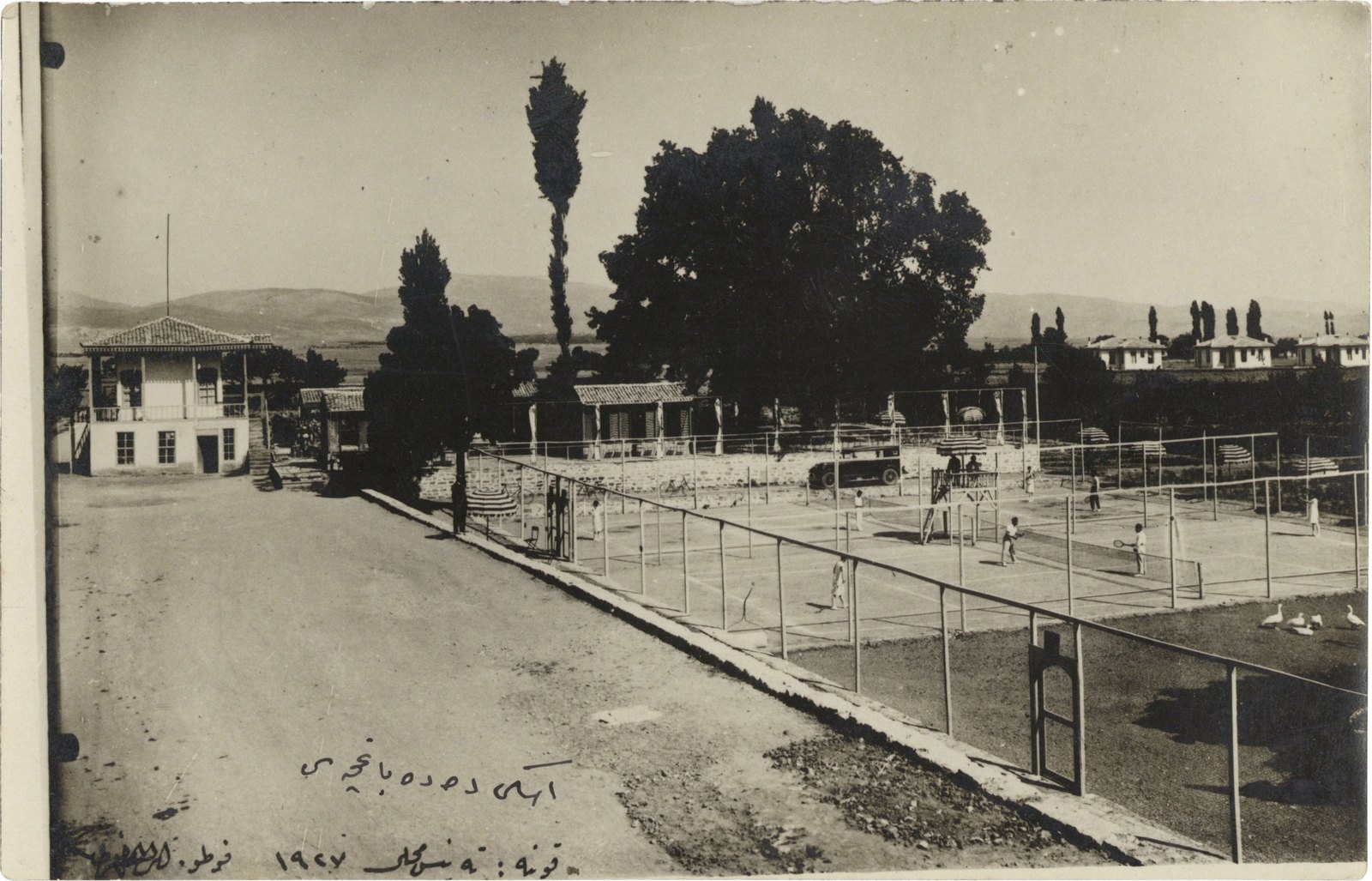
The Dede Garden of Konya
The Dede Garden with its tennis court, photographed by the district governor Turgut Başkaya — a record of the city's new leisure spaces.
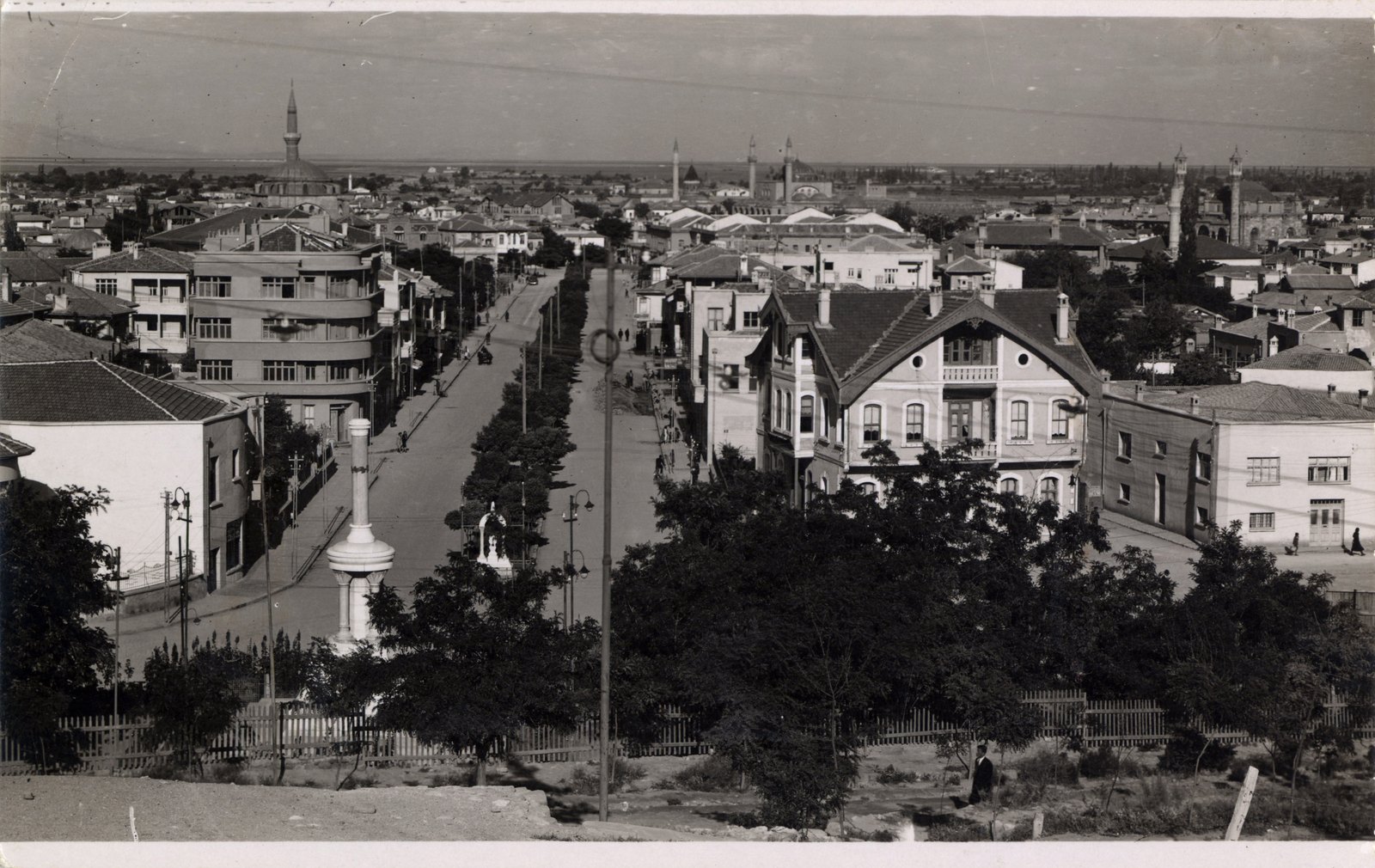
Konya from Alâeddin Hill
Looking from Alâeddin Hill towards the Mevlâna quarter: the first apartment blocks replacing the adobe houses, and the new wide boulevard.
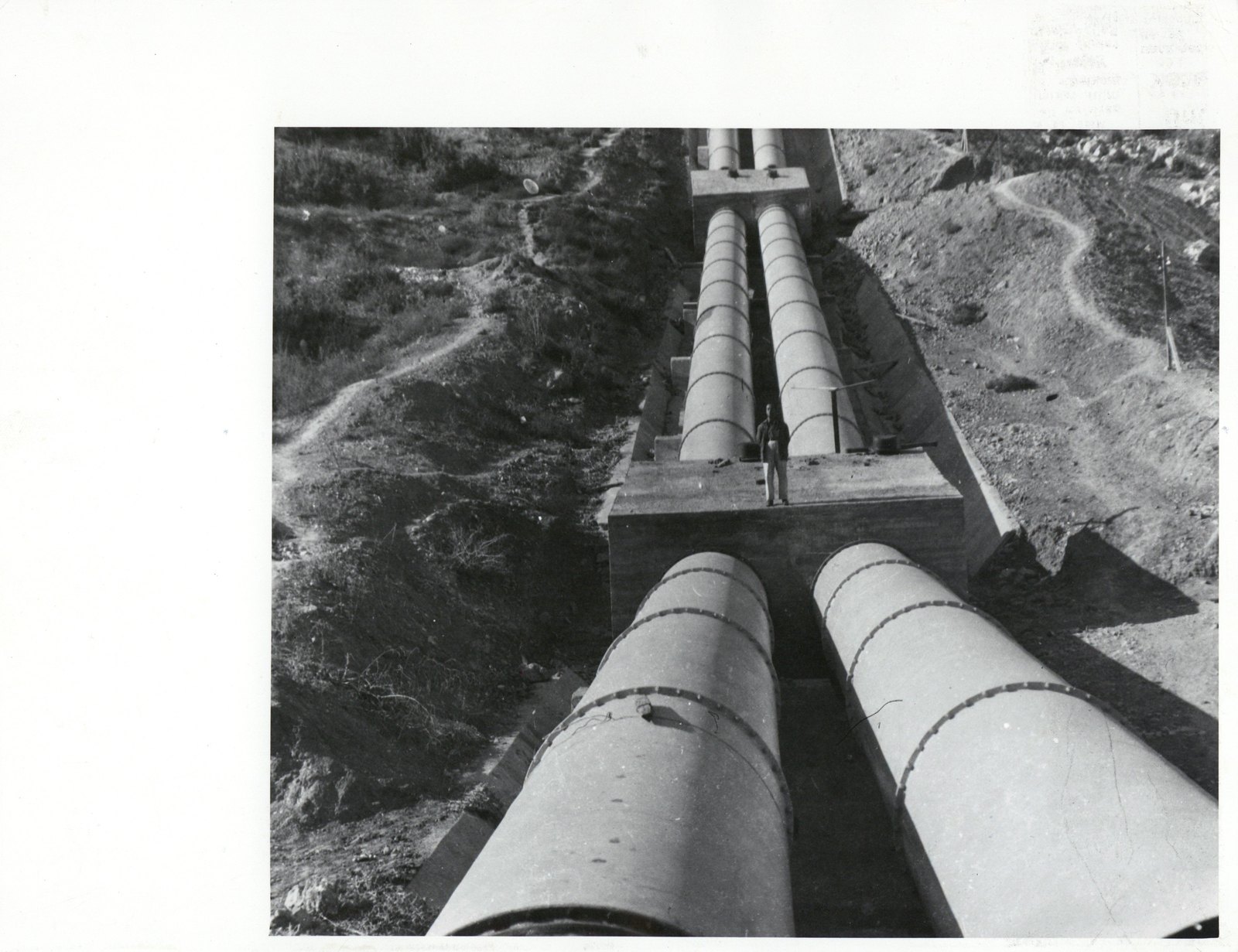
Penstocks of the Göksu power plant
The penstocks of the Göksu hydroelectric plant running down the slope — one of the key works in the electrification of the region.
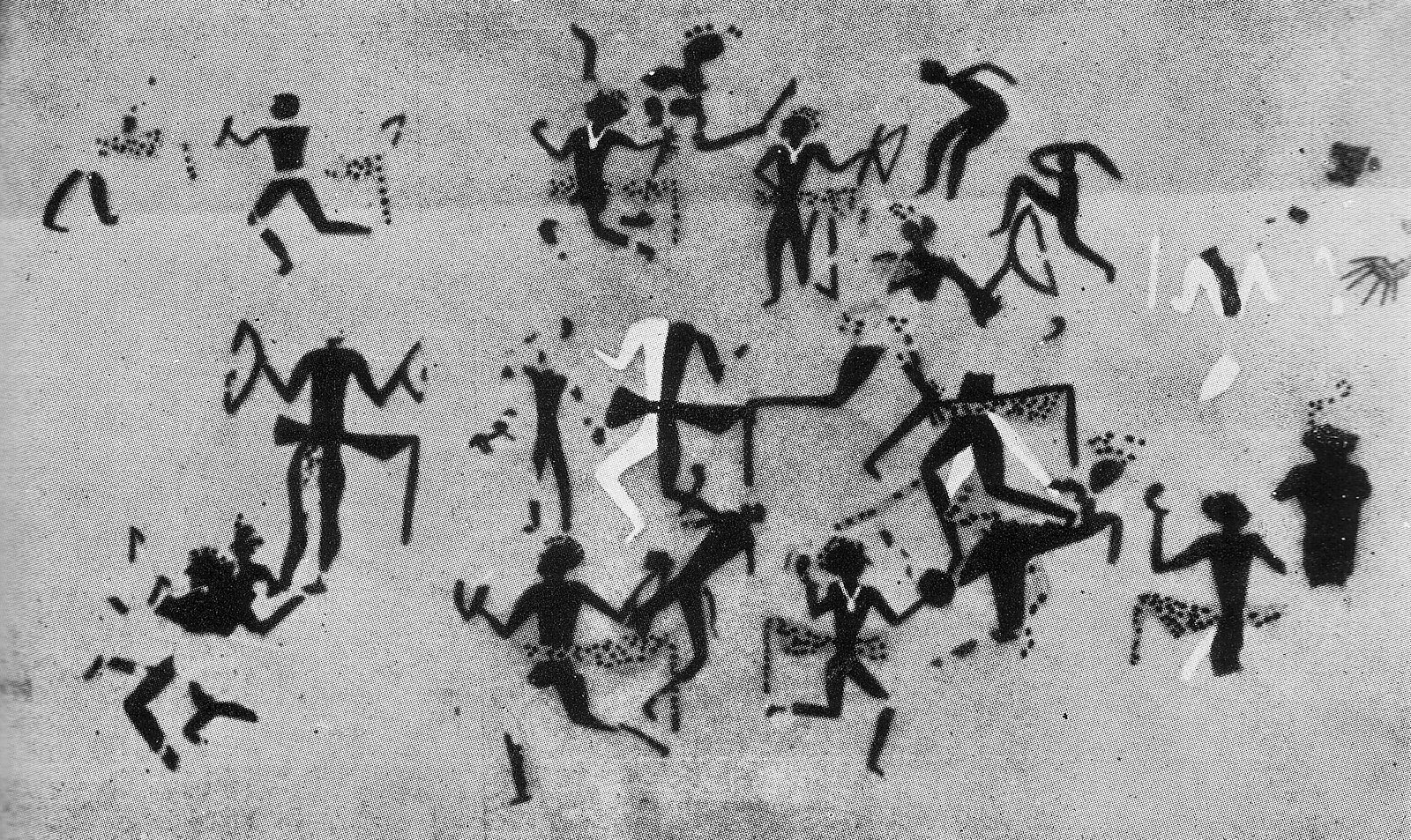
Çatalhöyük wall painting — dancers with leopard skins
Drawing of a wall painting uncovered in James Mellaart's 1961 excavations at Çatalhöyük near Çumra: dancers in leopard skins, c. 6000 BC.

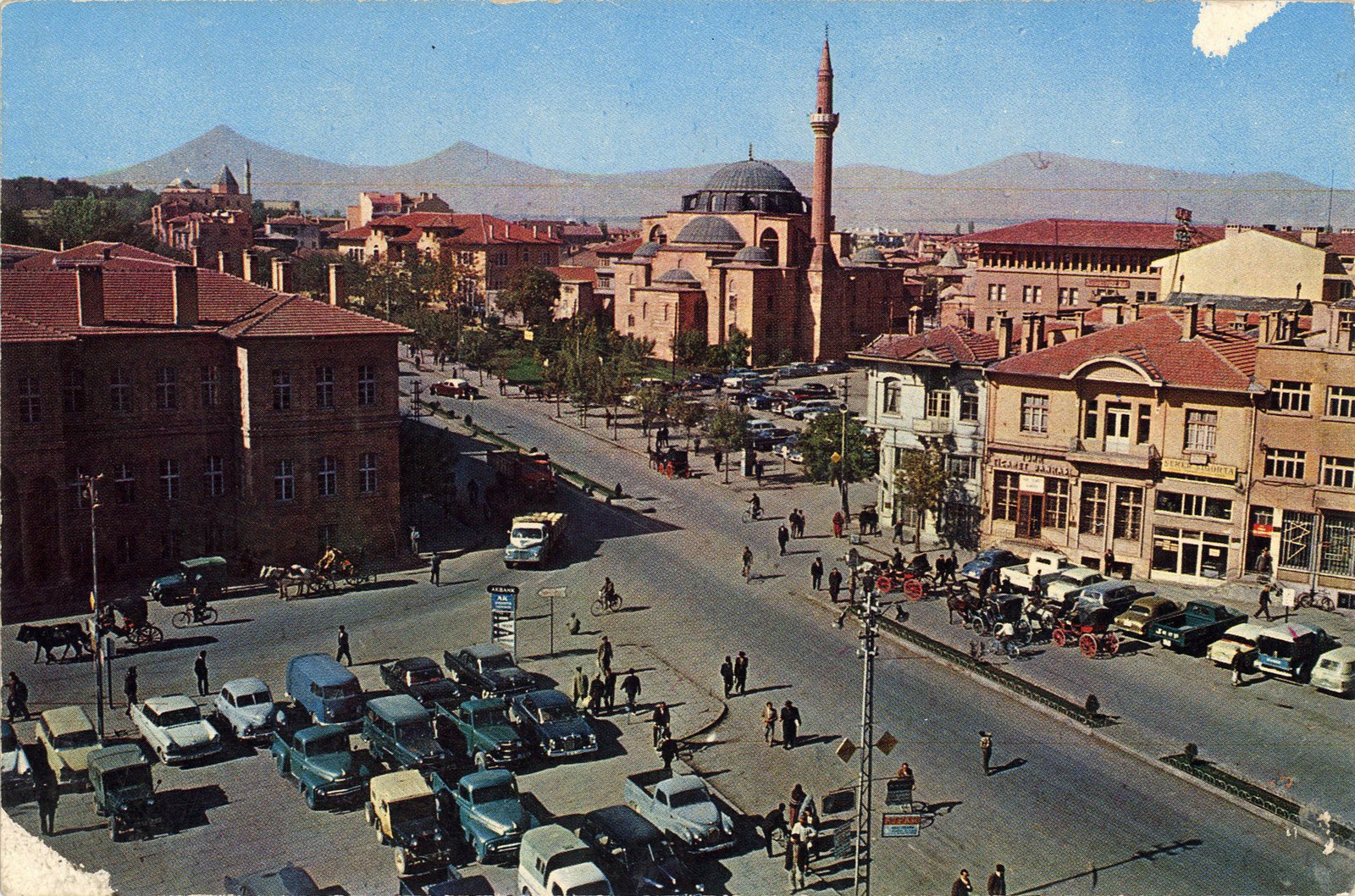
Government Square and the Şerafettin Mosque
Government Square in the 1960s: shared taxis and cars, the Şerafettin Mosque, and the snow-covered Mount Loras behind.
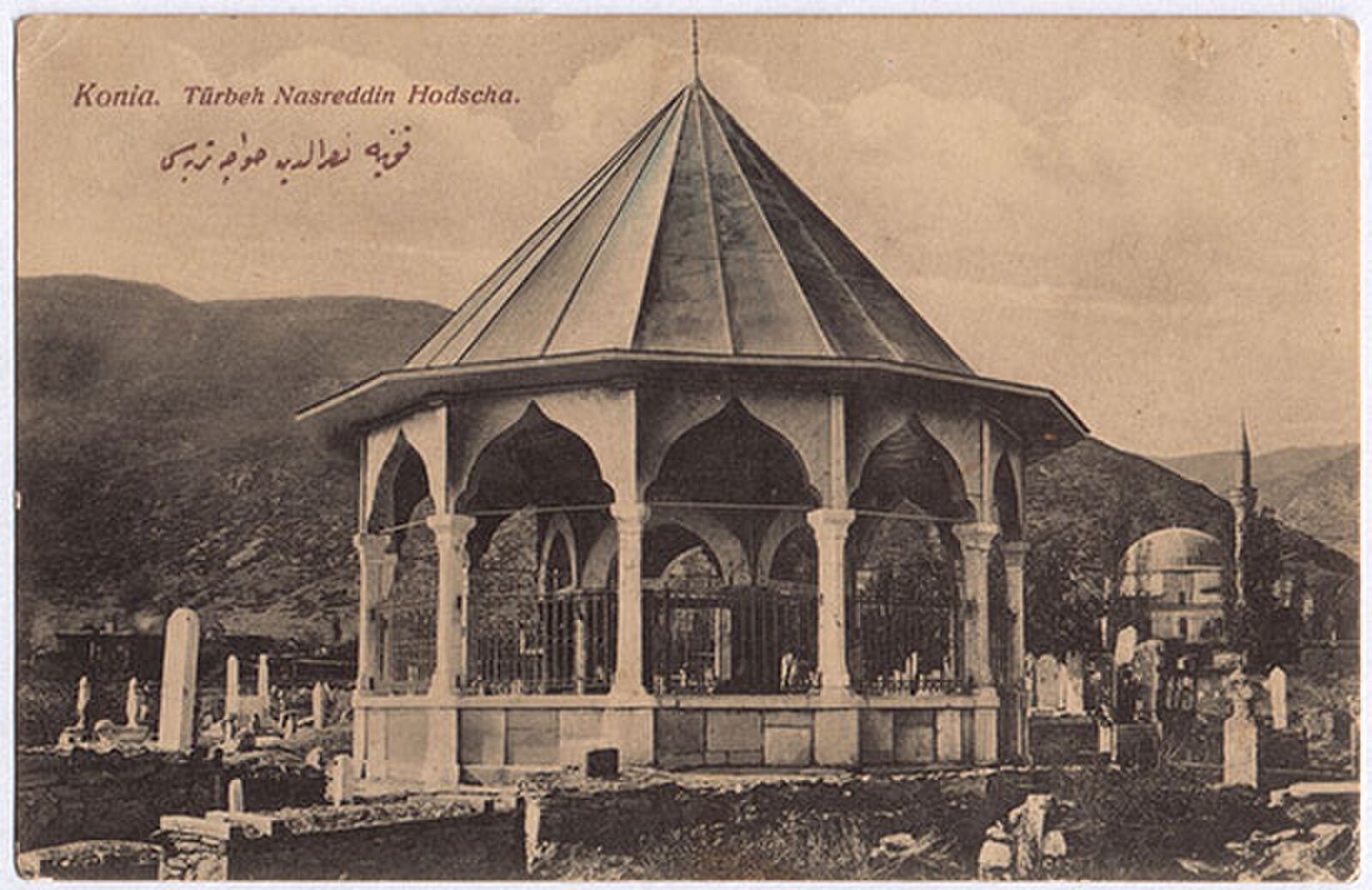
The tomb of Nasreddin Hodja
The open-domed tomb of Nasreddin Hodja at Akşehir, from an Ottoman-era postcard published by Boghos Tatéossian.

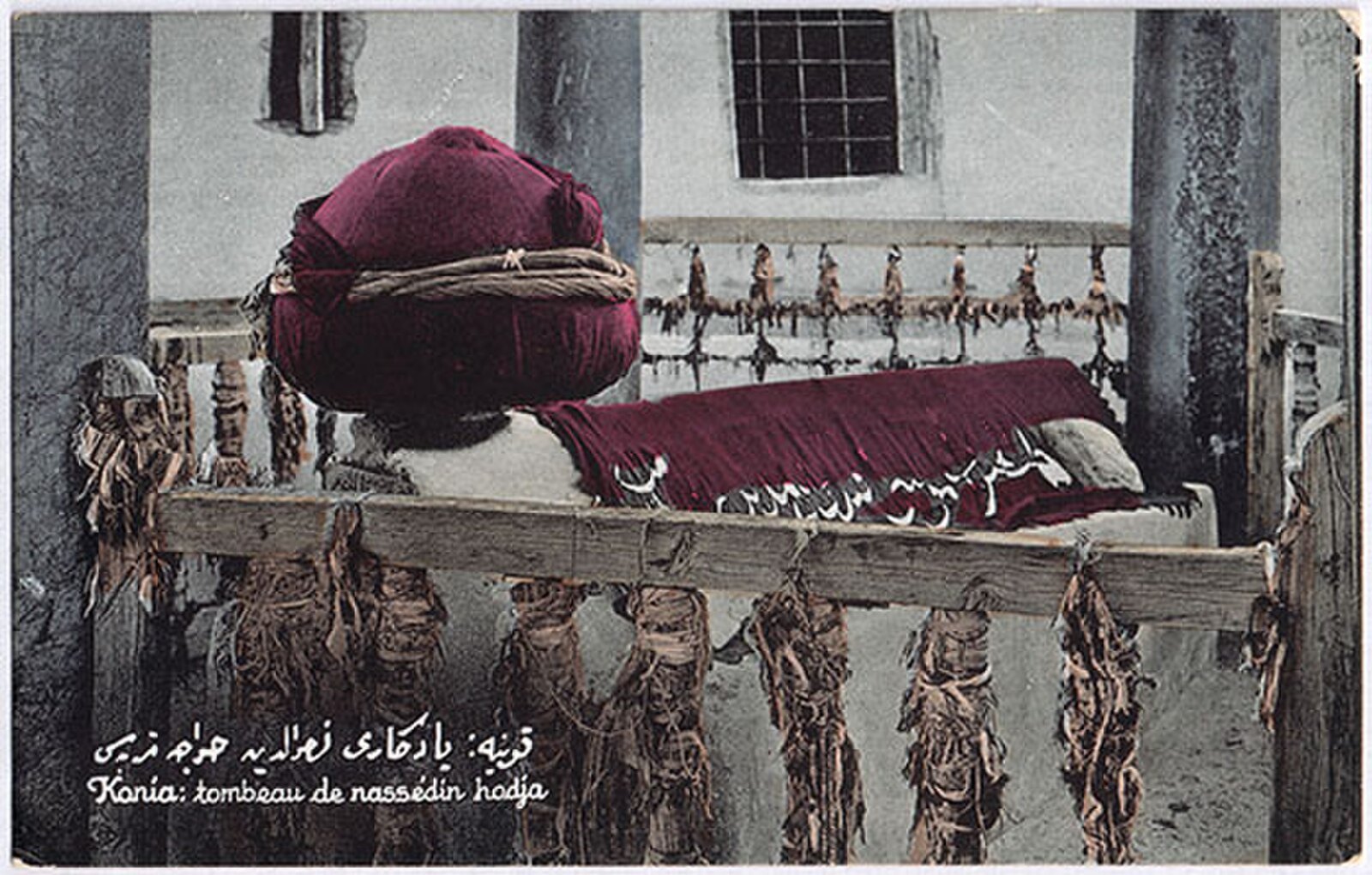
Souvenir of the tomb of Nasreddin Hodja
A second postcard from the same series: the cenotaph of the tomb and its covers.

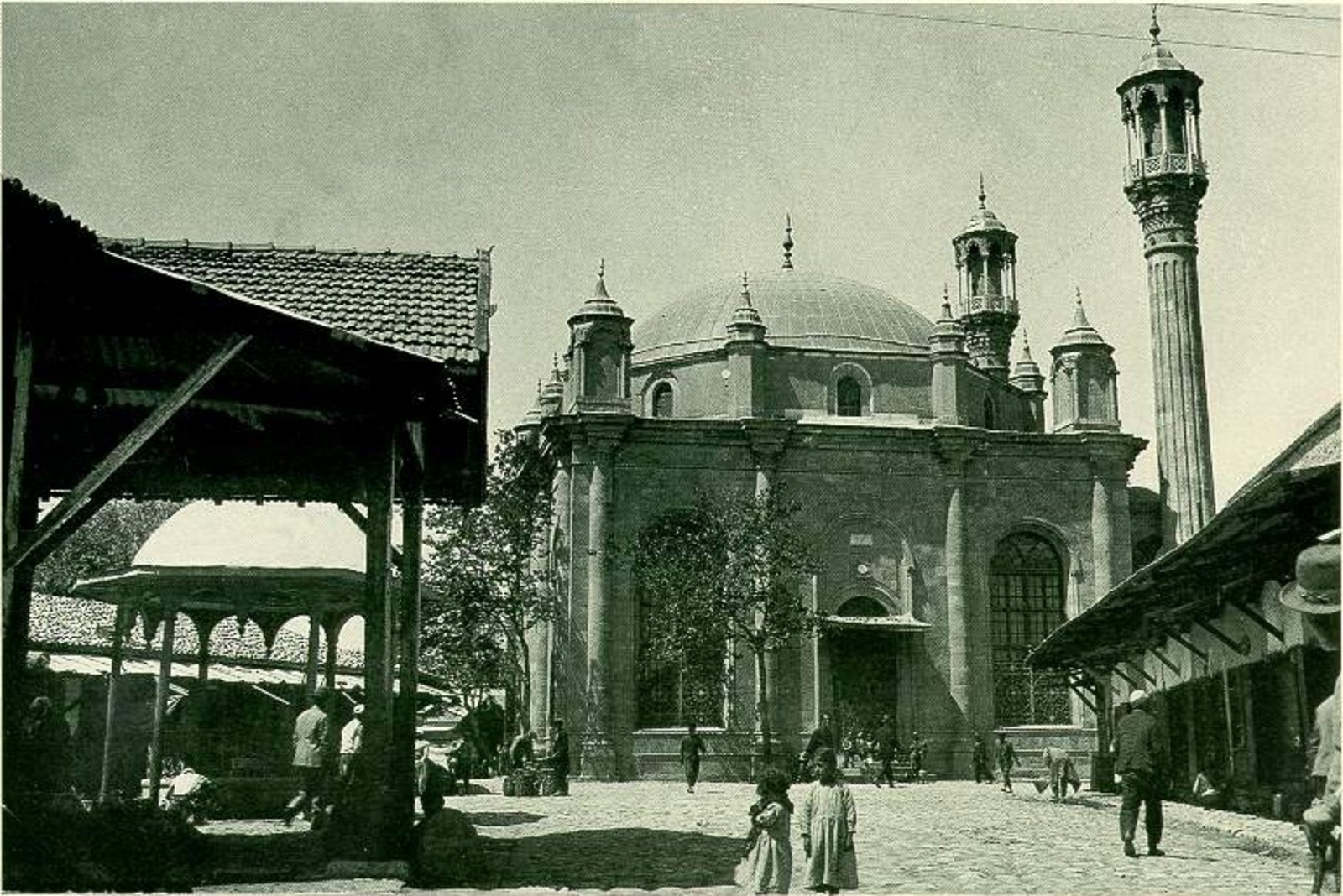
The Aziziye Mosque
The Aziziye Mosque in the middle of the Konya bazaar in earlier days, with its baroque minarets and the shops around it.

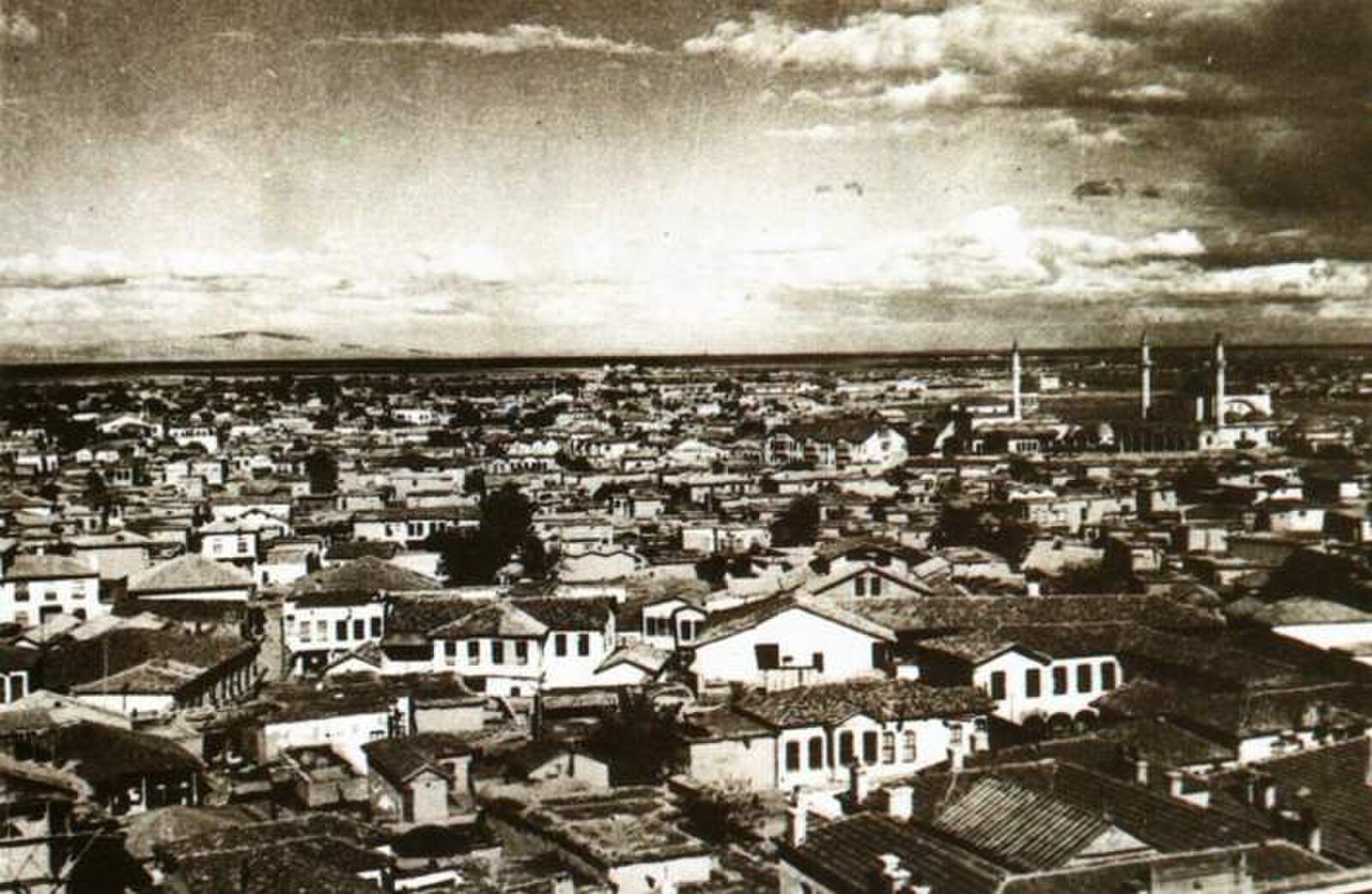
Panorama of old Konya
A rooftop panorama of Konya at the turn of the century, showing the dense fabric of its quarters and the minarets on the horizon.

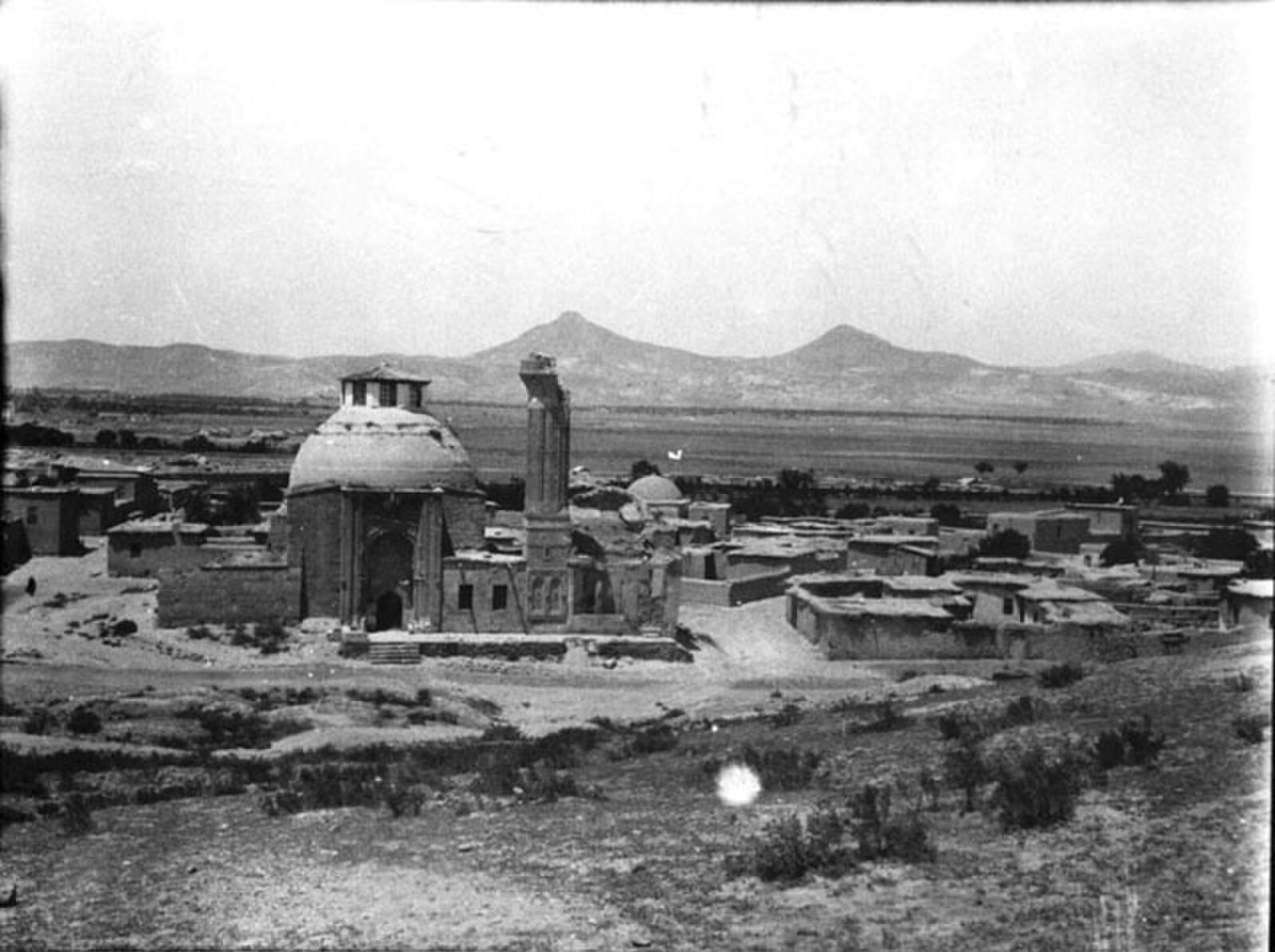
The İnce Minareli Medrese and its surroundings
The İnce Minareli Medrese and the earth-roofed houses around it, with the mountains ringing the Konya plain behind.

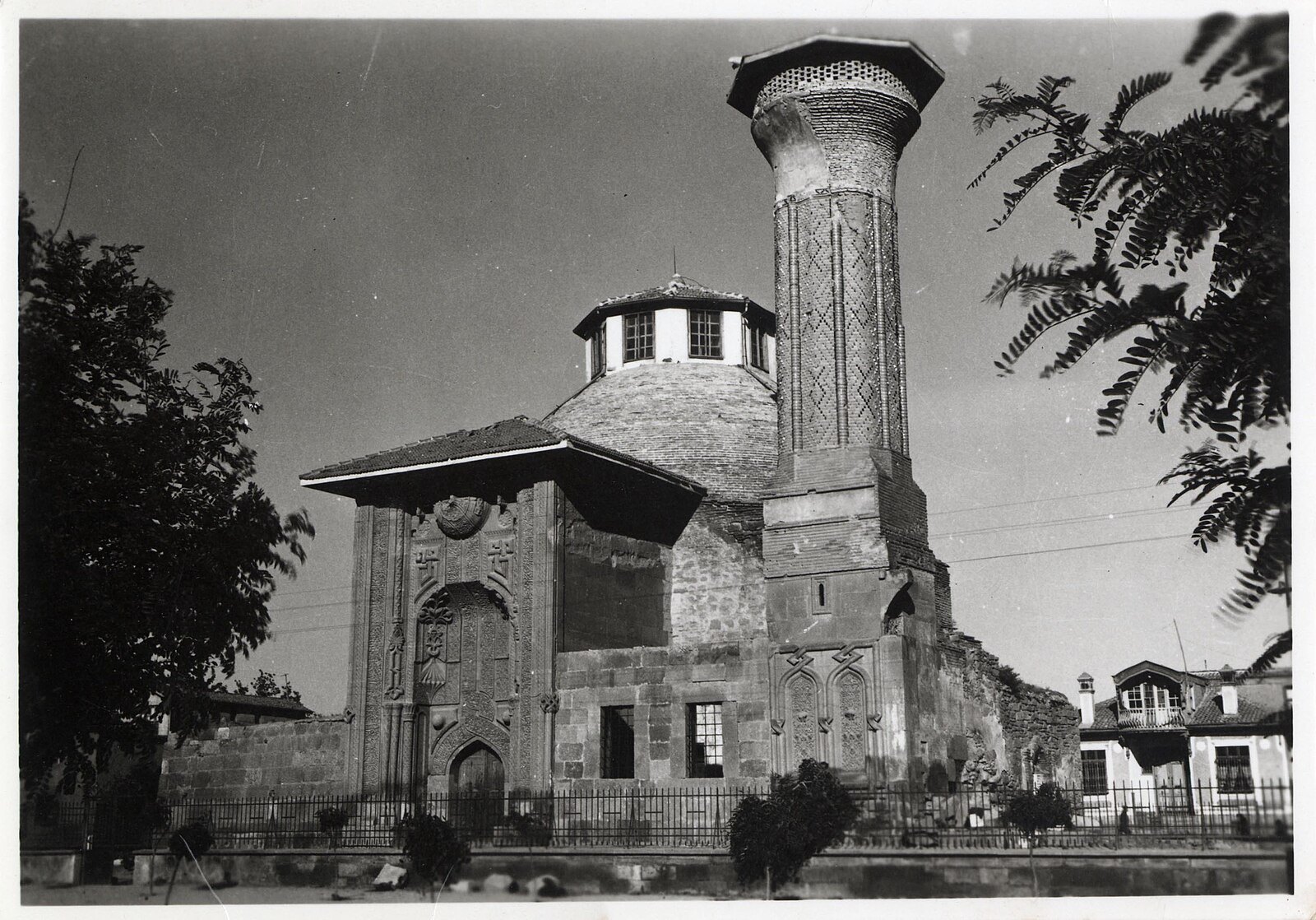
İnce Minareli Medrese — lantern of the dome
The lantern on the dome of the İnce Minareli Medrese — this many-windowed element, common in Seljuk and early Ottoman buildings, later gave way to drums. From…

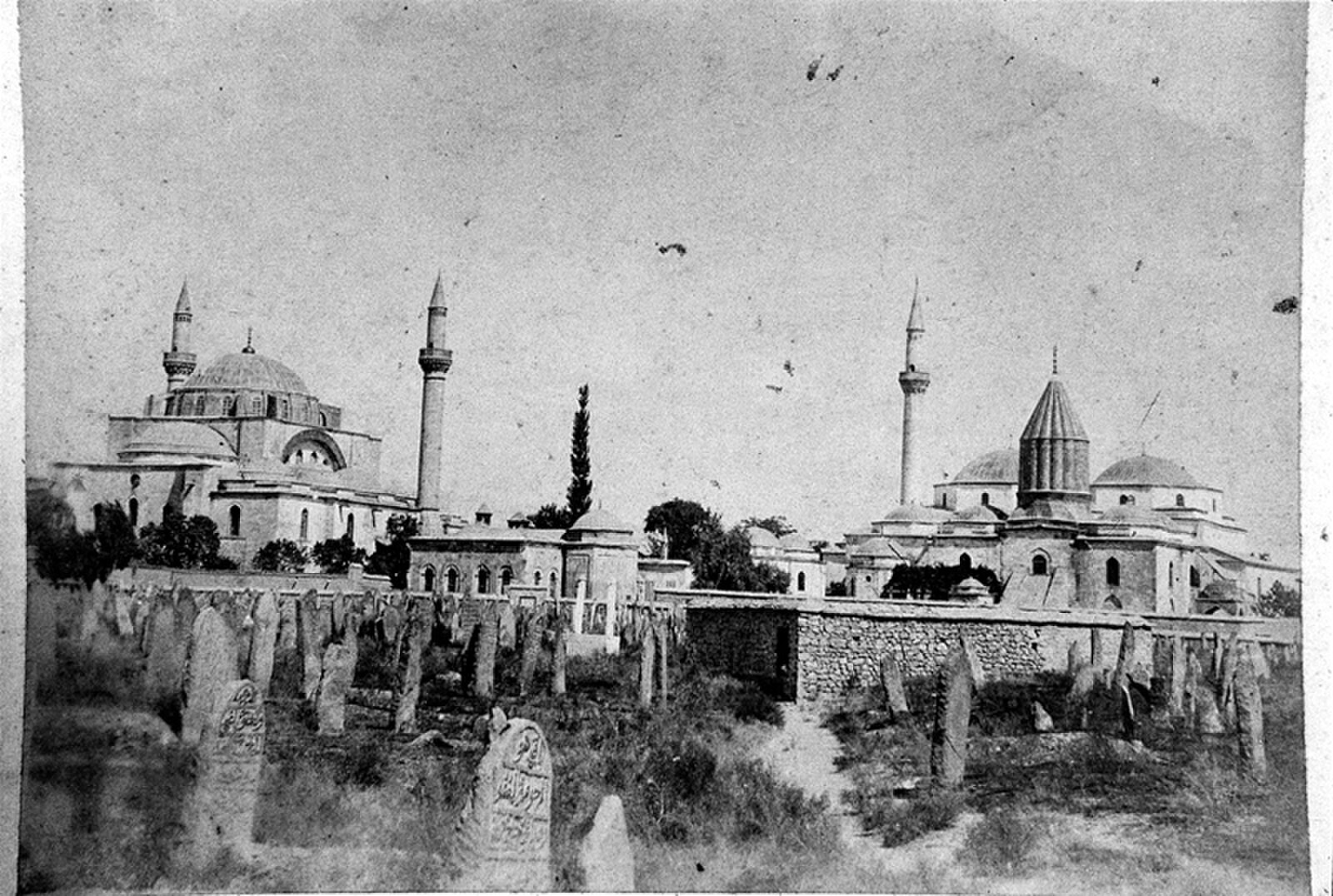
Üçler cemetery with the Mevlâna Lodge and Selimiye Mosque behind
Looking from the Üçler cemetery towards the Mevlâna mausoleum and the Sultan Selim Mosque — one of Konya's most repeated views, as it was at the turn of the…
